


Predictive Maintenance Services
Yalantis provides custom predictive maintenance development, building AI-powered software and IoT solutions that turn reactive maintenance into a proactive tool for reliability, efficiency, and cost savings.







Challenges Predictive Maintenance Solves
-

Unplanned downtime from sudden vehicle failures
Instead of reacting to a breakdown on the road, which causes delivery delays and expensive emergency repairs, predictive maintenance provides a forward-looking view. By analyzing sensor data, it forecasts potential component failures before they happen, allowing you to schedule service during planned off-hours.
-
Over-maintenance from rigid service schedules
Forget replacing parts based on fixed mileage or time intervals, which often leads to discarding healthy components. Predictive maintenance shifts to a condition-based approach, ensuring that service is performed only when data shows it’s actually needed, optimizing spend on both parts and labor.
-
No real-time visibility into component health
Without clear data, fleet managers are often blind to the gradual degradation of critical parts like engines, transmissions, and brakes. Intelligent monitoring transforms this ambiguity into awareness, providing a continuous health score for key vehicle systems across your entire fleet.
-
Bloated spare parts inventory due to uncertainty
Maintaining a large, costly inventory of spare parts to guard against unexpected failures ties up significant capital. By accurately forecasting when specific components will require replacement, you can move to a just-in-time parts strategy, reducing inventory costs and waste.
-
Rising fuel costs from subtle performance issues
Minor, undetected problems such as degrading fuel injectors or incorrect tire pressure can slowly increase fuel consumption across the fleet. Predictive analytics can spot these subtle performance anomalies early, flagging vehicles for tuning to restore optimal fuel efficiency.
-
Heightened safety risks from undetected mechanical problems
The risk of a catastrophic failure in safety-critical systems like brakes or tires is a constant concern for driver safety and liability. Predictive maintenance identifies stress patterns and abnormal wear, providing crucial alerts to address potential safety hazards before they lead to an incident.
Yalantis Predictive Maintenance Services


End-to-End Predictive Maintenance Platform Development


AI/ML Predictive Model Development


IoT Sensor Strategy & Deployment


Data Integration & Pipeline Development


Standalone Root Cause Analysis (RCA) Module
Predictive Maintenance Solutions for different industries

Industrial & Automotive Manufacturing
Predict failures in CNCs, robotics, and conveyors. Turn reactive repairs into proactive strategies to stop costly production downtime.

Logistics & Transportation
Use predictive analytics on your vehicle fleet and warehouse automation to prevent costly delays and protect your operational margins.

Private Fleets
Get predictive insights into your internal logistics assets. Prevent supply chain disruptions that threaten your core business operations.

Industrial & Machinery OEMs
Use our white-label platform to build recurring revenue. Sell a branded, high-margin predictive maintenance service to your customers.

Energy & Mining
Monitor high-value remote assets in harsh environments. Mitigate extreme financial risks by preventing catastrophic equipment failures.

Warehouse & Fulfillment
Guarantee the uptime of your critical conveyor and sorting systems. Maximize throughput by eliminating all operational bottlenecks.
Case studies





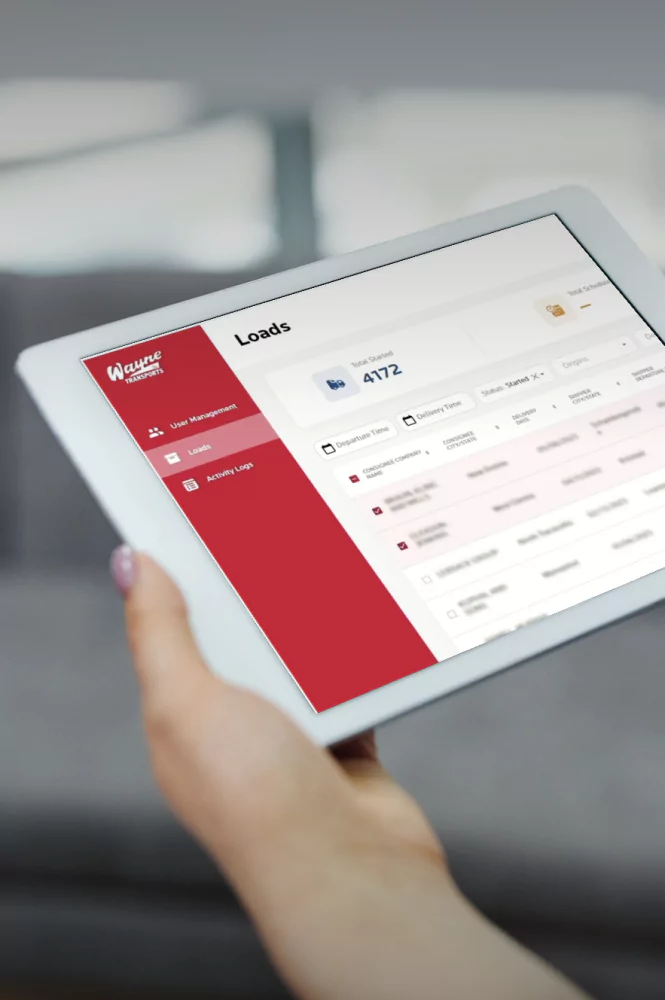

Benefits of developing a predictive maintenance solution with Yalantis
-
Maximize Operational Uptime
Our expertise in asset failure modes and custom AI models allows us to forecast component failures, transforming costly unplanned downtime into scheduled, low-disruption service events.
-
Optimize Maintenance Spend
Our full-stack solution transitions you from rigid, calendar-based service to condition-based maintenance, ensuring you only spend on parts and labor when data shows it’s necessary.
-
Maximize Asset Value & Lifespan
We build systems that provide deep visibility into component health, allowing you to address minor issues proactively and extend the operational life of your most high-value assets.
-
Enhance Operational Safety
Our experience allows us to identify stress patterns in safety-critical systems, providing crucial early warnings to your team to mitigate mechanical risks before they lead to an incident.
-
Streamline Spare Parts Inventory
By accurately forecasting component failures, our solutions let you move from a capital-intensive “just-in-case” inventory to a lean, cost-effective “just-in-time” model.
-
Unlock Actionable Asset Intelligence
We balance advanced AI with practical strategy to transform raw sensor readings into clear, actionable insights, empowering your team to make smarter, data-driven maintenance decisions.
Technologies we work with
-

Rust
-
C
-
C++
-
Kotlin
-
Bootloader
-
Linux Kernel
-
AWS IoT
-
Arduino
-
ESP32
-
STM32
-
NRF52
-
Zephyr
-
LoRaWAN
-
MQTT


Compliance and security support
Security for your supply chain
-

ISO 28000
-
DTLF
-
CISA / NIST


RFID-powered Logistics
-
GS1 EPC/RFID
-
ISO 17363–17365


Testimonials from our clients

The thing that has been unique in my experience working with Yalantis is that they aren’t a factory that you send over some requirements and they develop exactly to those requirements—whether good, bad, or indifferent—and then ship you back some products. It’s a much more interactive process, and the team at Yalantis, from the business analysts to developers, are very good at saying: “There might be a better way of doing this—why don’t you take a look at this?” They bring a really intelligent and dynamic approach to the engagement that you don’t get sometimes with other vendors.

“What fascinated me the most is how invested the Yalantis development team is, and how they often exceeded expectations in what we were trying to accomplish in terms of timeframes.”

“They have very good organization and project management expertise. We’re not just getting the developers, we’re getting a whole support structure. Also, Yalantis cares about their employee satisfaction. And with satisfied employees, we get much better output.”

“What triggered us was their remote collaboration practices as well as their experience in the IoT industry. Their strong technical experience helped us scale our platform and deliver great performance to our customers.”
“One of the biggest values they bring to the table is the way of thinking critically during the whole development process. They’re not just building software, they’re effectively solving your business problem.”

“Yalantis has been a great fit for us because of their experience, responsiveness, value, and time to market. From the very start, they’ve been able to staff an effective development team in no time and perform as expected.”

“Established development flows and good communication skills made collaboration with Yalantis very smooth. We appreciate their professionalism and dedication. If you are looking for a solid technical partner and a well-processed software outsourcing company for your project, I’d recommend Yalantis.”

“Working with Yalantis, you get their breadth of experience building hundreds of projects. Their expertise and knowledge were second to none. And that makes the difference between a good product and a great product.”

“With the product built by Yalantis, we have a lot of possibilities for growth. They elaborated a great user experience for our operators to work more efficiently and properly deal with troubleshooting. And the architecture of the product is scalable and ready for the future.”
Predictive Maintenance ServicesInsights

How Can IoT for Predictive Maintenance in Logistics Transform Your Fleet Operations
Learn how IoT sensors and Rust-powered systems enable predictive maintenance in logistics. Reduce downtime and boost reliability.

How Manufacturers Use IoT for Predictive Maintenance
Learn about the benefits of Internet of Things predictive maintenance for large manufacturers and how a web application can increase its effectiveness.
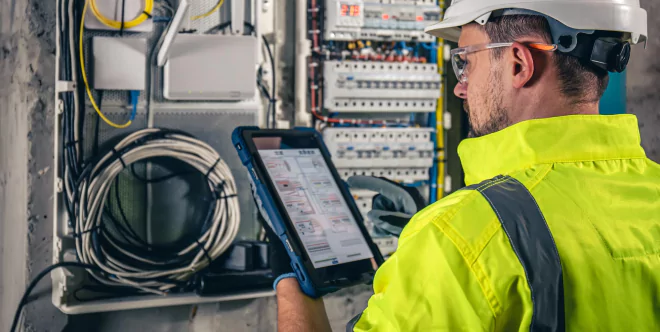
Being informed in advance: IoT predictive maintenance
Discover how IoT predictive maintenance can enhance equipment performance and reduce downtime. Read the essential guide to optimize your operations now.
FAQ
How is predictive maintenance different from the preventive maintenance we already do?
While preventive maintenance is a valuable step, it operates on fixed schedules (time or mileage), often leading to unnecessary service and part replacements on healthy assets. Predictive Maintenance (PdM) is far more intelligent. It uses real-time data from IoT sensors and machine learning to monitor the actual condition of your equipment. Instead of servicing on a schedule, you perform maintenance precisely when it’s needed, just before a potential failure occurs. This data-driven approach maximizes asset lifespan, reduces costs, and drastically improves operational uptime.
What is the process for implementing a predictive maintenance solution with your team?
The process begins with a deep discovery and assessment phase where we work to understand your specific challenges, key assets, and business goals. From there, we devise a comprehensive data and hardware strategy, leveraging any existing data sources and deploying custom IoT sensors where needed. Our data scientists then develop custom machine learning models while our engineers build the software platform to deliver alerts and insights. The final stages involve integrating the platform into your existing workflows, rolling it out to your team with full training, and providing ongoing support to ensure the solution continuously delivers maximum value.
What kind of data and equipment do we need to get started?
This is a common question, and the answer depends on your current setup. Many modern fleets and facilities already have equipment with built-in sensors and telematics systems that generate valuable data. Our first step is always to assess if we can leverage your existing data. If there are gaps, our team specializes in end-to-end IoT development, meaning we can design, build, and install the specific sensors and data pipelines required to monitor your critical assets effectively.
How long does it take to see a return on investment (ROI)?
While the full implementation timeline varies based on complexity, initial insights can often be generated within the first few months. The ROI for predictive maintenance is significant and multifaceted, coming from direct cost savings across your operation. You will see returns from the reduction in unplanned downtime, lower overall maintenance costs by eliminating unnecessary service, and the ability to run a leaner, just-in-time parts inventory. Furthermore, by ensuring your equipment runs under optimal conditions, you protect your long-term capital investment by extending its operational life.
How does a Predictive Maintenance platform integrate with an existing CMMS or ERP system?
Seamless integration with your existing systems is not just a feature; it is fundamental to operationalizing insights and maximizing value. A modern PdM platform acts as an intelligent layer that complements your Computerized Maintenance Management System (CMMS) or Enterprise Resource Planning (ERP) software. The process is a two-way street facilitated by robust APIs. Initially, the PdM platform ingests historical maintenance records and work order data from your CMMS/ERP to enrich and accelerate the training of its machine learning models.
Once operational, the real power becomes evident: when the PdM platform predicts an impending asset failure, it automatically triggers an action in your existing system. This could be generating a detailed work order in your CMMS, checking spare parts availability in your ERP’s inventory module, and even scheduling the required maintenance technician. This creates a closed-loop workflow that transforms a data-driven prediction into a concrete, scheduled action without manual intervention, turning your CMMS from a simple record-keeping tool into a proactive, intelligent system.
Can a Predictive Maintenance program be scaled from a pilot project to a full enterprise deployment?
Yes, not only is this possible, it is the most effective and recommended strategy for enterprise adoption. A successful deployment begins with a strategic pilot program focused on a small number of high-value, critical assets that have well-understood failure modes. This allows us to quickly demonstrate tangible ROI, refine the machine learning models on a manageable dataset, and establish a clear business case for expansion. The key is to prove value early and create internal champions for the program.
Once the pilot is successful, we leverage a scalable cloud architecture and the established data models to create a standardized blueprint for a phased, enterprise-wide rollout. This methodical approach allows your organization to manage change effectively, learn from each phase, and expand the program’s footprint across different facilities or asset classes with confidence. This ensures that the solution grows with your operational needs and delivers compounding value as more assets are brought online.
How do your custom machine learning models minimize false positives and alert fatigue?
Alert fatigue is a primary reason why generic PdM initiatives fail; if technicians are constantly chasing phantom issues, they will lose trust in the system. We combat this directly through the development of highly specific, custom machine learning models. Unlike off-the-shelf software that uses generic algorithms, our models are trained exclusively on your historical data, allowing them to learn the unique operational “fingerprint” of each of your assets. They understand that a pressure spike which is normal during a startup sequence is a critical anomaly during steady-state operation.
Furthermore, we utilize sophisticated feature engineering to isolate the most predictive data signals while ignoring system noise. Most importantly, our platforms include a human-in-the-loop feedback mechanism. This allows your expert technicians to validate alerts, confirming whether a prediction was accurate. This feedback is then used to continuously retrain and refine the models, creating a system that gets smarter and more accurate over time, ensuring that when an alert is triggered, it warrants immediate attention.
What is the difference between Predictive and Prescriptive Maintenance, and is that a future capability?
This is an excellent question that gets to the future of industrial maintenance. Think of it as an evolution in intelligence. Predictive Maintenance excels at answering the questions, “What will likely fail?” and “When will it likely fail?” It provides a forecast, a probability, and a time window, enabling you to plan and schedule maintenance proactively. For example: “Alert: Bearing B-123 on Conveyor 4 shows a 75% probability of failure in the next 150 operating hours.”
Prescriptive Maintenance is the next logical step, answering the crucial follow-up question: “What should I do about it?” It analyzes the prediction in the context of broader operational data and provides a specific recommendation. The same alert in a prescriptive system might read: “Alert: Bearing B-123 will likely fail. We recommend replacing it during the scheduled plant-wide downtime on Tuesday. The required part (PN-X) is in stock at the primary warehouse. Click here to automatically generate a work order and allocate the part.” The robust data infrastructure and accurate models we build for your predictive solution are the essential foundation required to unlock prescriptive capabilities in the future.
Contact us

got it!
Keep an eye on your inbox. We’ll be in touch shortly
Meanwhile, you can explore our hottest case studies and read
client feedback on Clutch.


Nick Orlov
IoT advisor
How to get started with IoT development
-
Get on a call with our Internet of Things product design experts.
-
Tell us about your current challenges and ideas.
-
We’ll prepare a detailed estimate and a business offer.
-
If everything works for you, we start achieving your goals!