


Yalantis is a healthcare software development company, and we build the clinical products you cannot buy off a shelf, from the platform your clinicians work in to the device and EHR data feeding it. Our healthcare software development services come with the compliance records attached, because the same team writes the code and the documentation your auditors will ask for.
Custom Healthcare Software Development Services
15+
Years building
healthcare software
25+
FDA and CE
approvals supported
60+
Engineers with healthcare
domain depth
ISO
13485 and ISO 27001
certified
R&D
In-house device
lab in Warsaw

HIPAA
Patient data privacy

HL7 / FHIR
Interoperability

ISO 13485
Medical device QMS
ISO 27001
Information security

IEC 62304
Medical software lifecycle
SOC 2 GDPR
Controls and privacy
Who we build for
We work with midsize and enterprise healthcare organizations, usually with a CTO or a VP of engineering on the other side of the table.
Our healthcare software development services
Our custom medical software development services come as a full set or as the single piece your team is missing, and most engagements start with one platform or one integration.
SaaS healthcare platform development
Product companies bring us in for software product development when one codebase has to serve hundreds of clinics without slowing down. We architect the multi-tenant core first, because retrofitting tenancy after your first enterprise client signs is how platforms lose a year.
- Multi-tenant architecture that holds as the clinic count grows
- White-label logic so every B2B client keeps its own branding
- Subscription billing and usage metering wired into the product
- Healthcare analytics that answer operational questions without a data team
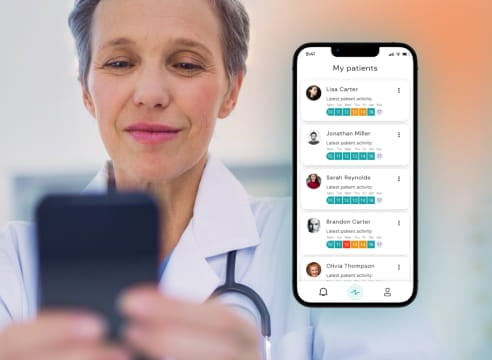
Medical mobile apps and patient portals
For most patients the medical app is the whole product, which is why it carries your retention numbers. Our healthcare app development services cover the patient-facing side and the data plumbing behind it, right down to the BLE pairing that decides whether a reading arrives at all.
- Cross-platform builds for iOS and Android from one codebase
- Device pairing over BLE with background sync for remote monitoring
- AI assistants that handle scheduling and refill requests
- Health metrics presented so people keep coming back
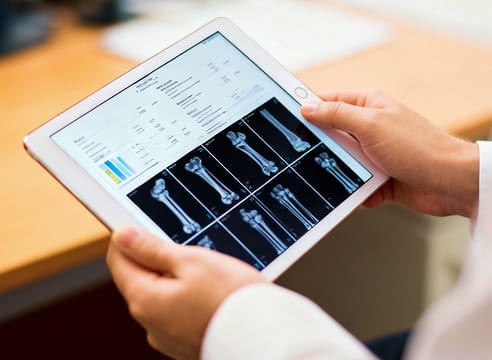
Custom EHR and EMR system development
Niche EHR vendors hire us to build the connectivity layer their buyers ask about in every demo. We design FHIR-native from the start, which turns later hospital integrations into configuration work.
- FHIR-native data models and versioned APIs
- SMART on FHIR launch inside a hospital EHR session
- e-Prescribing modules connected to pharmacy networks
- Clinical decision support that flags interactions at the point of order
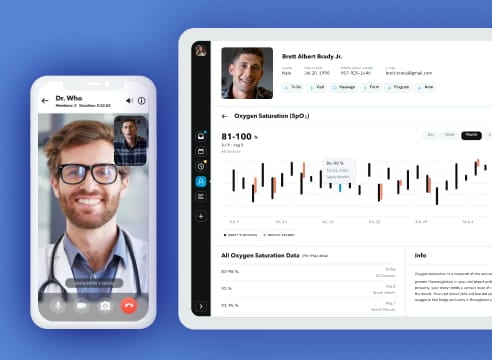
Telemedicine and virtual care ecosystems
Telemedicine software fails in front of the patient, so we get call reliability right before adding anything else. From there we build the visit itself along with the documentation and billing that surround it.
- WebRTC pipelines tuned for diagnostic-quality video
- AI symptom intake that briefs the clinician before the call
- Asynchronous care flows that stretch provider capacity
- GenAI scribes drafting notes for clinician review
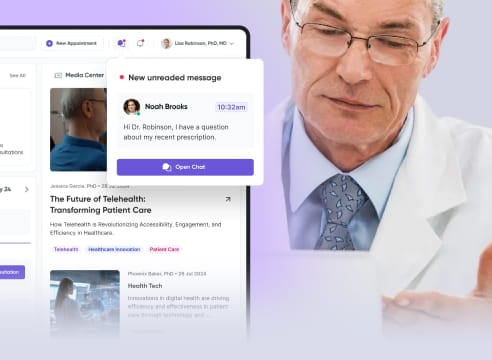
End-to-end practice management software
Admin work quietly decides how many patients a clinic can see in a day. We centralize the healthcare workflows that staff currently hold together with spreadsheets and phone calls, and most of the manual error disappears with them.
- Scheduling and intake digitized down to the consent forms
- Real-time inventory tracking that prevents supply gaps across healthcare facilities
- Workforce planning for healthcare professionals , informed by historical demand
- Operational dashboards for utilization and no-show rates

Revenue cycle management software
Revenue usually leaks in small amounts, so most of the win comes from catching errors early. We build the medical billing software that flags a coding problem at submission time, while fixing it still costs nothing.
- AI claim scrubbing against payer rules before submission
- Automated eligibility and benefits verification
- Denial management workflows with root-cause reporting
- Reimbursement forecasting from your historical claim data

Healthcare AI integration and consulting
AI inside a clinical product has to survive review by people who will not accept a confident guess. Our AI healthcare software development services fine-tune models on de-identified data and keep a clinician in the loop, then document how the model behaves for your regulatory file.
- Model selection and fine-tuning on de-identified clinical data
- MLOps pipelines so a result can be reproduced months later
- Document processing that structures faxes and scanned records
- Bias and hallucination audits with clinician sign-off

Healthcare compliance and security engineering
Security is cheapest when it starts at the architecture stage. Our HIPAA compliant software development services put the controls into the delivery pipeline, so audit evidence builds up while the product does.
- Threat modeling and control mapping before the first sprint
- End-to-end PHI encryption with keys held in hardware
- Audit logging that records every access to patient data
- Continuous vulnerability scanning inside CI/CD
- Security questionnaires and BAA documentation prepared for you
Explore more
What we build
Custom healthcare software development covers a lot of ground, so here are the custom healthcare software development solutions clients ask us for most often.
Software as a Medical Device

SaMD products developed under IEC 62304, with the risk file and requirement-to-test traceability a reviewer expects. We have supported clients through 510(k) and De Novo pathways.
Remote patient monitoring platforms
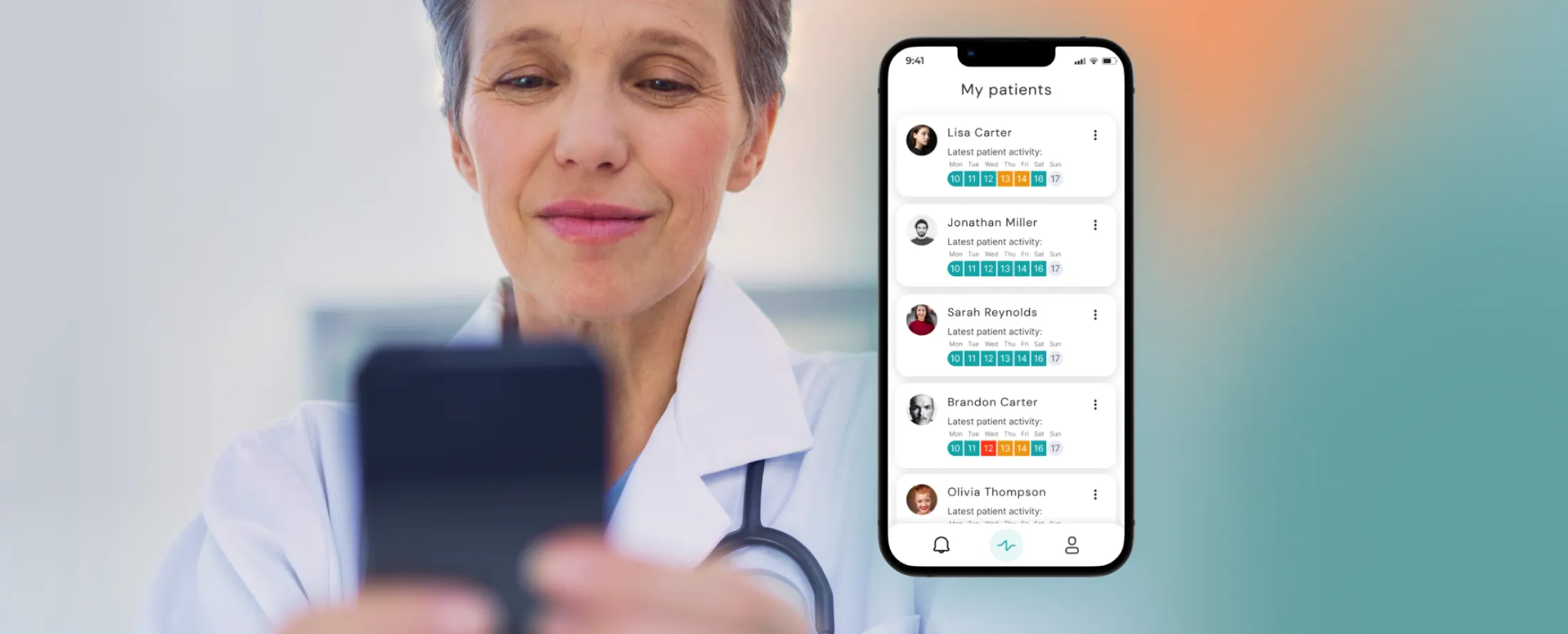
Readings come in from home devices and turn into alerts a care team can act on. Escalation rules and billing-ready records are part of the build.
FHIR interoperability layers
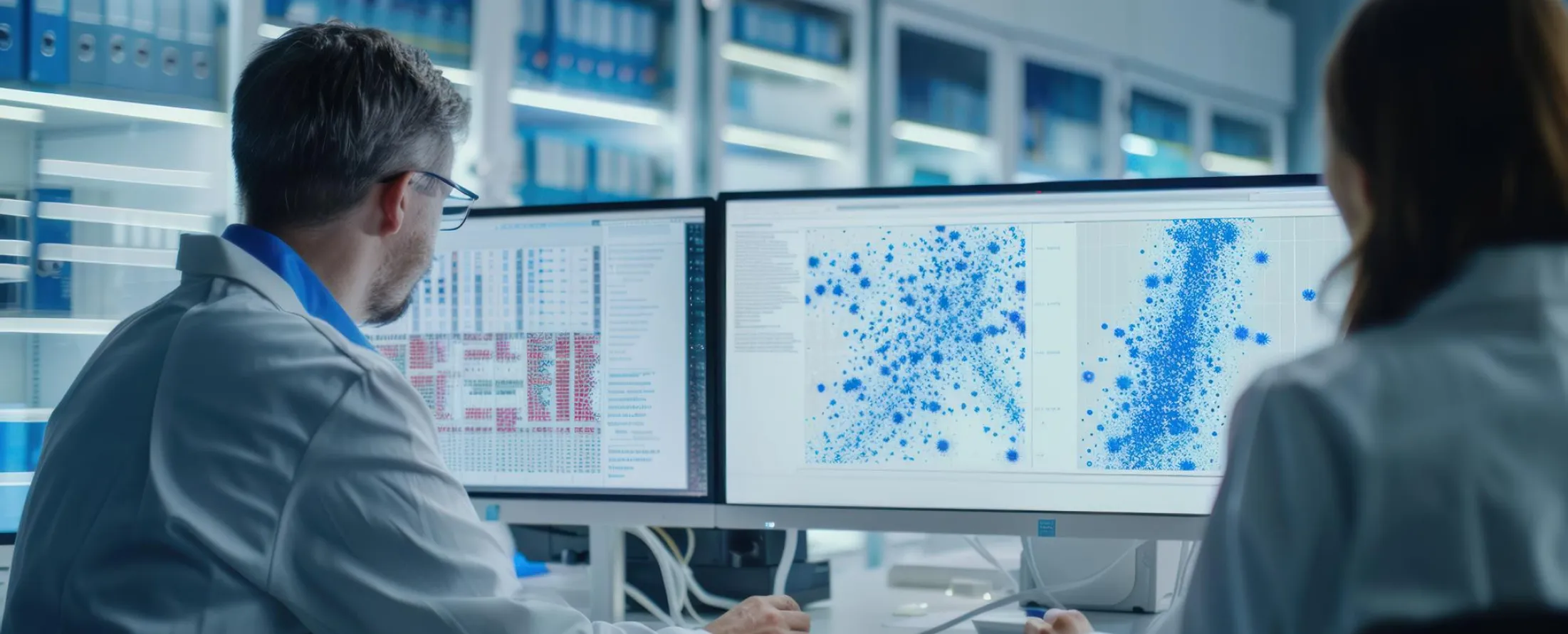
One canonical data model between your product and the healthcare systems around it, with terminology mapped to LOINC and SNOMED CT so a lab result means the same thing everywhere.
Patient engagement portals
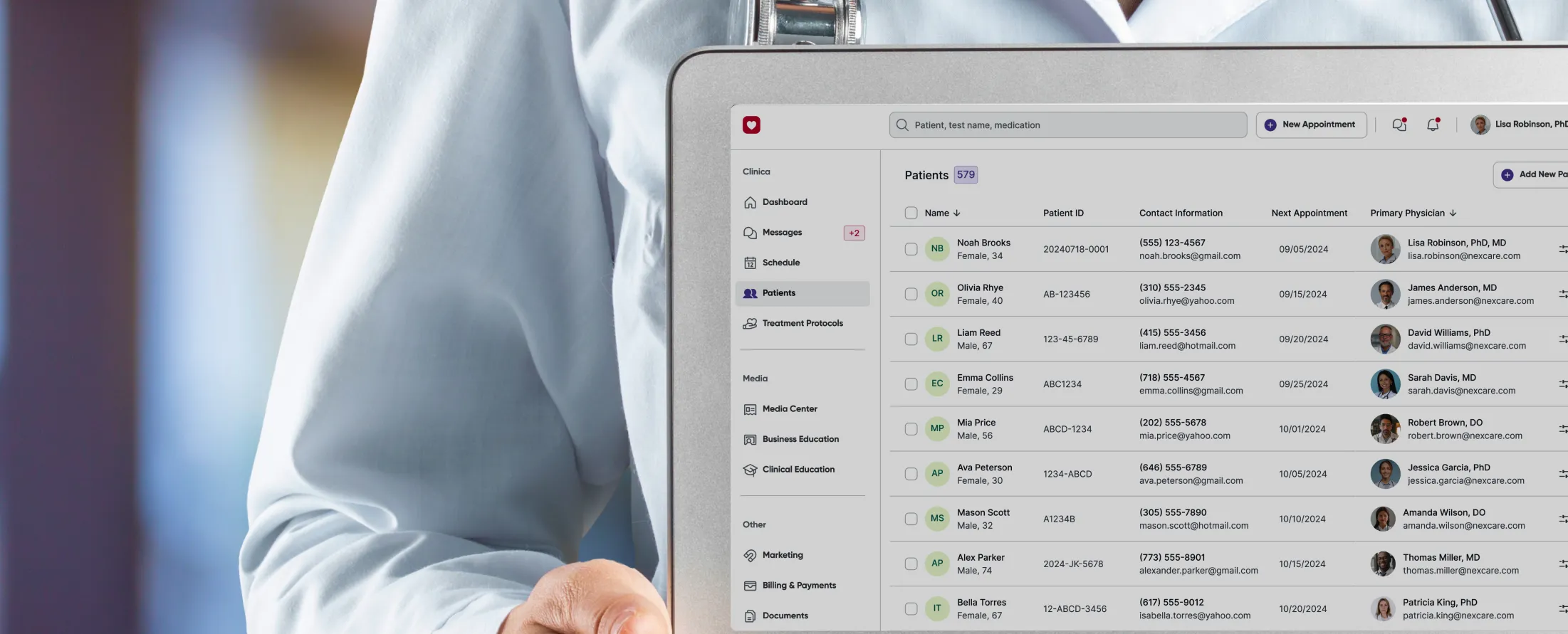
Cross-platform portals wired into the EHR, so a patient sees the same record the clinician does. Real-time sync then keeps care coordination off the phone.
Clinical workflow automation
In a lot of places healthcare providers still move intake and prior authorization by fax and phone call. We automate the routing and leave clinical judgment where it belongs.
Clinical AI and documentation support
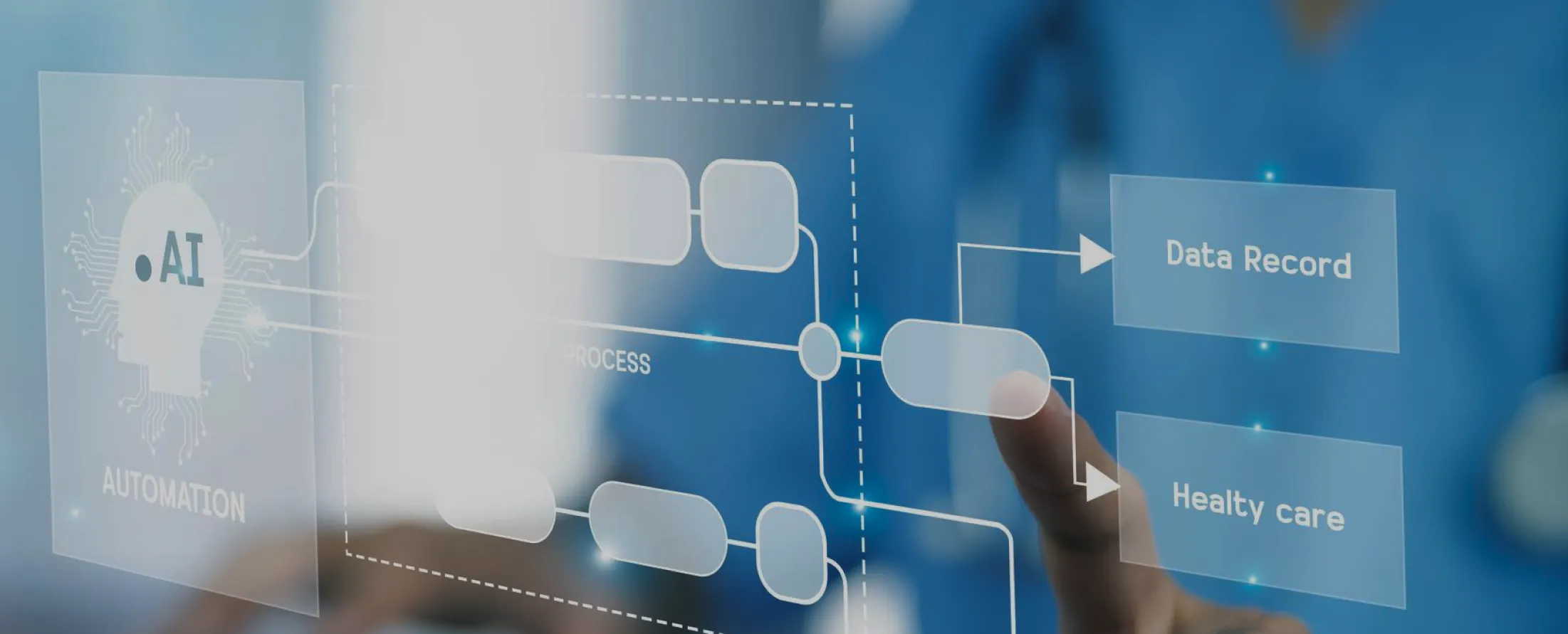
Ambient scribing and coding assistance built on de-identified training data, with decision support added where the clinical evidence allows it. Every output stays reviewable and every model version reproducible.
What usually goes wrong, and what we do about it
Nearly every program we inherit shows up with a version of the same few problems, so here is how each one gets handled.
Healthcare software development process
Every stage ends with something you can watch run, and the compliance work keeps pace with it from the first phase.

Strategy and roadmapping
Our healthcare software consulting services start here, aligning the build with your business objectives before we price the options against them. Stakeholders help define scope and priorities, and we settle the regulatory pathway here as well, because whether the product is a medical device changes the plan and the budget.

Product design and discovery
Next we detail functional requirements and study how the work is done today, usually by watching a clinical workflow on site. Risk assessment starts in this phase under ISO 14971, so the mitigations shape the design while it is still cheap to change.

Architecture and technical design
With the product defined, our architects draw the blueprint: system architecture and technology stack, plus the interoperability model that decides how data enters and leaves. Security architecture and control mapping get agreed at the same review, so the compliance evidence has somewhere to attach.

Development and implementation
Engineering usually opens with a prototype or an MVP to prove the concept, then moves into full delivery in two-week increments you can inspect. Verification tests and technical documentation are written next to the code, which is what keeps an audit from turning into an archaeology exercise.

Testing, deployment, and support
Before launch the product goes through QA and validation against the requirements agreed in discovery, including performance under clinical load. We handle deployment and cloud migration, then stay on for monitoring, security patching, and the compliance updates that follow every regulatory change.
Where does your product stand?
Tell us which stage you are in and what has already been built. Our engineering lead comes back with the remaining scope and the team shape it needs.
Select Your Plan
Our engagement models
Our software development services for healthcare run in one of three ways, and the right one mostly depends on how settled your scope is.
Dedicated team
Your roadmap, our engineers, usually staffed within two to four weeks and reporting into your own process. It suits multi-year platform work, and the team composition shifts with you as you move from build to scale.
Fixed-scope delivery
Best for a defined module or a single integration where the requirements hold still. You get a scope and a price up front, along with the acceptance criteria we will be measured against.
Time and materials
The practical choice for discovery work and legacy modernization, where scope becomes clear as you go. Billing follows actual effort, with a monthly cap if your finance team needs one.
Technologies we work with
What we reach for depends on your compliance requirements and the code you already own.
Technologies we work with
Swift

Kotlin

SMART on FHIR

DICOM
Kubernetes

Mirth Connect

SNOMED CT

WebRTC

Flutter

Node.js

.NET

Ruby on Rails

LOINC
Java

Go

Microsoft Azure

Rust
Python

React.js

Angular

AWS

Google Cloud
Microsoft Azure
Apache Kafka

PostgreSQL

MongoDB
HL7 / FHIR

Terraform

PyTorch

MLflow

BLE

Zephyr
Custom healthcare software development success stories
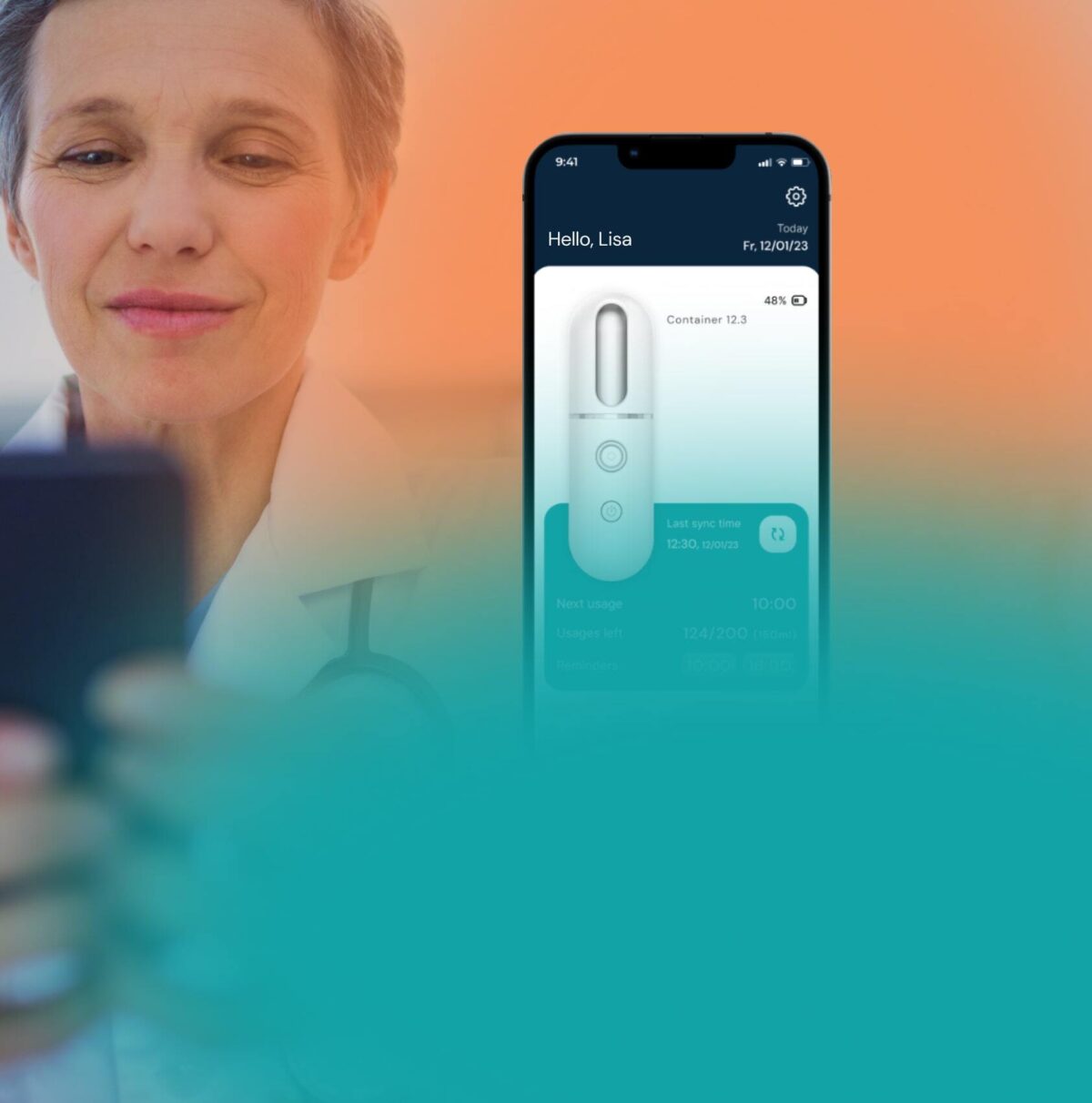
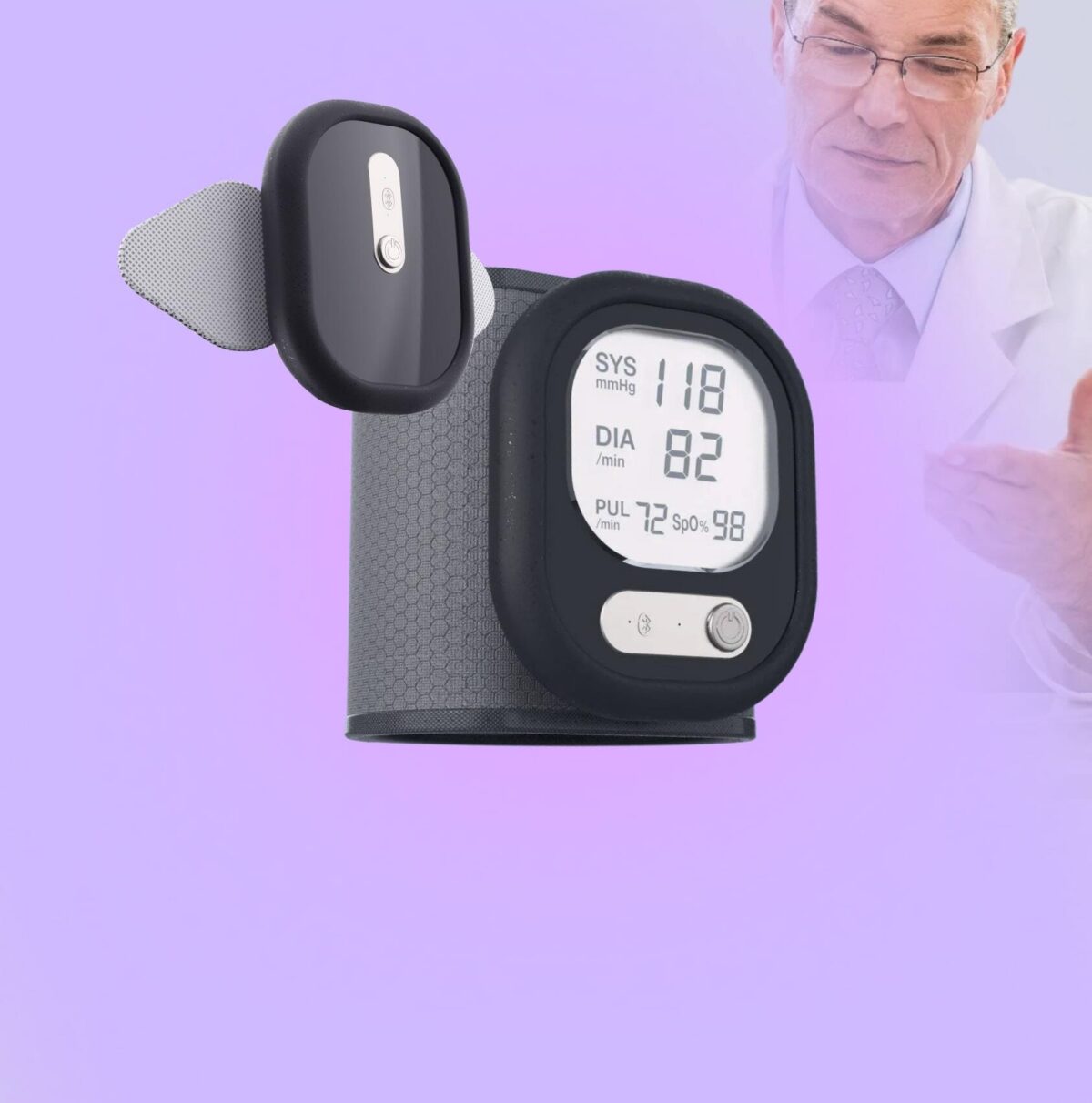
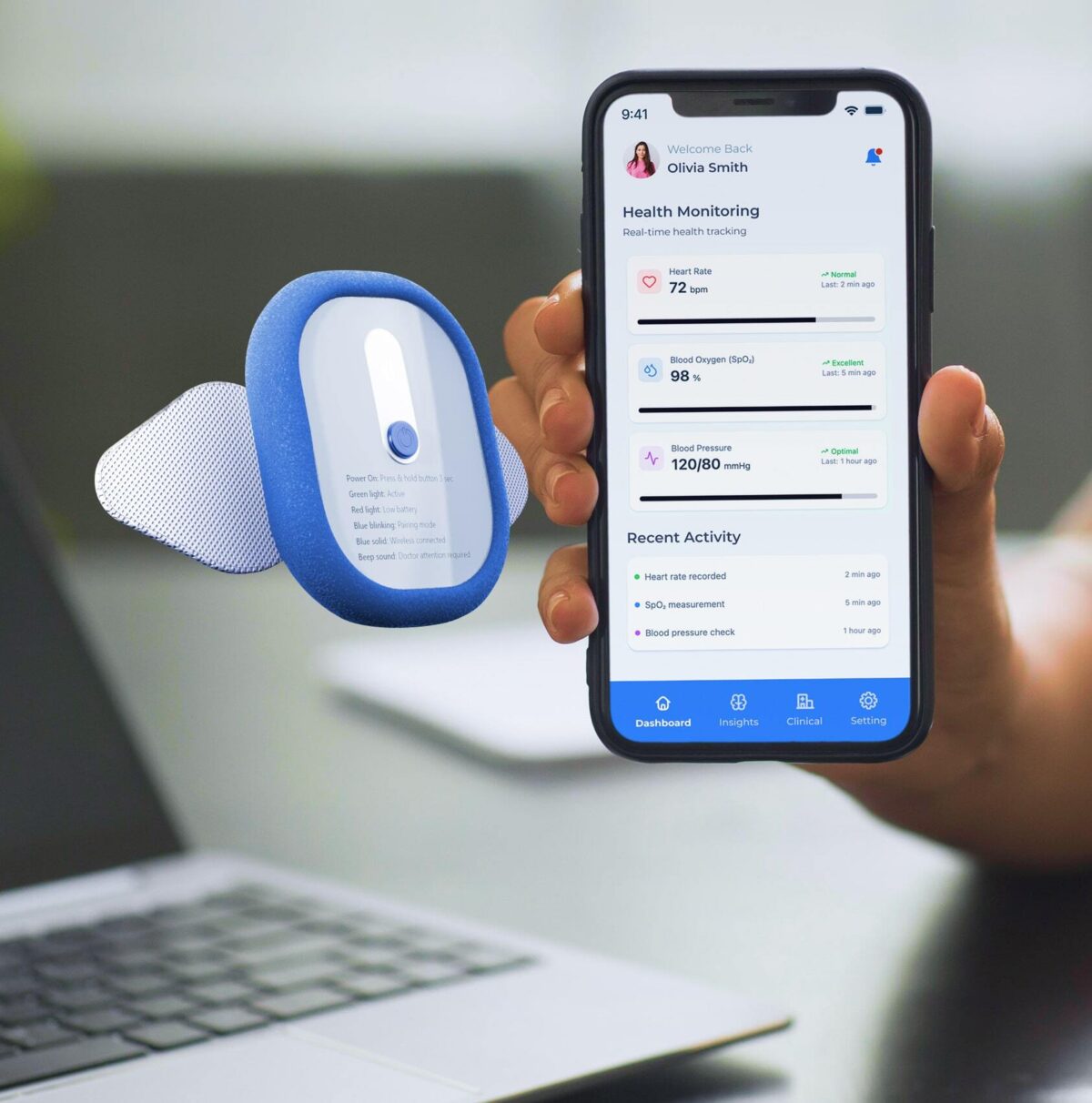
A few examples of what we have built, and what changed for the client once it went live.








Why partner with Yalantis for custom medical software development
Most development vendors will take a healthcare project, so here is what changes with a custom healthcare software development company that has spent 15 years in regulated environments

A track record in regulated healthcare
We deliver digital health platforms and enterprise-grade clinical systems, with more than 15 years of experience in healthcare behind them. In healthcare environments serving millions of patients, downtime and data breaches are not survivable events, and that assumption shapes how we build.
Audit-ready compliance, produced as we go
We are certified to ISO 13485 and ISO 27001, and we align products with HIPAA, GDPR, SOC 2, and FDA expectations from day one. Compliance runs as code in the delivery pipeline, so the evidence for an audit already exists when your regulatory team goes looking for it.
Hardware and software under one contract
Our own R&D lab means firmware, the cloud backend, and the certification work sit with one partner. That is what separates us from a generalist medical software development company, and it is why device manufacturers stop needing a second vendor for the software half of the product.
Engineers who already know the domain
Scale your R&D in two to four weeks with healthcare software developers who understand clinical workflows and the FHIR standard, including how CPT codes shape a data model. You skip the learning curve, and the domain knowledge stays on the team for the whole lifecycle.
Architecture built for load and due diligence
From memory-safe Rust in performance-critical services to serverless components where they earn their place, we design for the uptime targets your enterprise clients write into contracts. Cloud unit economics get watched too, because an investor reading your TCO will notice.
One partner across a fragmented ecosystem
A patient-facing product and its cloud backend often sit with different vendors, with the legacy EHR integration owned by a third. That is where the integration bill hides. We unify them into one interoperable environment that data moves through without friction.
Get a technical roadmap for your healthcare product
Send us the product you are trying to build along with its compliance context. Our engineering lead comes back with a detailed execution plan, plus the two or three questions worth answering before anything starts.
Compliance and certifications
Certifications we hold:
ISO 13485
Medical device quality management, re-audited annually
ISO 27001
Information security management, re-audited annually
ISO 9001
Quality management, company-wide
Standards and regulations we design and document to:
HIPAA

HITECH

GDPR and UK DPA 2018
SOC 2
IEC 62304
ISO 14971
IEC 60601-1

FDA 21 CFR Part 820
FDA 21 CFR Part 11

EU MDR
IEC 62443
HL7 v2
FHIR R4

ONC Cures Act
NIST SP 800-66
What our clients say


Insights into medical software development

Articles
HIPAA Law vs Healthcare Privacy Regulations Equivalents in other Countries
Find out the key differences in healthcare laws in the US, Canada, the UK, Australia, and MENA countries.

Articles
E-prescription app development: how to make your system efficient
Check out how you can develop e-prescription (eRx) software that is smart, user-friendly, and HIPAA-compliant in our guide to e-prescribing app development.

Articles
How to implement health risk assessment functionality in an EHR system
Need to implement effective healthcare risk assessment functionality? We’ll provide you with the latest practices, useful tools, and tips on what to focus on.
Related services and industries
FAQ
-
What healthcare software development services does Yalantis offer?
As a healthcare software development services company we cover nine areas: SaaS healthcare platforms, patient-facing products, custom EHR and EMR work, telemedicine, connected health and IoMT, practice management, revenue cycle management, healthcare AI, and compliance engineering. Some clients take the whole set for a new product, and plenty of others bring us in for a single layer, most often an integration or a firmware rebuild on a device that already exists. Either way the work runs under our quality system, so the documentation arrives together with the code.
-
What does healthcare software development cover?
t is the work of building and validating software that handles clinical data or supports a clinical decision. In practice that means clinical systems such as EHR and EMR platforms, patient-facing products, Software as a Medical Device, connected health and IoMT, interoperability layers on HL7 and FHIR, and clinical AI. What sets custom software development for healthcare apart from general software engineering is that every technical choice has to hold up in front of a regulator or a hospital security review, and often both.
-
What is the difference between custom and off-the-shelf healthcare software?
Off-the-shelf works well when your workflow looks much like everyone else’s. You pay less up front and start sooner, and in return you accept the vendor’s view of how care should be delivered.
Custom healthcare software development pays off in two situations. The first is when the workflow is your competitive advantage and a packaged product would flatten it. The second is when integration depth decides whether the product works at all, which is usually the case with device data, several EHRs in play, or a regulatory claim on the software itself. Licensing changes the math over time as well, since per-seat pricing across a growing network can pass the cost of a custom build within a few years.
-
How do you choose a healthcare software development company?
Five checks will tell you most of what you need. Ask which certifications the company holds and when they were last audited. Ask which production EHRs it has integrated with, and what it did when the API turned out not to exist. Look for security work inside the delivery process instead of a policy written after launch. Then ask how much clinical domain knowledge actually sits on the engineering team, and if your product is a medical device, check that the partner can produce the risk file and the traceability a reviewer expects.
-
How do you build HIPAA-compliant healthcare software?
HIPAA is an architecture decision long before it becomes a checklist, so we map the required controls onto the design at the very first review.
In the build that shows up as AES-256 encryption at rest and in transit, MFA and OAuth-based authentication, role-based access, automatic session logout, and audit logs that record every look at patient data.
The administrative half matters just as much. We sign a Business Associate Agreement, and vulnerability scanning and penetration testing run on a regular schedule. We also keep the answers ready for the security questionnaires your enterprise clients will send.
-
How do you use AI in healthcare software development safely?
Safe means two things here: the output can be explained, and the system fails in a predictable direction. Models are fine-tuned on de-identified clinical data and grounded in your own records instead of open web content, which is what keeps a confident invention out of a clinical note. We also build the evaluation set together with your clinicians and rerun it on every model change.
Wherever a result could influence care, a clinician stays in the loop and the interface makes the role of the model obvious. We document model versions and training data provenance along with known limitations, because that is the record a regulator or an enterprise security reviewer will ask to see.
-
Can you modernize a legacy healthcare platform while keeping HIPAA and patient-data compliance?
Yes, and it is one of the more common reasons teams call us. We move one capability at a time behind a stable interface, so the legacy system keeps serving clinical users while its replacement proves itself against real traffic.
Compliance travels with the migration. Audit trails stay continuous, and data migrations come with record-level reconciliation reports. Access controls get rebuilt instead of copied over with their old gaps. Cutovers happen in a window your clinical operations team picks, with the rollback path tested beforehand.
-
How do you handle EHR/EMR and HL7/FHIR integration with Epic or Cerner?
This is one of the things we do most. We work through HL7 v2 and v3, FHIR, and DICOM when medical imaging software is in scope, connecting products with Epic, Cerner, Allscripts, and smaller EHR vendors, and where the vendor runs a partner program we go through it. Testing always happens in a sandbox before anything touches a production environment.
When a usable API does not exist, we build middleware or route through an interface engine such as Mirth Connect, so data moves securely without disturbing healthcare operations . We also write the interface specification and the security answers early, since those two documents are what a hospital IT review is really assessing.
-
How do you ensure interoperability across hospital systems and devices?
We build one canonical data model and map every source of healthcare data into it, so a lab value arriving from two sources means the same thing inside your product. Terminology gets normalized to LOINC and SNOMED CT, and device feeds have their units and timestamps reconciled before anything reaches the chart. Conformance testing then runs against the healthcare standards and profiles your partners publish, so healthcare interoperability is proven rather than assumed. After that, adding the next device or system is configuration work.
-
What certifications should a healthcare software development company have?
For medical device work, ISO 13485 is the one that counts, because it certifies the quality management system your documentation will be judged against. For anything touching patient data, ISO 27001 shows that information security is managed rather than improvised, and a SOC 2 report covers controls on hosted services.
Certificates on their own will not tell you much, so ask what the process actually produces: IEC 62304 lifecycle records and ISO 14971 risk files, plus traceability from requirement to test. We hold ISO 13485, ISO 27001, and ISO 9001, all re-audited every year, and our work has supported more than 25 FDA and CE approvals.
-
Do you support FDA submission for Software as a Medical Device (SaMD)?
Yes. We take clients through the 510(k) and De Novo pathways with development aligned to IEC 62304, which covers the software requirements specification, architectural design records, risk management files to ISO 14971, and verification and validation reports. Because those records are written while the software is being built, the submission package gets assembled rather than reconstructed, and reconstruction is usually where teams lose months.
-
What engagement models do you offer for healthcare software projects?
Three of them. A dedicated team suits multi-year platform work where the scope keeps moving, and it is usually staffed within two to four weeks. Fixed-scope delivery fits a defined module or a single integration, with the price and the acceptance criteria agreed before anyone starts. Time and materials is the practical choice for discovery and legacy modernization, and we will put a monthly cap on it if your finance team needs one.
-
What drives the cost of a healthcare software project?
The cost of custom healthcare software is not something we publish as a rate card, because two products with identical feature lists can differ by a factor of three once compliance enters the picture. A HIPAA-aligned platform and a Class II medical device carry very different documentation and validation loads, and every production EHR, payer, or lab connection adds engineering and coordination time on top of that.
Hardware in the loop brings its own bring-up work and over-the-air infrastructure, and AI features cost more in evaluation and clinical review than in modeling. Uptime targets shape both the architecture and the hosting bill. Send us the product and the compliance context, and we will come back with an estimate for your healthcare product that you can take into a budget conversation.
-
How long does it take to build a custom healthcare solution?
A prototype or MVP of a custom healthcare software solution usually takes three to four months, and a fully featured, compliant platform lands somewhere between six and 12. What stretches a timeline is almost always a complex EHR integration or a regulatory certification path.
We deliver in increments, so core features can go live while the rest of the ecosystem is still being built. That also gives you something running to show a board or a design partner well before the full release.
-
What technologies are best for a telemedicine platform?
WebRTC is the standard for real-time video, thanks to low latency and browser support, and on the backend Node.js or Go handle concurrent connections comfortably. TURN and STUN servers matter more than most teams expect, since they are what get a call through a hospital or a home firewall. We usually recommend AWS or Azure for reliability and auto-scaling, with the patient-facing product in React Native or Flutter so quality stays consistent on iOS and Android.
-
What happens after the software is launched?
Healthcare software needs looking after, so support is part of the model from the start. That covers monitoring, security patching, compliance updates as regulations change, and feature work driven by what users actually do with the product. We manage cloud infrastructure as your user base grows, and for connected products, firmware releases and component obsolescence swaps sit in the same scope.
Let’s Start from call scheduling
- Schedule a call
- We collect your requirements
- We offer a solution
- We succeed together!
Welcome to Yalantis, please fill up the form and we’ll get back

Thank you for contacting us.
Keep an eye on your inbox. We’ll be in touch shortly
Meanwhile, you can explore our hottest case studies and read
client feedback on Clutch.