


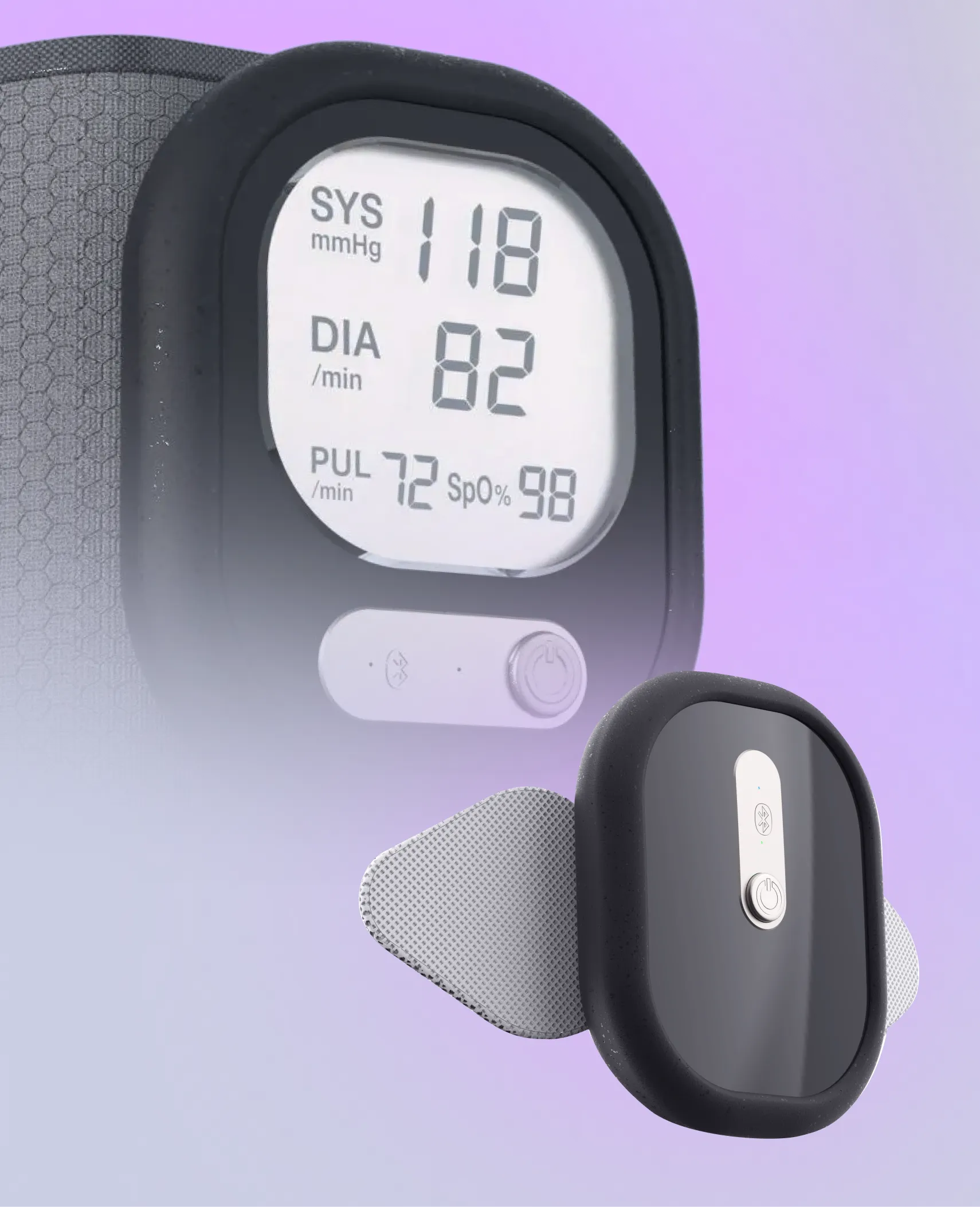
At Yalantis we build wearables end to end, so the same team writes the firmware on the device and the app people open every morning. That covers Apple Watch and Wear OS, Samsung Galaxy Watch, Fitbit and Garmin, plus IoMT sensors and hardware of your own, with the data landing in your platform or a doctor’s EHR.
Wearable App Development Services

17+
Years in
software engineering
400+
Engineers on staff
91
NPS from
client surveys
4+
Years of average
client retention
R&D
In-house
lab in Warsaw

ISO 9001
Quality management
ISO 27001
Information security
ISO 13485
Medical devices

HIPAA
Health data
GDPR
Data protection
What our wearable app development services cover
Six areas make up our wearable application development services, and you can take all of them or just the part your own team is missing.
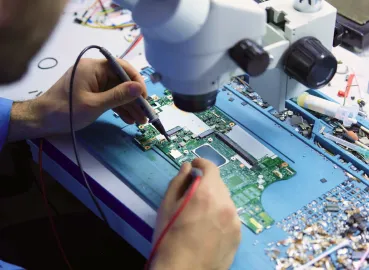
Medical wearable devices development
Our wearable device app development services start at the sensor, so we prototype early to see how your hardware behaves under real use, then write the firmware and the on-device app that keep readings steady once the unit leaves the bench.
- Wearable device prototyping
- Smartwatch OS application development
- Wear OS application development
- Custom firmware development
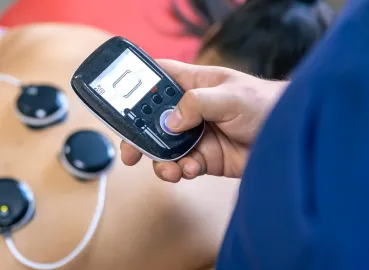
IoMT and connected devices
Our wearable IoT software development services connect monitoring devices to your platform and set the thresholds that reach a care team early enough to change the outcome.
- Remote patient monitoring (RPM) solutions
- Chronic disease management solutions
- Telehealth solutions
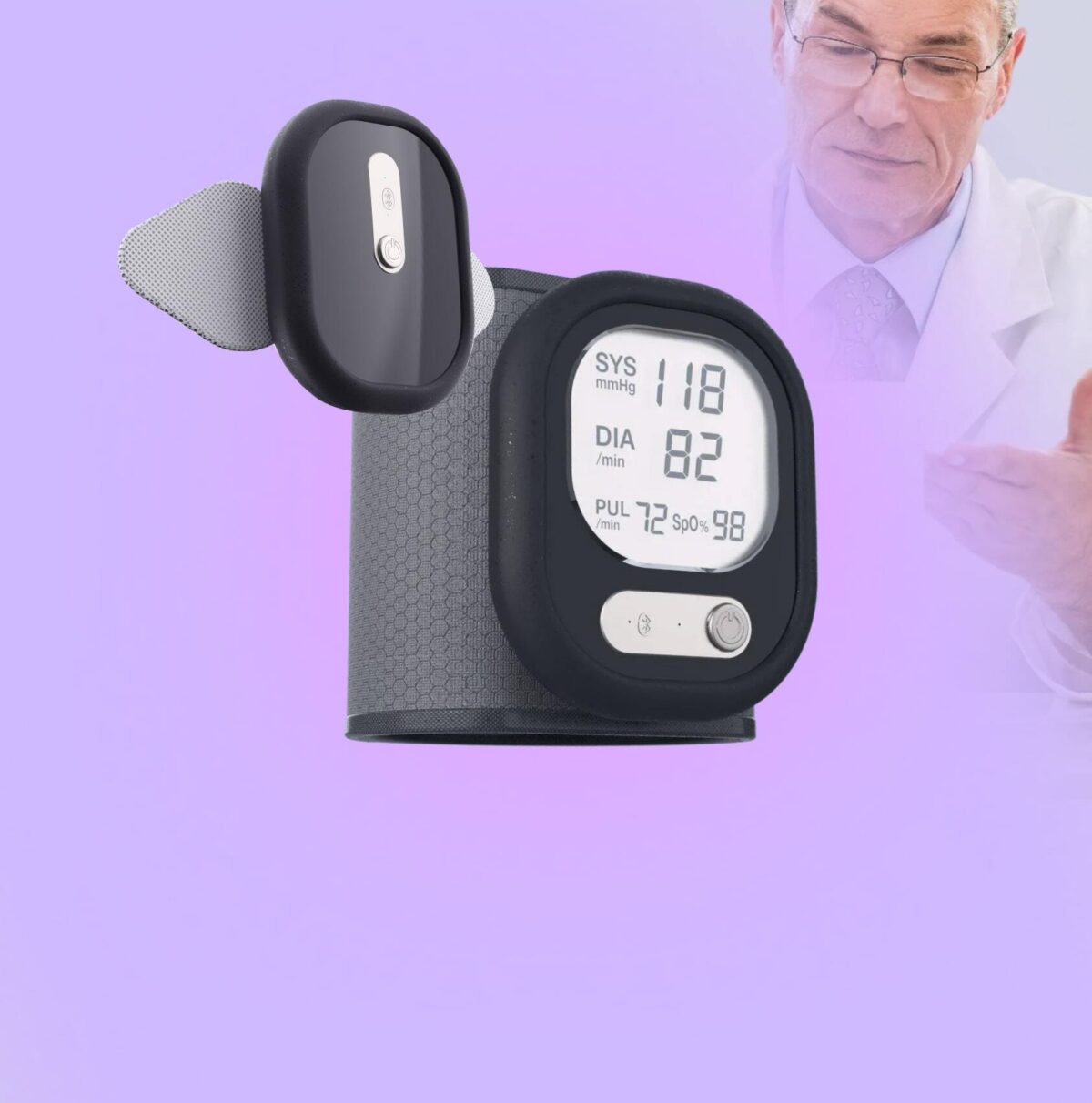
- Blood pressure trackers and blood sugar monitors
- Cardiac activity sensors
- Sleep trackers
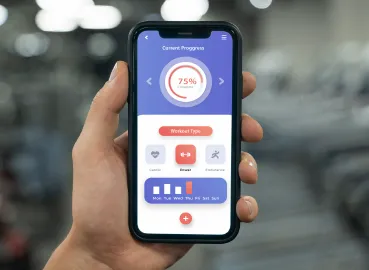
Fitness and sports tracking applications
We tune a fitness wearable or smartwatch app for numbers people trust and a screen that loads before their arm drops, then layer on the goals and the social side that bring them back.
- Workout tracking apps
- Vitals monitoring
- Performance analytics
- Goal setting and gamification
- Social sharing features
Third-party services and cross-platform integration
We wire your app into the systems you already run and map each wearable ecosystem onto your data model, so a reading taken on someone’s wrist lands in the tools your team opens anyway.
- EHR integration
- API integration
- Cross-platform data sync
- Payment gateway integration
- Third-party sensor integration
- CRM system integration
Data management and analytics
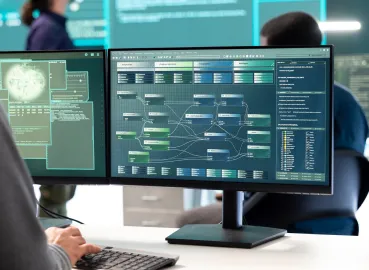
We plan wearable data storage and processing for the scale you are heading toward, then put the numbers on screens your team reads without training.
- Health data visualization
- Predictive analytics
- User behavior analysis
- Big data processing
- Custom reporting tools
- Data security and compliance

AI and ML healthcare solutions
We train models on data from wearable devices in your own fleet and validate the output against clinical review, then run inference wherever your latency budget allows, on the device or in the cloud.
- Health forecasting and anomaly prediction
- Automated diagnostic assistance
- Personalized treatment plans
- Health data visualization and reporting
- Real-time health alerts and notifications
Explore our cases
What usually goes wrong, and
how we handle it
Almost every project runs into the same challenges in wearable app development, so here is our answer to each one.
How a wearable project runs with us
Every stage of our wearable app development process closes with something you can open on a device, so you always know where the product stands.

Discovery and product definition
We start with the devices you have to support and the data that has to leave them, then agree on the regulatory path ahead and the numbers that will tell you the product is working. Cost per device and expected fleet size come up here too, because both shape the cloud design later.
Ends with: a scope you can budget against and an agreed data model

UX for a screen the size of a stamp
Once the scope is agreed, user experience work starts from a hard fact: a wrist gets about two seconds of attention, so most of the work is deciding what to leave out. We define the glance view and the alert behavior, then settle what the companion app has to carry that a watch face cannot.
Ends with: a clickable prototype running on the target device

Device and firmware layer
Right after the design is signed off, we write the code closest to the sensor: drivers, sampling, the Bluetooth profile, and a signed update path so a bug can be fixed in the field without a recall. Power draw gets measured on real hardware in our lab as features land, which is when a bad decision is still cheap to reverse.
Ends with: firmware on hardware, with measured battery numbers

Companion app
Then wearable mobile app development starts on the data coming off the device, covering iOS, the Android wearable app and the watch app where one belongs. Sync is offline first, so anything buffered on the device gets replayed once it reconnects and the app behaves the same on a subway platform as it does on office Wi-Fi.
Ends with: a build your team can install and use daily

Cloud and integrations
After that the backend goes in, with ingestion and storage tuned for time series data, plus the APIs your other systems call. This is also where the connections into your EHR and RPM tooling get built, then tested against a sandbox instance first.
Ends with: an end-to-end path from wrist to clinical system

QA, security and compliance
With the full chain running, testing covers the connected system at once, from device to cloud, because the interesting failures live in the joints between them. Endurance runs and connection loss scenarios happen here, along with penetration testing, and the documentation your auditor asks for is assembled as the tests pass.
Ends with: test evidence and a compliance record set

Launch, then the long tail
Finally, we handle submission to the app stores and the health claims review that comes with it, then watch the first weeks of real usage closely. From there the work settles into a rhythm of OS upgrades and new device generations, plus the features your users start asking for once they trust the app.
Ends with: a shipped product and a support model you can plan around
Give clinicians data they can act on the same day
Partner with Yalantis on a wearable app that puts live patient data in front of the people making treatment calls, so a change in someone’s condition surfaces while there is still time to respond to it.
Why teams pick us for wearable app development
Our wearable app development services keep the firmware and the app on one team, and everyone on it has shipped connected products before.

Wearable device integration expertise
We build for smartwatches and fitness trackers, plus devices running an OS of your own, and we have worked through the quirks each of these wearable platforms hides in its background execution rules. That experience is usually the difference between a two-week integration and a two-month one.
Tuning for the constraints that actually bite
On a wrist you are working against battery life and radio time, inside the half second of attention you get before someone looks away. We profile against all of them on real hardware, so the app stays quick and the device still has charge at bedtime.
Embedded software under the same roof
Our embedded team writes firmware built for stability and long device life, and they sit inside the same organization as the mobile and cloud engineers. When a driver and an app disagree about what a reading means, the two people involved settle it in the same standup.
An agile process that survives changing requirements
Developing wearable apps in short sprints with a demo at the end of each one keeps the product pointed at what you learned last month rather than what you assumed at kickoff. You see the same build your users will see, early and often.
Testing the connected system as a whole
Our QA team runs wearable device compatibility checks alongside the ugly cases, like a flat battery mid-sync or a phone that switched to airplane mode at the wrong moment. Those are the bug reports that keep support tickets low once you are live.
A team that stays after release
A wearable app development company earns its keep after launch, so we monitor performance and ship updates based on what users actually do. Each new OS version gets handled before it breaks anything. Clients tend to stay with us past four years, and our NPS sits at 91, which mostly reflects how the work goes once the first release is behind us.
Let’s build a wearable people keep wearing
Tell us about the device and where the data has to end up. Our engineering lead comes back with a scope and a team shape, plus the two or three questions worth settling before anything starts.


The tech stack we build wearables with
What we reach for depends on your device and the compliance path in front of it, so here is what our teams use most.

watchOS

Wear OS

Tizen

Zephyr
FreeRTOS

nRF Connect SDK

ESP-IDF

Embedded Linux
Swift

SwiftUI
Kotlin

Jetpack Compose

Flutter

React Native
BLE / GATT

ANT+

NFC
Wi-Fi

LTE-M

NB-IoT
MQTT

Apple HealthKit

Health Connect

Samsung Health SDK

Fitbit Web API

Garmin Health API

HL7 FHIR/ SMART on FHIR
AWS IoT Core

Azure IoT Hub
Google Cloud

Kafka
TimescaleDB
InfluxDB

PostgreSQL

Grafana

Python

PyTorch

TensorFlow Lite
Core ML

ONNX Runtime

Edge Impulse
Health data, handled the way auditors expect
Compliance work starts at the architecture review, so the evidence is ready before anyone asks for it.
ISO 9001 – Quality management, re-audited annually
ISO 27001 – Information security, re-audited annually
ISO 13485 – Medical devices, for regulated device work
Regulations and standards we build to
HIPAA
HITECH
GDPR

IEC 62304
ISO 14971
IEC 62366-1
IEC 60601-1
FDA 21 CFR Part 11

FDA 21 CFR 820

EU MDR

ETSI EN 303 645

WCAG 2.2 AA
Testimonials



Wearable and IoT engineering insights
Articles
What Is Rust Used For? A 2026 Guide to Real Use Cases
Learn why Rust is so popular, how your business can benefit from adopting it, and market prospects for this language to learn how to find Rust developers.
Articles
How to Prevent Firmware Vulnerabilities with Secure Boot and OTA Updates
Discover how to prevent firmware vulnerabilities and how to keep connected devices secure, compliant, and recoverable at scale.
Articles
AI in Product Development: How to Automate Manual Work and Accelerate Your PDLC
Discover the AI-powered product development lifecycle framework built by Yalantis
Related services and industries
Other services we provide
Frequently Asked Questions
-
What industries benefit most from custom wearable app development?
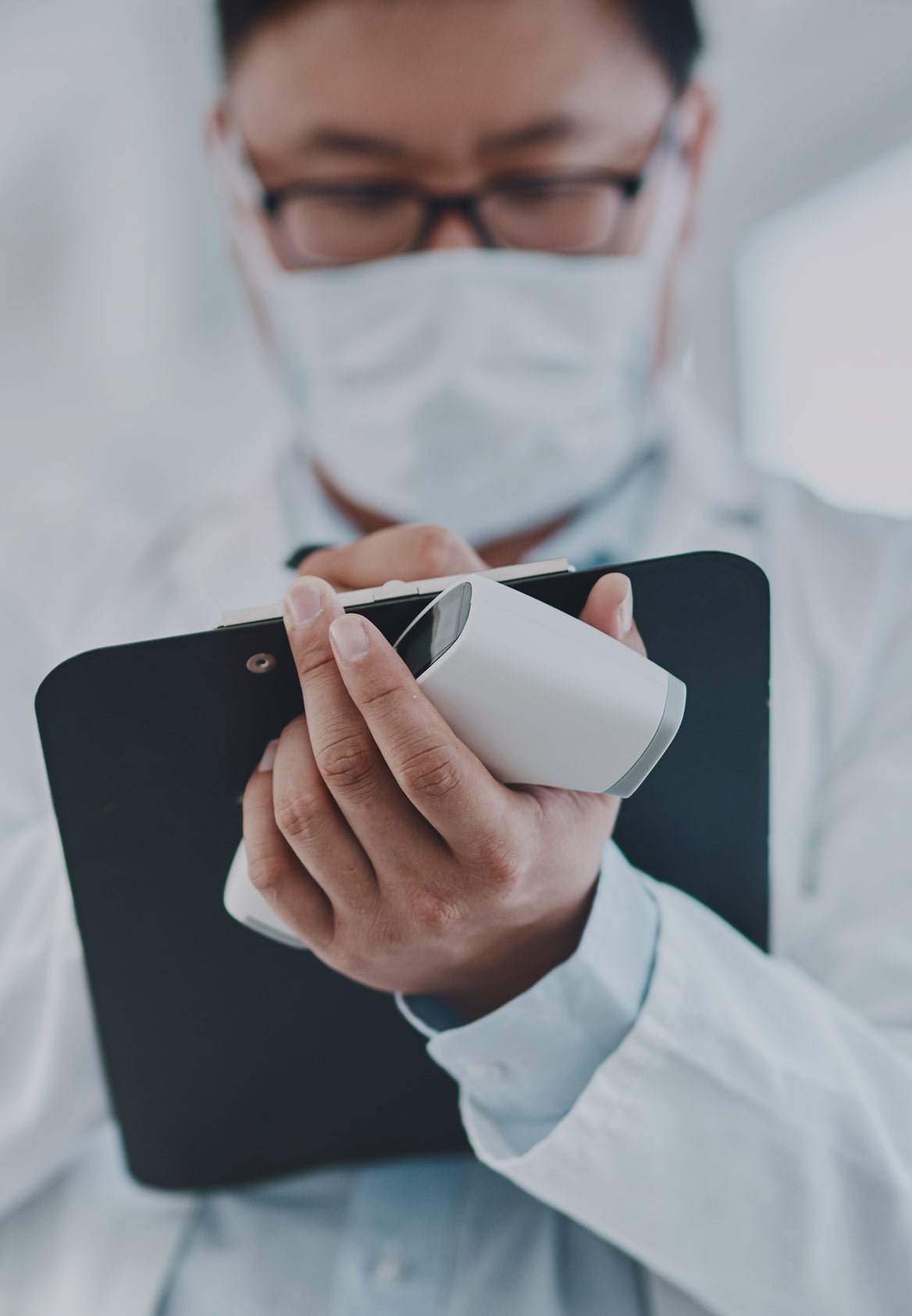
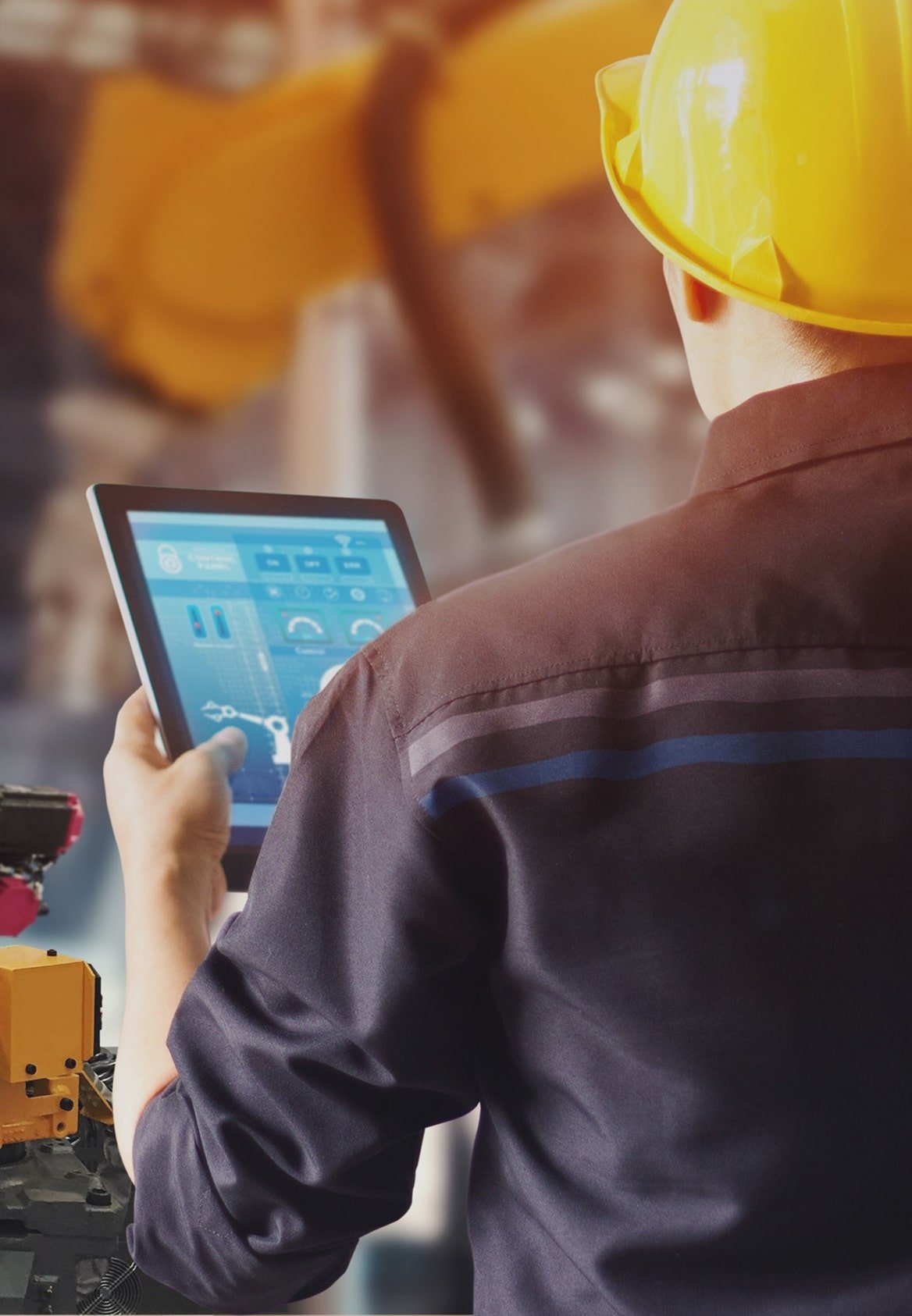
Health and fitness products and clinical care get the most out of it, since both run on data coming off a body all day. Logistics and workplace wellness follow close behind, where the question is usually where something is or how a person is holding up through a shift. The pattern is the same everywhere: if a decision depends on knowing something today, a wearable earns its place.
-
Can you integrate wearables with existing healthcare systems?
Yes, and it is one of the more common reasons teams call a wearable application development company. We connect wearable apps to EHRs and RPM platforms over HL7 v2 or FHIR, depending on what the hospital exposes, and we agree that mapping in the first weeks so nothing surfaces late.
Testing then runs against a sandbox instance, with access control and audit logging in place from the start, since those are the parts your security review will look at hardest.
-
Do you offer post-launch support for wearable apps?
Yes, and with app development for wearable devices it matters more than usual. Every new phone or watch OS release can quietly change background execution or Bluetooth behavior, which is enough to break a sync that worked fine last month, so we keep the app current and watch how it behaves in production.
-
How do you ensure HIPAA and GDPR compliance in wearable apps?
Compliance shapes the architecture here, so it is one of the first conversations we have with you.
Health data gets classified during design, then encrypted in transit and at rest. Access is tied to role, with logging behind it.Our own delivery runs under ISO 27001, and regulated device software is documented to IEC 62304 inside an ISO 13485 quality system. When your assessment comes around, there are records to hand over.
-
Can you build cross-platform apps for wearables?
Yes. Our smartwatch app development services cover Wear OS and Apple Watch, plus fitness bands and devices running an OS of your own, and the experience stays consistent across them. Cross-platform wearable app development saves time where it does not cost battery life, and Android wearable app development or native watchOS code goes in where a platform needs it.
-
How can wearable apps improve remote patient monitoring?
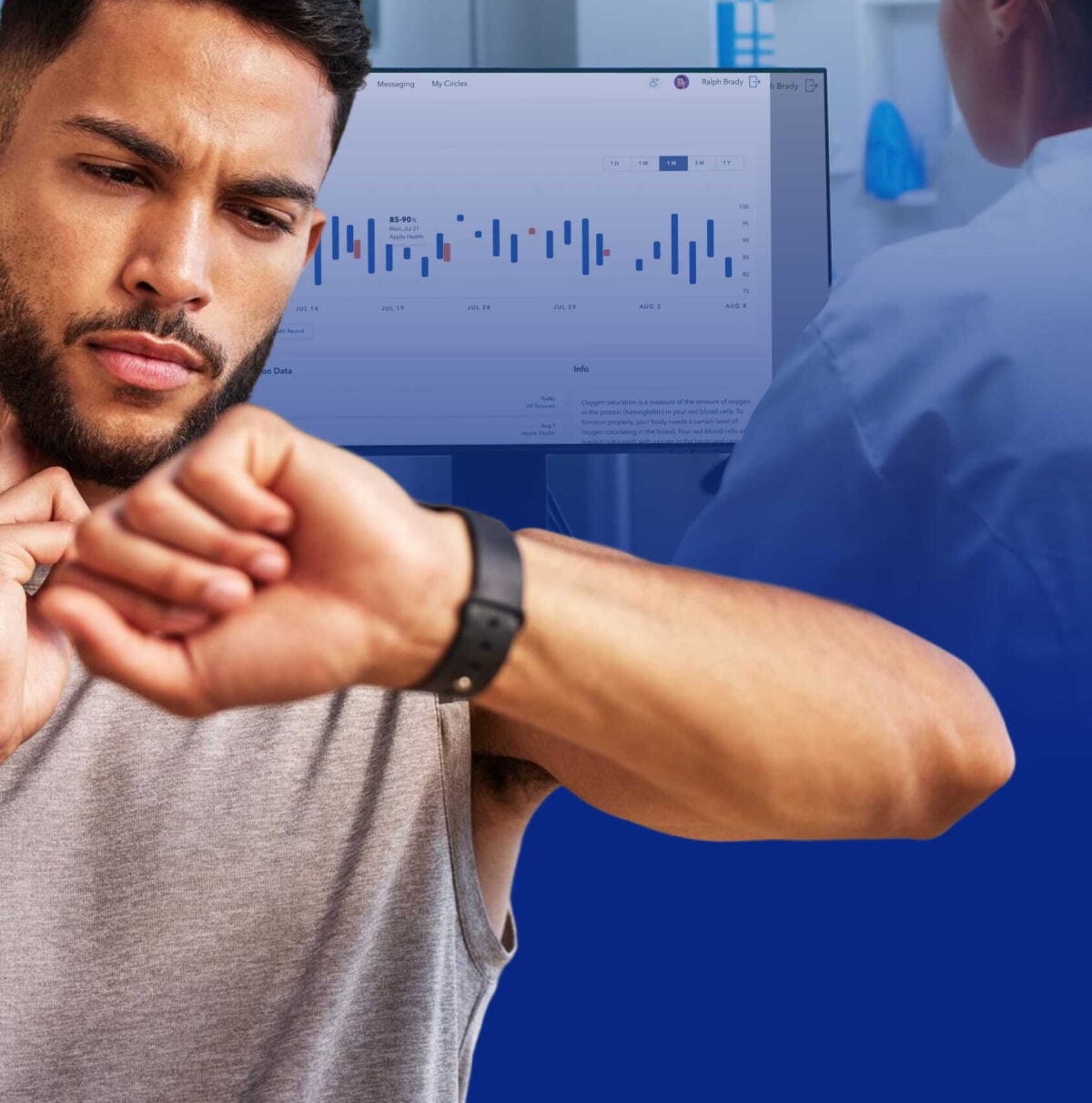
The gain is continuity. A clinic visit gives you one reading on one day, while a wearable gives you the shape of a whole month, and that is usually where the useful signal sits.
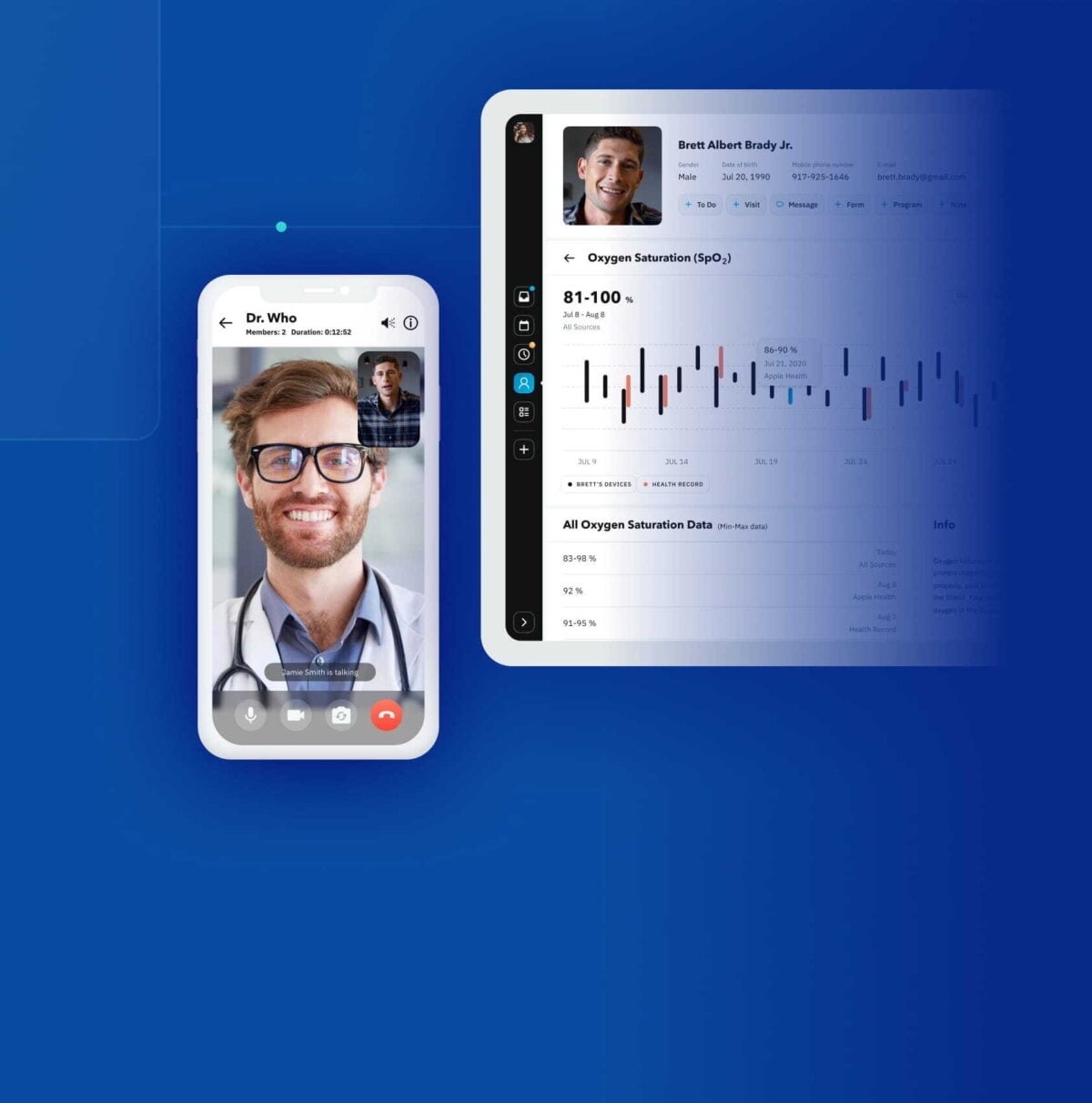
In practice we build apps that track vitals and sync them into your RPM tooling, then alert a provider once a reading crosses a threshold you set. Patients travel less, and your team hears about a problem while it is still small. -
Can you develop custom solutions as part of wearable technology app development?
Yes. Custom wearable device app development runs from validating the concept through to a finished product, including the device software when the hardware is yours. The apps we build talk to consumer wearables and to regulated medical devices, so whichever way your product goes, the data lands somewhere your team can use it.
-
How does your wearable app development support healthcare IoT?
Healthcare wearable app development and healthcare IoT sit on the same foundation: secure connectivity and a data model that holds up as the fleet grows.
So in practice the work looks much the same. We connect your IoMT devices and analyze what they send, then pass it into your EHR or RPM systems, which keeps monitoring and treatment decisions on current readings.
-
How do you keep a wearable app from draining the battery?
We treat power as a requirement with a number attached, then design toward it. Sampling rates and radio wake time get measured on the device itself, and readings are batched so the radio stays asleep longer. Anything running in the background has to earn its place.
Every build is then checked against that battery target before it goes near a release. Battery complaints are the fastest route to a one-star review, so it is worth being strict here.
How to get started with Yalantis
Leave your info and a few words about the project. We’ll review it and reach out to book a call.
Welcome to Yalantis, please fill out the form and we’ll get back to you.

Thank you for contacting us.
Keep an eye on your inbox. We’ll be in touch Meanwhile, you can explore our hottest case studies and read client feedback on https://clutch.co/profile/yalantisu0022 target=u0022_blanku0022 rel=u0022noopeneru0022u003eClutch.u003c/au003eu003c/pu003e