


Key takeaways:
- IoT remote management lets enterprises monitor and configure devices across dispersed locations without on-site visits.
- Sensors and gateways work together to make it possible to manage remote IoT devices from a single platform.
- Remote management in IoT helps logistics, agriculture, and manufacturing teams cut costs and prevent equipment failures.
- Cloud platforms keep remote IoT devices synchronized, updated, and recoverable after going offline.
- A secure IoT remote connection relies on certificate exchange, user permissions, and auto-provisioning.
- To manage IoT devices remotely at scale, you need onboarding, real-time alerts, and troubleshooting built into your platform.
- Organizations that control IoT devices remotely no longer need specialized on-site staff to manage IoT infrastructure on-site.
- The tools you choose early on determine how easy it will be to manage remote IoT devices as your network grows.
Remote IoT device management is now one of the most practical uses of the Internet of Things (IoT), a concept that’s been around for more than two decades. The term was invented in 1999 to promote radio-frequency identification (RFID) technology. From 2008 to 2009, the number of things connected to the internet surpassed the number of individuals using it.
Since then, interconnected devices have become mainstream. Apple, Cisco, General Motors, and other tech giants are producing IoT sensors and devices. IoT technology has been adopted by nearly every industry: manufacturing, healthcare, logistics, energy, agriculture, smart cities… the list goes on.
As these devices become more integral to our daily operations, it’s crucial to have the ability to manage them efficiently from anywhere. An IoT platform with remote access makes this possible, letting users handle devices even when they’re far from the site.
In this post, we cover everything from how IoT systems work and the cloud infrastructure that powers remote access, to the security practices and step-by-step approach that make large-scale remote management reliable.
Read on to get the full picture.
Read also: How an IoT supplier can build IoT software to attract new customers
How does IoT enable remote device management?
To achieve seamless remote IoT device management, two core components are essential: IoT sensors and IoT connectivity devices. Together, these elements enable reliable IoT device control over the internet.
IoT sensors
Sensors (also called end devices, physical devices, or nodes) detect various physical phenomena including heat, pressure, movement, humidity, and smoke. As sensors are expanding to new industries, the market is still growing, adding to the variety of sensors.
Sensors usually use a wireless connection to periodically send their data. As a rule, sensors must be as cheap as possible, non-volatile, autonomous, tailored to serve a specific function, and long-lasting. Considering their small size and the requirements above, enabling sensors to connect to the internet isn’t cost-effective or practical. That’s why sensors are commonly coupled with connectivity devices.
IoT connectivity devices
A separate group of IoT devices act like gateways or routers, serving as intermediaries between sensors and the internet. IoT connectivity devices can receive data from sensors using Bluetooth or specific 4G and IoT connectivity protocols that help to connect nodes to the internet, including LoRaWAN (Long Range Wide Area Network) and Sigfox.
Gateway devices collect data from sensors, pack that data, sometimes preprocess it, and send it to a web server where it’s processed. Collaborating with an experienced IoT development company can further enhance the efficiency and reliability of these processes. This collaboration can also enable predictive maintenance and anomaly detection in IoT systems through machine learning algorithms. This processing might result in:
- calculating statistics and trends
- initiating specific actions like turning on an irrigation system
- generating an alert in case of an emergency or anomaly
As one connectivity device can communicate with thousands of nodes, connectivity device manufacturers try to make these devices adaptive, autonomous, and reliable. Such a device might be equipped with a SIM card or have an Ethernet or Wi-Fi internet connection.
Also, such a device has more computing power than a sensor and lets you manage devices remotely via the internet, which is crucial for efficient remote management of IoT devices. Remote IoT device control allows the system administrators to update configurations, monitor status, and troubleshoot issues without needing to access the device physically. The availability of these capabilities impacts the cost, as a rule making a connectivity device more expensive than a sensor.

Recent innovations for improved IoT use
IoT sensors and connectivity devices are evolving. Manufacturers of such equipment are trying to expand and improve their adoption. For example, RAKwireless produces all classes of IoT devices for trending use cases and makes all its sensors compatible with all its gateways.
RAKwireless also provides IoT modules that have connectivity interfaces and several slots that can be equipped with various nodes. For instance, if you put a temperature sensor and a smoke detector into a module, you get a sophisticated fire detection system.
Additionally, the need for remote IoT system management and maintenance has led to recent cloud technology breakthroughs. IoT device management software vendors like RAKwireless or Wanesy Management Center have expanded their services to meet the demand. They help organizations take advantage of a plethora of remote device management benefits, and to effectively handle large data sets, companies often turn to data engineering for creating efficient data pipelines and storage solutions.
What are the key benefits of remote IoT device management?
Historically, many IoT vendors have required users to be in close physical proximity to IoT equipment for setup and maintenance. This is because an IoT gateway, like an internet router, requires a user to be in the coverage area to connect to it.
But in the case of enterprises, dozens of gateways are often installed in many hard-to-access and dispersed locations in order to connect with thousands of nodes. However, all these gateways still require constant setup and monitoring. Can we operate IoT devices remotely? Certainly, we can, especially with modern remote IoT management platforms that let users control devices from one place.
Let’s check out how enterprises can benefit from remote IoT system management based on examples from the logistics, agriculture, and manufacturing domains.
Logistics
According to the IoT in Logistics Market Research Report by Research and Markets, the global IoT in supply chain market is predicted to advance at a 13.2 percent CAGR from 2020 to 2030. The following supply chain divisions will benefit most from the ability to manage physical IoT remote control:
Warehousing
Forklifts, pallets, and other equipment can be tagged with sensors for easy locating. For condition monitoring, organizations can allocate sensors within a facility to track temperature, air quality, humidity, smoke, etc. Remote IoT system management usually requires one gateway per warehouse and stable IoT remote device access so teams can check data without being there.
Transportation
A report by Research and Markets points out that IoT fleet management contributed the most revenue to the logistics market among all other divisions of the IoT in logistics market from 2014 to 2019. This is partly due to enabling real-time fleet visibility. Vehicles, containers, and even valuable parcels can be equipped with sensors.
For identifying locations, logistics companies use private or public IoT networks. If using private networks, companies can place gateways in warehouses between which vehicles travel. When using public networks, companies usually get data from operator platform gateways put on roadside posts. With the implementation of an IoT data analytics platform, these systems can provide deeper insights into the collected data, optimizing operations further.
Agriculture
An agribusiness might have several fields 10 to 100 hectares in size. To ensure effective irrigation, it should consider current weather conditions, and to make that possible, sensors that monitor soil moisture and temperature can be dug into the ground.
To transmit data to gateways, sensors can use radio frequency bands that are good for agricultural purposes as they cover large areas, easily go through soil, and are energy efficient. The last characteristic ensures that such a sensor can work for several years. A gateway might be placed on a pole and is usually enough for a field.
With tools to manage IoT devices remotely, farmers don’t need to visit every field to get sensor data.
Manufacturing
According to Statista, in 2020, 57 percent of global IoT manufacturing spending was on devices responsible for factory automation. This is because effective field device management helps reduce costs related to equipment maintenance and operations.
One use case for remote management in IoT of field devices is in factories that have to follow strict clean air rules. Equipment like filters and turbines must be adjusted to ensure the required level of air purity.
To remotely monitor this equipment’s performance and predict failures, sensors measuring air noise and pressure, the presence of microparticles, and other readings can be placed all over the equipment. A gateway, usually put on the ceiling, can then send this data to employees responsible for the equipment monitoring, helping to prevent costly consequences of air pollution.
This kind of setup is part of a growing trend in industrial IoT solutions, where connected systems help factories operate more efficiently and respond to issues faster, making IoT predictive maintenance for manufacturers an increasingly viable and valuable strategy.
IoT vendors are increasingly ensuring the above-mentioned capabilities of remote device management to meet the growing demands and expand their business. That’s where cloud platforms give a helping hand.
How does the cloud help manage IoT devices remotely?
Leading cloud providers like AWS, Microsoft Azure, and Google Cloud offer specialized cloud infrastructure and approaches to organizing remote IoT network management. These systems are called IoT management platforms, and they provide users with the following key benefits.
Smooth synchronization between software and hardware
Along with data centers, cloud providers allow their customers to use a range of services for IoT infrastructure maintenance. These services help to ensure quality synchronization between software and physical devices. For example, AWS provides its IoT Device Shadow service.
As part of this service, a so-called “shadow” is assigned to each gateway in a network. This shadow is literally a cloud infrastructure counterpart of a particular device. The shadow constantly synchronizes with its device and has a list of all parameters that need to be set. Respectively, the gateway reports to the shadow the gateway’s current settings and statistics, while the shadow sends updates to the gateway.
Want a simpler way to manage your connected devices?
Our IoT remote management solutions are built to do just that.
Automated gateway setup and maintenance
Before moving to the cloud, technologies didn’t allow for automated multiple gateway management. But manually setting up large sets of gateways one by one is extremely time-consuming.
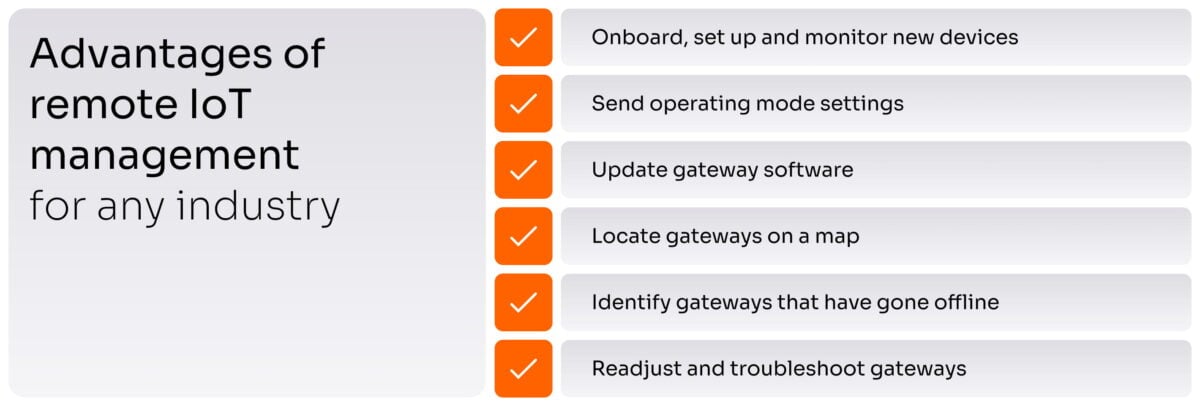
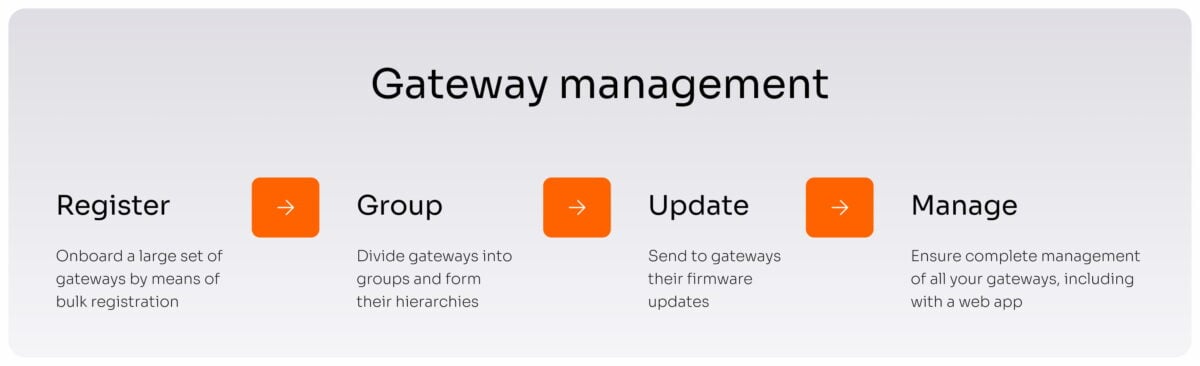
Cloud technology helps an organization see all its gateways and ensure various business flows. These flows may include combining gateways in networks and tagging gateways to group them by different parameters (indoor or outdoor, with or without a GPS module, old or new). Through grouping gateways by different parameters, an organization can perform large-scale setup in just one click.
An IoT manufacturer can see all gateways it has produced, remotely connect IoT devices over the internet, and perform emergency firmware updates if vulnerabilities are detected. In turn, customers can download firmware updates from a centralized place. This setup also supports remote IoT device update, so changes can be applied without on-site access.
High fault tolerance
Gateways might periodically go offline due to signal fluctuations. However, if a gateway is offline when settings are sent, those settings will not be received by the gateway. A cloud system that’s available 24/7, however, can receive and record all data. When the gateway comes back online, it can synchronize with the cloud to get all the updates it missed.
To benefit from the abovementioned advantages, an IoT provider needs to follow the cloud migration strategy we talk about next.
What are the steps to manage IoT devices remotely?
IoT vendors like RAKwireless, Wanesy Management Center, and Gemtek have already managed to provide their customers with remote IoT device management platforms that are in active use. Such IoT providers also enable customers to perform automated gateway setup and maintenance. This is especially helpful for large organizations that manage multiple large-scale and fast-growing networks of remote internet access IoT devices in different locations.
Such software solutions are tailored to network administration experts not requiring specialists with IoT infrastructure expertise within an organization. These IoT remote management solutions incorporate ready-to-use tools for managing IoT infrastructure as well as give users practical insights into how to remotely control IoT devices at scale.
To ensure such IoT network management, an IoT provider needs to take three important steps. Let’s look at them one by one.
Step 1. Expand your IoT infrastructure
As a starting point, an IoT provider might have only hardware infrastructure. The provider may manufacture gateways and have an R&D department that develops firmware — software installed on a gateway’s memory chip that turns the gateway into a smart device. To expand this infrastructure, an IoT provider starts using an IoT management platform offered by a cloud provider. Companies can also invest in embedded firmware development for IoT devices to create robust and secure firmware for gateways, ensuring smooth remote management across large-scale networks.
Step 2. Ensure synchronization between the cloud and gateways
Although an IoT management platform like AWS provides tools for ensuring synchronization, your gateway firmware needs to know its shadow, how to accept settings from it, how to report data to it, and how to perform this synchronization in a reliable, secure manner.
This requires you to tune your gateway firmware and set up cloud services to enable two-way synchronization, as this service usually isn’t offered by a cloud provider. Independent technology providers with IoT expertise like Yalantis can set up your IoT management platform.
Enabling synchronization between a cloud service and gateways allows any external software service — for example, a gateway onboarding platform — to communicate with a gateway. This is ensured via the cloud service, which is always online and whose connection rules are clear.
When you’ve achieved the goal of quality synchronization between the cloud, shadows, and your gateways, proceed to the next step.
Step 3. Enable users to remotely manage devices and gateways
An IoT provider needs to offer customers an effective tool for easy IoT network management. This tool should help network administrators from the customer’s side manage all the company’s IoT networks and control IoT devices remotely, without depending on physical access to each site.
Overall, such a remote IoT management system has to:
- have specific features like different scales of device maintenance
- offer reporting capabilities and troubleshooting tools
- be secure by providing audit logs and user permissions
What challenges might you face as you manage IoT devices remotely?
How to control IoT devices in a secure and reliable manner? Enabling your customers to take advantage of remote IoT management is a challenging task with lots of hidden pitfalls. In general, they are related to the following aspects.
Data security
Before moving to the cloud, you had to be close to a gateway and know its local password to manage it. But with the cloud, your system becomes vulnerable to cyber attacks and viruses. In addition to implementing strict user permissions dictating which user can detect and manage a particular gateway, consider these practices.
To enable a gateway to securely communicate with the cloud, you should establish a secure communication channel. One way to do this is to exchange certificates between a gateway and the cloud. Thereby, other hardware can’t address the cloud provider’s account because it lacks the correct certificate. These layers of protection are critical. They often rely on well-designed IoT security that address the unique risks of connected systems.
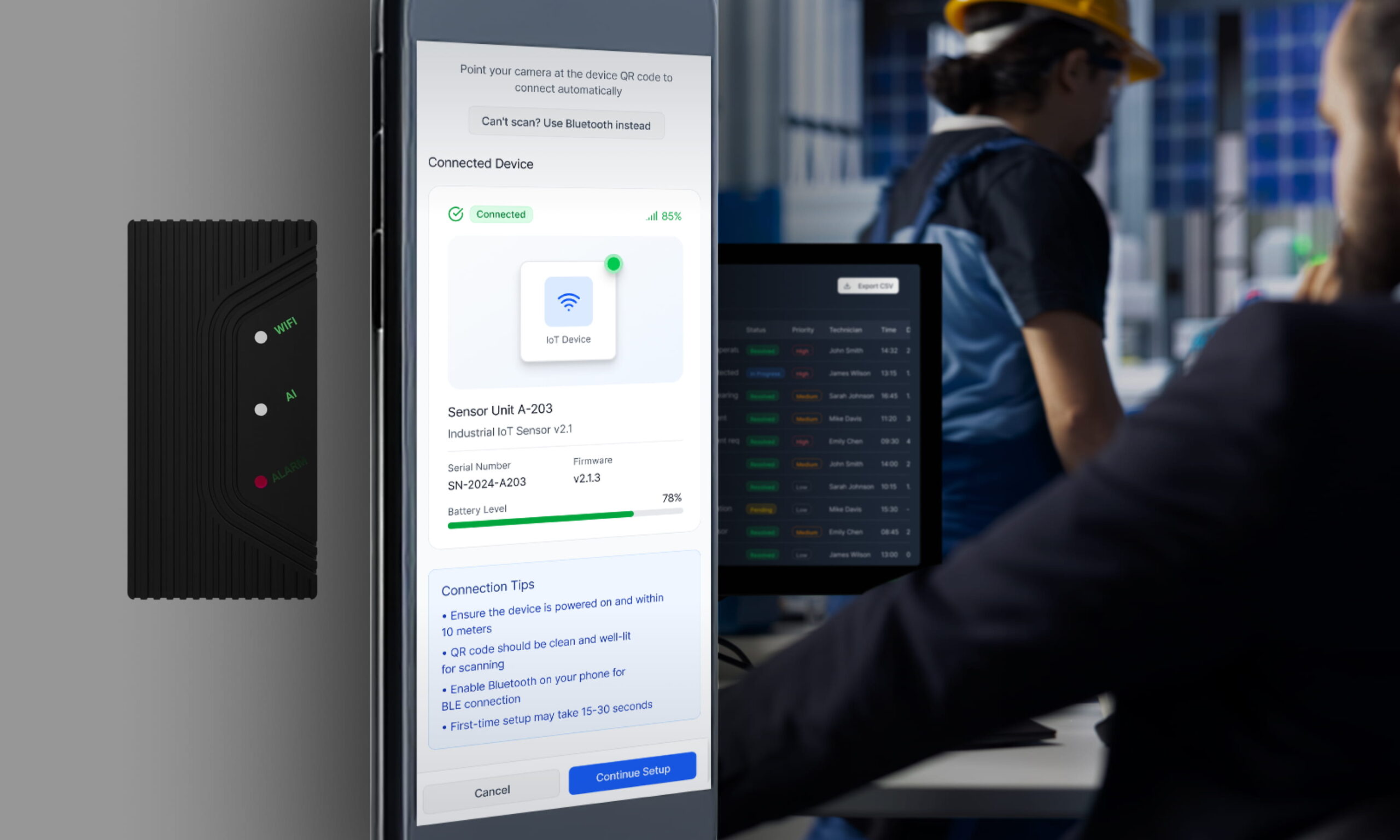
To establish a secure channel between the cloud and a client-facing app, your gateway should be able to auto-provision, register in the cloud, and ask the cloud for service. Then the end user needs to be able to onboard their gateway via the user-facing app. To do that, the user enters the gateway’s unique serial number into the system. To help the user prove their gateway ownership, IoT providers implement various approaches. They might include adding a field to a gateway interface where a user has to enter a unique buyer ID or accompanying the gateway serial number with an additional key.
Ensuring secure IoT remote device management involves combining these steps with strict certificate handling, permission control, and cloud-based validation.
Asynchronous/synchronous interactions
Your web platform should support both asynchronous and synchronous interactions, since gateway setup performed via the cloud is partially asynchronous. When the cloud-facing platform communicates with the cloud, it accepts data and requires you to wait until the cloud sends data to the gateway.
But it’s often impossible to implement standby mode within the platform architecture (for example, in case of using the serverless approach). To enable asynchronous interactions for the RAKwireless app, we ensured continuous bidirectional gateway data synchronization based on AWS IoT Core shadows and adding specific business logic flows.
Some systems also need a plan for IoT remote troubleshooting, especially when network delays or offline devices are common.
Web platform architecture
While designing a web platform architecture, you should consider not only support for asynchronous/synchronous interactions. As IoT equipment has limited computing power, it can take a long time to do things like apply lots of settings on the hardware device side. Such long operations might exceed the existing cloud API gateway timeout.
For the RAKwireless web app, we built an architecture based on serverless Lambda that ensures additional mechanisms for supporting long-running operations. To meet the AWS API timeout requirements, we used job processing and polling mechanisms.
On top of that, managing IoT devices behind a firewall brings its own challenges, as restricted ports or Network Address Translation (NAT) settings can interfere with cloud access.
If you choose to implement a serverless architecture to make the system cost-efficient, keep in mind that this type of architecture is challenging for ensuring long-running operations, asynchronous operation support, security, and fault tolerance. These challenges make developers come up with non-standard architectural mechanisms.
We hope this post on how to manage remote IoT networks was helpful. If you decide to cooperate with a technical partner to provide your customers with quality remote IoT management services, make sure your partner knows how to handle the pitfalls associated with implementing the solution we described in this post. We have been helping IoT solution providers for years. Check out how we provided one of our such clients with long-term team augmentation services. Our technical team will gladly help you expand your IoT remote management capabilities and successfully enter the enterprise segment of the IoT market.
Need a technical partner for ensuring remote IoT management?
We make remote IoT management hassle-free.
How Yalantis builds remote IoT device management solutions
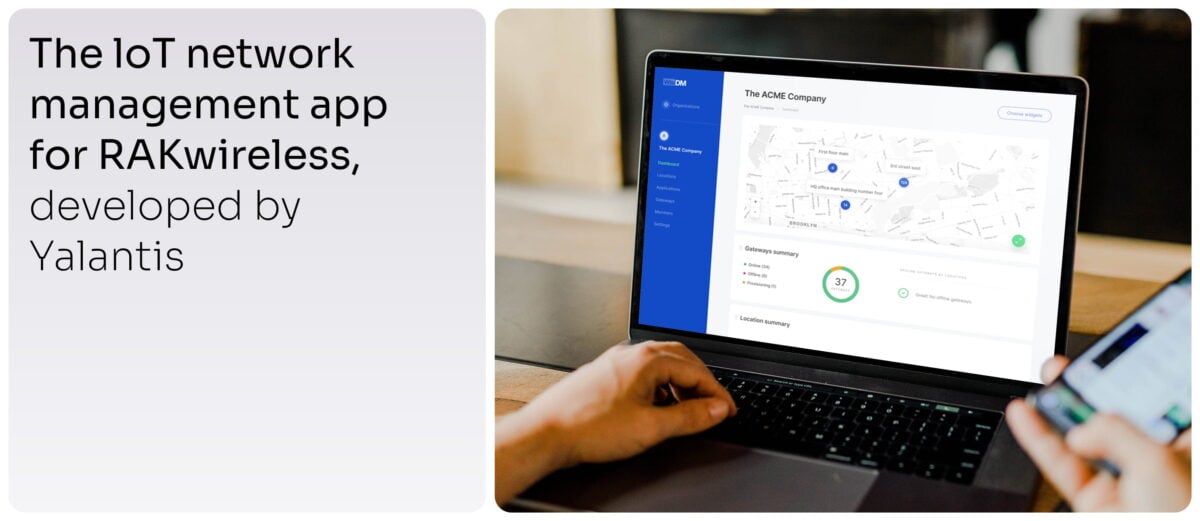
At Yalantis, we know remote IoT device management inside and out. A strong example of our work is the user-facing control platform we developed for RAKwireless.
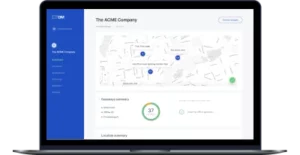
The SaaS web application interacts with our client’s IoT management ecosystem through the AWS IoT Core message broker. New gateways auto-provision to AWS IoT Core and provide technical characteristics that help users locate, onboard, and configure gateways. Users can remotely update gateways and receive near real-time alerts if their equipment goes offline. This kind of result requires both strong technical architecture and hands-on experience with real-world IoT deployments.
Based on our valid expertise, we have created an article about the SaaS migration strategy that may be useful to you.
If you need an IoT software development company that knows remote management inside out, we are ready to help.
Explore our software development servicesBringing it all together
Remote IoT device control is now a regular part of how connected systems work. As networks grow and spread out, teams need a way to handle devices without being there in person.
That kind of access doesn’t happen by accident. The IoT device management tools and setup you choose early on will shape how your system works later, and how much effort it takes to keep it running.
Getting this right early on can make your system easier to manage and keep your team focused on day-to-day work.
Managing a platform with growing demands?
Our IoT systems already support 1M+ devices worldwide. Ready to set up something similar?
FAQ
What is IoT device management?
At its core, IoT device management is the process of monitoring, configuring, and maintaining connected devices remotely. It covers everything from onboarding new devices and pushing software updates to troubleshooting issues and tracking performance, all without needing to be physically present at the device location. For enterprises managing hundreds or thousands of devices across multiple sites, having a solid device management system in place is not optional, it is essential.
Can IoT devices be updated remotely?
Yes, and this is one of the biggest practical advantages of remote IoT management. Over-the-air (OTA) firmware updates let you push changes to thousands of devices at once without sending anyone on-site. Cloud platforms like AWS IoT Core handle the delivery and make sure devices that were offline during the update catch up automatically once they reconnect.
Are IoT devices remotely controllable?
Yes, absolutely. Modern IoT devices can be monitored, configured, updated, and troubleshot entirely remotely through a cloud-based management platform. The key is having the right infrastructure in place, specifically a gateway with sufficient computing power, a reliable cloud connection, and a well-designed management platform sitting on top of it all.
How do you secure remote access to IoT devices?
Security in remote IoT management comes down to several layers working together. Certificate-based authentication ensures only authorized devices can communicate with your cloud account. Strict user permissions control who can access and configure which devices. Auto-provisioning with unique serial numbers prevents unauthorized onboarding. And keeping firmware updated regularly closes vulnerabilities before they can be exploited.
How can you ensure remote management of IoT devices?
IoT device management is performed by accessing IoT devices in order to track and manage their functioning distantly. This can be done using remote IoT device management software. It helps to remotely reveal problems with particular parts of equipment to be examined and solved before they affect the entire system. In the absence of effective IoT remote management software, businesses can’t use their IoT devices effectively and monitor the system’s operational status.
A reliable remote IoT device platform also allows businesses to stay connected to their devices around the clock, even in remote or hard-to-reach locations.
What cloud platforms are commonly used for IoT remote management?
The big three, AWS, Microsoft Azure, and Google Cloud, are the most widely used, and for good reason. They’re reliable, scalable, and come with purpose-built IoT tools. We work a lot with AWS IoT Core specifically. It handles device synchronization really well, keeps things running even when a gateway briefly goes offline, and makes auto-provisioning straightforward. That said, the right choice depends on your existing infrastructure and specific needs.
What is the best protocol for IoT remote control?
It depends on your use case. LoRaWAN works well for long-range, low-power scenarios like agriculture or smart cities. MQTT is widely used for lightweight, real-time data exchange between devices and cloud platforms. Sigfox suits applications that send small amounts of data infrequently. There is no single best answer, but choosing the right protocol early on has a significant impact on how your system performs at scale.
Which industries benefit most from remote IoT device management?
Quite a few, but logistics, agriculture, and manufacturing tend to see the most immediate impact. In logistics it’s about knowing where your fleet is at any given moment. In agriculture it means farmers stop driving out to every field just to check a reading. And in manufacturing, teams can monitor equipment around the clock without sending anyone on-site. The common thread is that it saves time, cuts costs, and reduces the kind of surprises that turn into expensive problems.
How do you manage IoT devices behind a firewall?
This is a common challenge. Firewalls with restricted ports or NAT settings can block the cloud connection your devices need. The typical approach is to configure outbound connections from the device side rather than relying on inbound access, which most firewalls allow by default. In more complex setups, VPN tunnels or dedicated IoT connectivity brokers like AWS IoT Core can bridge the gap securely without requiring you to open up your firewall.
Can you integrate remote IoT management into our existing infrastructure?
Yes, we can. We’ve done this many times and still support projects where we’ve built remote IoT management into existing systems. Our team includes specialists who focus on this kind of work. Reach out to us, and we’ll find the best solution for your setup.
What is the cost of building an IoT remote management system?
It depends on your requirements. Once we understand the scope, we’ll provide a rough estimate. For a precise figure, we usually begin with a short discovery phase. Get in touch with our team, and we’ll help you map out the best path forward.