



Yalantis tests connected products as a full-cycle IoT partner. The same engineers who test your system also build its firmware and cloud platform, so the device and the backend it depends on get validated as one. Defects surface in our Warsaw lab long before they reach the field.
End-to-End IoT Testing Services


18+
Years
in engineering
400+
Experts
70+
End-to-End
IoT Deployments
R&D
In-house lab
in Warsaw
What our IoT testing services cover
Our IoT product testing services validate a connected system across all five of its layers, from the physical device up to the cloud backend, then check how those layers behave together.
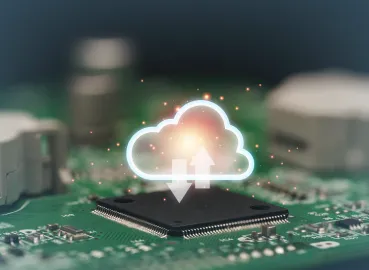
Cloud backend
We load-test the APIs and data ingestion with the traffic a full fleet generates, then confirm the data that lands is actually correct.
- API response times when the whole fleet reports in
- Whether readings arrive complete and in order
- Dashboards and stored history under sustained load
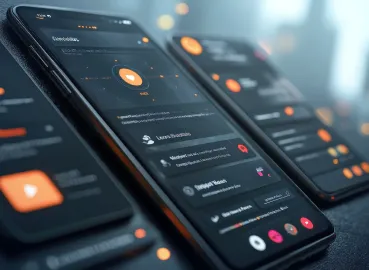
Mobile and web apps
Testing starts with pairing and onboarding, then moves to the app running against live device state rather than mocked data.
- First-run setup and pairing on real hardware
- What the app shows when a device drops offline
- The Android and iOS versions your users actually run
Connectivity
Every link gets tested under packet loss and weak signal rather than on a clean office network.
- MQTT, CoAP, BLE, LoRaWAN, and cellular links
- Reconnection and message recovery after a drop
- Network handoff as devices roam between regions
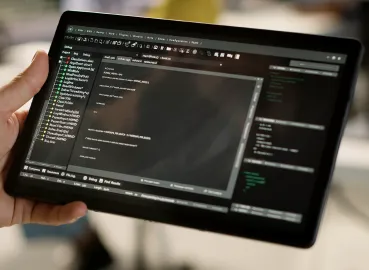
Firmware
The OTA update agent gets the most attention here, since one bad build can strand a device in the field.
- Interrupted updates and clean rollback
- Secure boot and signed-image checks
- Embedded logic on the real hardware
Device hardware
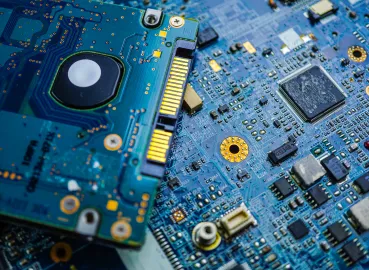
Physical units go through real field conditions in our Warsaw lab until something gives.
- Temperature cycling and power brownouts
- Sensor and radio accuracy at the edges of spec
- Whether the device recovers on its own
Explore our cases
Types of IoT testing we perform
A connected product can fail in any layer or in the handoff between two, so a comprehensive IoT testing program covers each test type below, scoped to your product.

Functional and integration testing
We verify that every feature behaves as specified, then check interoperability across the handoffs between layers, so a change in one component never silently breaks another.
IoT device and hardware testing
Our IoT device testing puts physical units through real field conditions in our Warsaw lab, from temperature cycling to power brownouts, with hardware-in-the-loop rigs adding scale that bench testing cannot reach.
Firmware and OTA update testing
Over-the-air updates are where many IoT products fail, so we test that a device applies a new image correctly and rolls back cleanly when an update is interrupted.
IoT app testing (mobile and web)
Our IoT app testing services check the companion app against the realities of connected hardware, from pairing and onboarding to offline behavior, confirming compatibility across the Android and iOS versions your audience actually uses.
Performance and scalability testing
A system that works for ten devices can collapse at ten thousand, so we simulate large device populations and measure throughput and message loss as the fleet grows under load.
IoT device security and compliance testing
We test the device and backend against recognized IoT threat models, probing authentication and secure boot, then fuzzing the protocols it speaks to surface security vulnerabilities. This cybersecurity work maps to OWASP IoT Top 10 and MITRE ATT&CK for ICS.
Talk to our IoT testing experts
Whether you need a second opinion on a connected product before launch or a full testing program across your device fleet, our engineers are ready to scope it with you.
What untested IoT costs you after launch
Once a connected product ships, every defect becomes expensive. Pre-production IoT testing moves those failures forward in time, to where they are cheap to fix and invisible to your users.
Field failures and truck rolls
A defect that only appears under real network conditions sends technicians on site and erodes trust in your product. We reproduce those conditions in the lab before release.
Costly recalls
Hardware and safety defects discovered after shipping can force a recall across an entire production run. Lab validation catches them while a fix still means cutting a new build instead of running a logistics operation.
OTA updates that brick devices
A failed firmware rollout can turn a connected fleet into dead hardware overnight. We validate rollback and recovery so an interrupted update stays survivable.
Delayed certification
Missing test evidence stalls FDA and CE submissions for months. We generate the documentation alongside the testing, so the evidence is ready when you file.


How our IoT testing process works
A structured, milestone-driven workflow that takes your product from a test strategy to compliance-ready evidence, backed by a physical lab in Warsaw.

Test strategy
We start by mapping your product’s architecture and risks against its target certifications into a single test plan. Critical paths and regulatory requirements are identified up front, so coverage is deliberate from day one.

Test design
Then we write test cases and acceptance criteria for each layer and design the integration tests that cover the handoffs between them. Automated and manual coverage is decided per case based on risk and repeatability.

Environment setup: physical and simulated devices
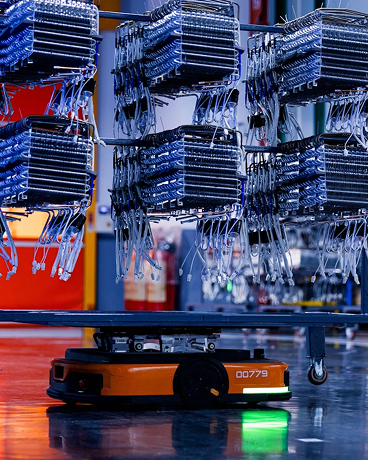
Right after that, we assemble the test environment, combining physical units in the Warsaw lab with simulated device fleets for scale. Hardware-in-the-loop rigs and protocol simulators let us reproduce field conditions on demand.

Execution and automation
Once the environment is live, tests run across hardware and simulated devices, wired into your CI/CD pipeline so regressions are caught on every build. Defects are logged with the evidence needed to reproduce and fix them quickly.

Reporting and compliance evidence
Finally, you receive structured reports tied to requirements, plus the documentation packages your regulatory compliance submissions depend on. Every test result is traceable back to the requirement it verifies.
Standards, certifications, and compliance
Compliance with industry standards is part of how we test, from the first test plan to the final evidence package. We hold the certifications regulated clients require and test against the frameworks their products are measured by.

ISO 13485 Medical device quality ISO 27001 Information security ISO 27701 Privacy management ISO 9001 Quality management

IEC 62443 Industrial OT security IEC 60601 Medical electrical safety IEC 62304 Medical software lifecycle
ISO 26262 Automotive functional safety

21 CFR 820 US quality system readiness

EU MDR EU medical device readiness

OWASP IoT Top 10 IoT security testing

ATT&CK ICS ICS threat modeling
Our IoT testing tools and infrastructure
We combine a physical test lab with simulation and automation, drawing on the tools and technologies needed to test a single prototype or a simulated fleet of thousands against the same suite.
Hardware-in-the-loop, simulated device fleets, Warsaw R&D lab, protocol simulators, environmental chambers

MQTT

CoAP

LoRaWAN

Modbus

OPC UA
BLE

Zigbee

Wi-Fi

cellular/LTE-M
CI/CD-integrated automation, cloud load testing, protocol fuzzing, boundary scan
OWASP IoT Top 10
MITRE ATT&CK for ICS
Our IoT testing
success stories
A selection of connected products our engineering teams have helped test and validate, with outcomes drawn from each published case study.









Find what your testing is missing
Already shipping but seeing field failures or OTA rollbacks you cannot reproduce in the lab? Our engineers review your test strategy and coverage across all five IoT layers and deliver a gap analysis report: what is covered, what is not, where the field-failure risk is highest, and what testing you need to add for your target certifications.
Why teams choose Yalantis for IoT testing
Most IoT testing companies either lack the hardware to test devices physically or lack the engineering depth to test them as full IoT systems. Yalantis has both.
An in-house IoT test lab in Warsaw
We run a physical R&D and test lab with hardware-in-the-loop rigs and environmental testing, so hardware quality engineering and QA happen in house. Most software-focused IoT firms outsource device testing entirely, which is where integration gaps hide.
Certified for regulated work
Our ISO 13485 and ISO 27001 certifications, together with ISO 27701 for privacy, mean our testing processes already meet the bar that medical and security-sensitive products require.
IoT is what we do most
Around 40% of our project portfolio is IoT, so the engineers who test your product work on connected systems every day.
18+ years in regulated engineering
Almost two decades building software for regulated industries, from medical to automotive, means we understand the failure modes and compliance demands your product faces.
Testimonials from our clients









IoT testing insights

Articles
The Ultimate Guide to IoT Testing: Catch Failures Before Your Customers Do
Master the complexities of IoT quality assurance with our comprehensive guide. Learn how to validate device-to-cloud synchronization and ensure ironclad security across your entire IoT network.

Articles
How to Build an IoT Device in 2026: A Full-Cycle Guide
Full-cycle guide walks you from hardware and firmware through connectivity, cloud, and the compliance work that decides whether a connected product ships or stalls.

Articles
A Full-Cycle IoT Security Guide for 2026: From Device to Cloud
IoT security now decides whether connected products stay trusted, compliant, and ready for market. Read the guide to see how to protect every layer of an IoT system, from device hardware to cloud infrastructure.
Related services
FAQ
-
What are the main types of IoT testing?
IoT testing spans several types because a product on the Internet of Things has several layers. The core types are functional and integration testing, device and hardware testing, firmware and OTA update testing, IoT app testing for mobile and web, performance and scalability testing, and security and compliance testing. Comprehensive IoT testing services combine them, because a defect can sit in any one layer or in the handoff between two of them.
-
What certifications matter for IoT testing?
It depends on your market. Medical IoT is governed by ISO 13485 and IEC 62304, with IEC 60601 for electrical safety. Industrial systems look to IEC 62443 for operational-technology security. Information security and privacy are covered by ISO 27001 and ISO 27701, and automotive electronics align to ISO 26262. Yalantis holds ISO 13485 and ISO 27001 certifications, along with ISO 27701, and we test against the relevant industry standards and regulations as your product requires.
-
How do you test IoT devices without physical access to every unit?
We combine a small number of physical units with simulation. In our Warsaw lab we test representative hardware directly, then use simulated device fleets and hardware-in-the-loop rigs to reproduce the behavior of thousands of units publishing at once. This lets us reproduce real-world scenarios at scale that would be impractical to recreate with physical devices alone.
-
How do you test over-the-air (OTA) firmware updates?
We test the entire update path. That means confirming a device applies an update correctly, then deliberately interrupting and corrupting updates to verify clean rollback and recovery. We run updates across mixed firmware versions and over unreliable connections, including power loss mid-write, and we verify signed-image checks on every build. The goal is firmware that cannot be bricked by a failed update in the field.
-
What IoT protocols and standards do you test against?
On the connectivity side we test the protocols connected devices actually use, including MQTT, CoAP, LoRaWAN, Modbus, OPC UA, BLE, Zigbee, Wi-Fi, and cellular. On the standards side, our testing supports ISO quality requirements and IEC 62443 for industrial security, plus the medical and automotive standards relevant to your product. We also test against the OWASP IoT Top 10 and MITRE ATT&CK for ICS.
-
How does usability testing apply to IoT products?
Usability testing for IoT looks at the user experience across the device and its companion app together. We check how setup and pairing feel to a first-time user, and how clearly the app reflects device state, including what happens when connectivity drops. A confusing pairing flow or a stale app reading can undermine an otherwise solid device, so usability sits inside the test plan from the start, where we identify usability issues before launch.
-
What tooling do you use for IoT test automation?
Our automation tooling depends on the layer. As an IoT software testing company, we build automated suites for apps and APIs that run in your CI/CD pipeline on every commit. For devices we use hardware-in-the-loop rigs and protocol simulators, so automated tests can drive real hardware. For scale we use cloud load testing and simulated device fleets, and for security we apply protocol fuzzing. The aim is repeatable coverage that catches regressions automatically as your product evolves.
How to get started with Yalantis
Leave your info and a few words about the project. We’ll review it and reach out to book a call.
Welcome to Yalantis, please fill out the form and we’ll get back to you.

Thank you for contacting us.
Keep an eye on your inbox. We’ll be in touch shortly
Meanwhile, you can explore our hottest case studies and read
client feedback on Clutch.