

Bridge the data gap between clinic visits and patient home life.
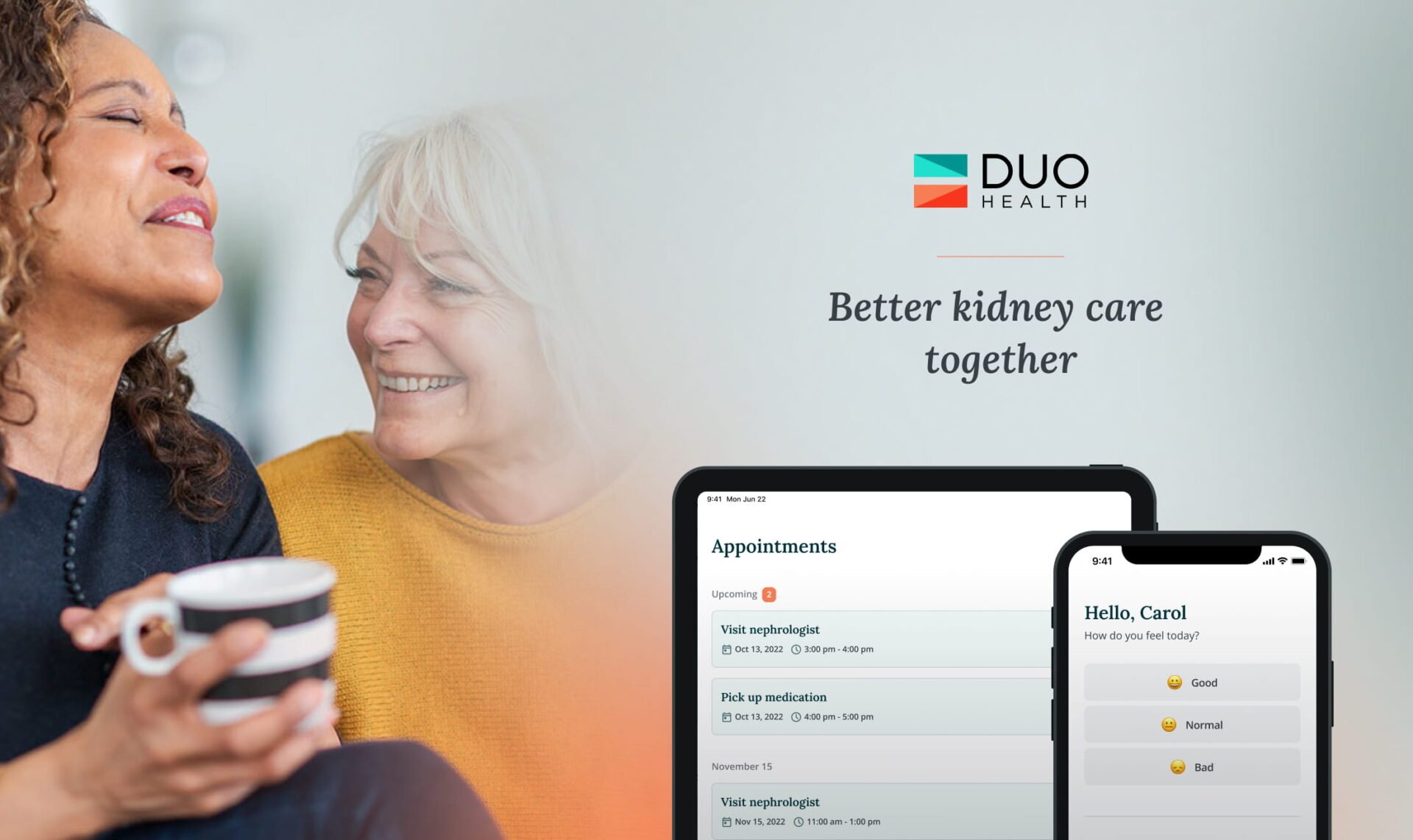
Duo Health: An EHR-Integrated Patient Portal That Automates Data Sync for Clinical Teams
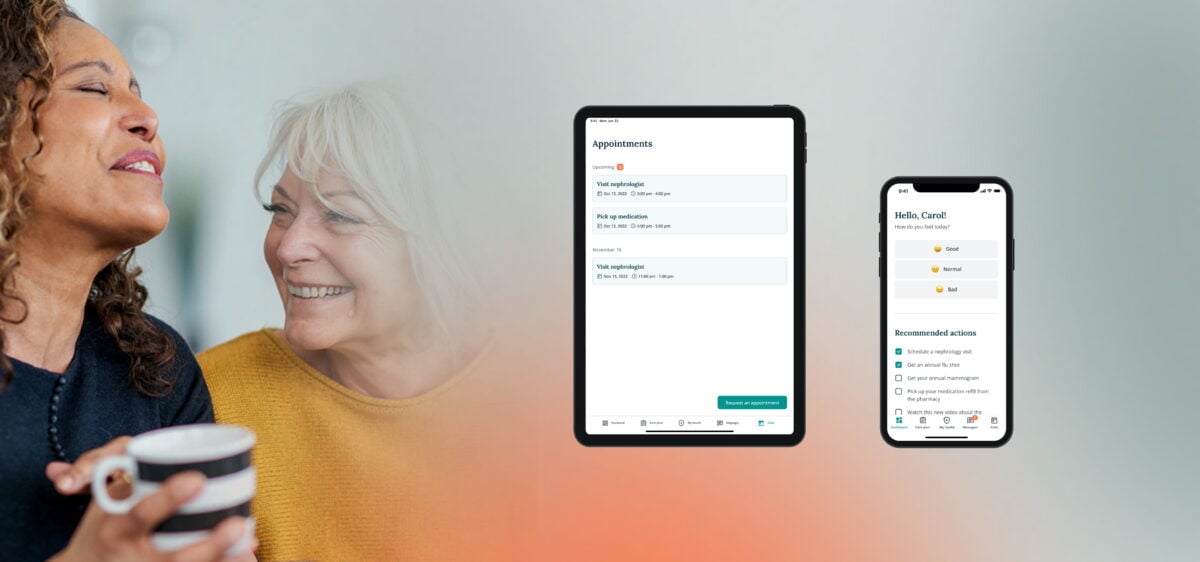
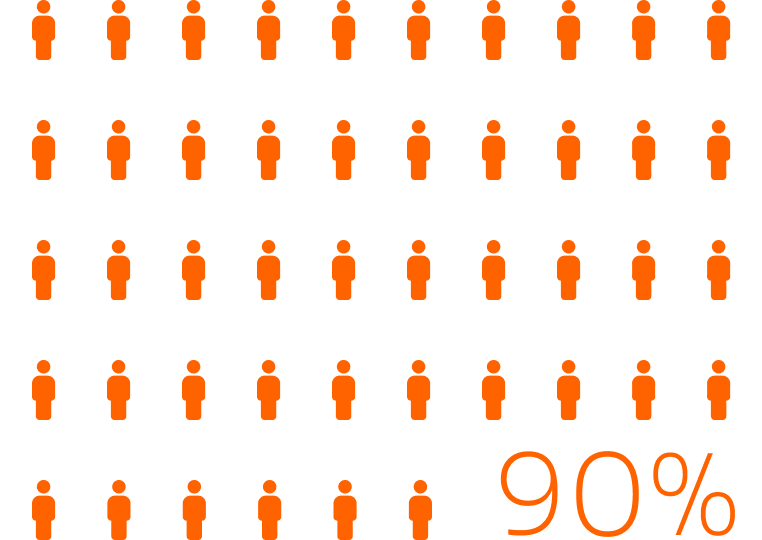
Yalantis developed a cross-platform patient engagement portal integrated with Canvas EHR and Verato, enabling real-time care coordination for chronic kidney disease patients. An accessibility-first design for elderly users drove a 90% adoption rate.
90%
Patient adoption rate
3
Month MVP launch
3
OS: (iOS, Android, Web)


Need to engage patients outside the clinic?
We build accessible digital health platforms
that drive real adoption.
A comprehensive patient ecosystem integrated with Canvas EHR and Verato
1.
Healthcare team web portal & workflow automation
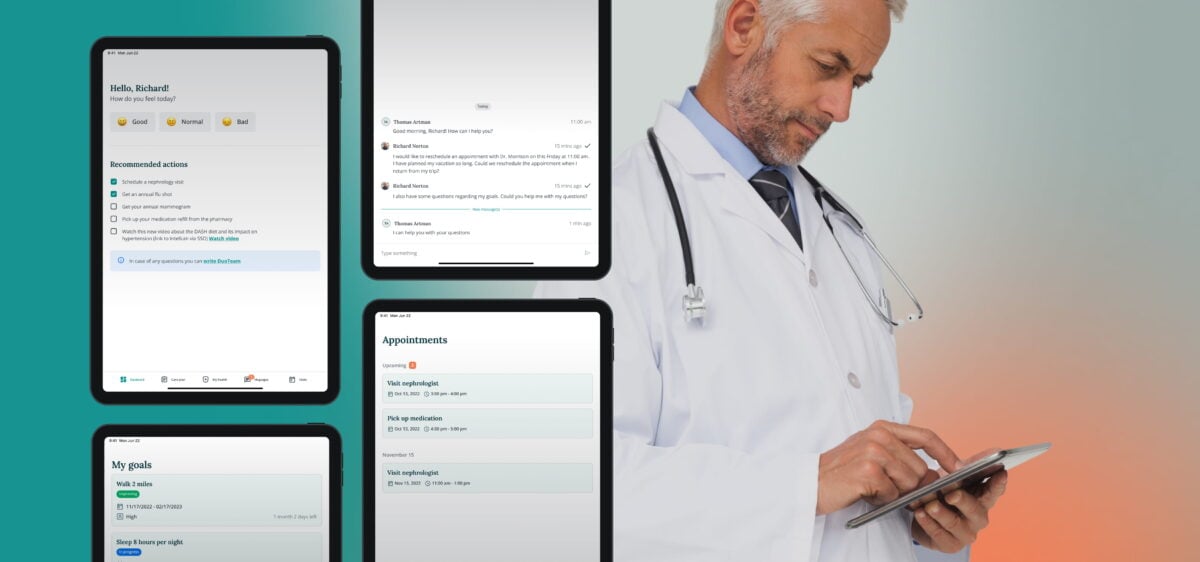
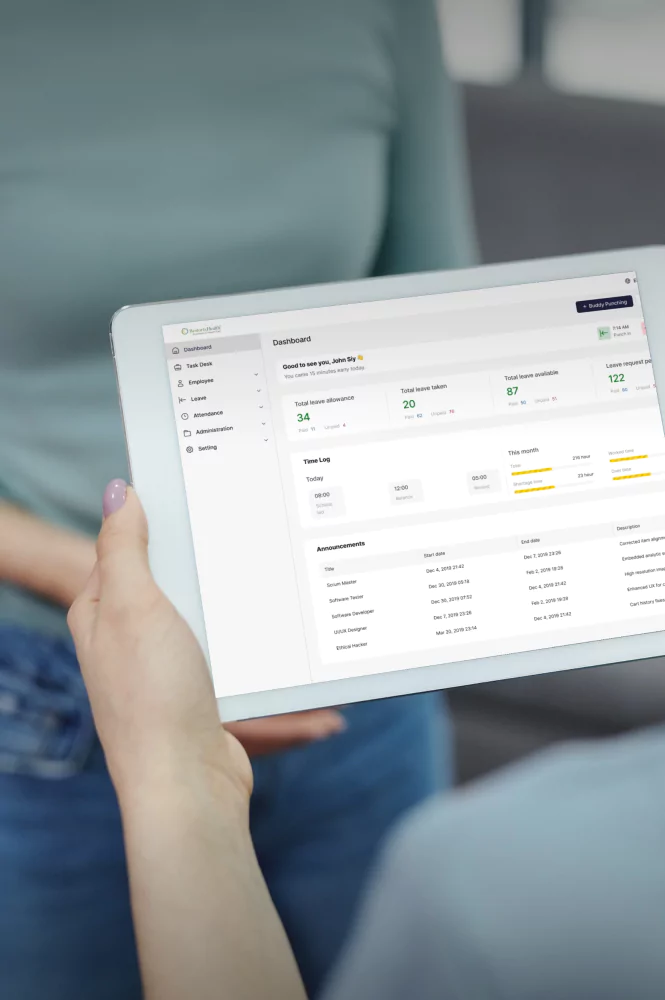
We unified the provider’s operational tools. By integrating the portal with Duo Health’s existing admin panel, Canvas EHR, and Microsoft Dynamics CRM, we created a seamless workspace for the healthcare teams. Doctors and coordinators can now manage appointments, review patient-reported data, and send HIPAA-secure messages directly from their existing EMR interface without switching between platforms.
2.
Accessibility-first design for elderly patients
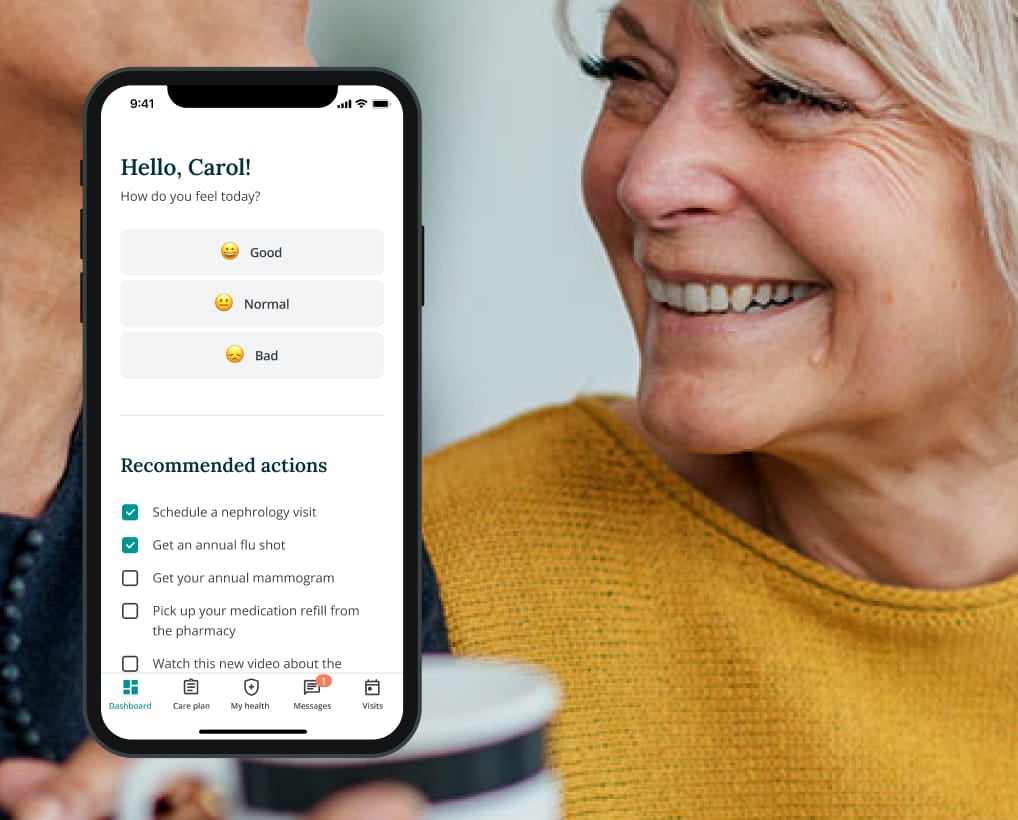
We ignored standard design trends and built for the actual user. The interface uses high-contrast color schemes, large touch targets (minimum 48x48dp), simplified navigation flows with minimal nesting, and scalable font sizes. Every screen was tested against WCAG 2.1 AA guidelines. The design accounts for patients with potential vision impairment, reduced motor control, and limited tech literacy.
3.
Bidirectional EHR integration with Canvas via Redox
We treated the patient portal as an extension of the clinic, not a separate system. We built a robust integration layer with Canvas EHR through the Redox middleware platform. When a patient updates their symptom log or sends a message, the data is automatically written into their medical record. When a doctor updates a care plan in the EHR, the patient sees it instantly in the app. No manual re-entry on either side.
4.
Master Patient Index integration with Verato
Duplicate patient records are a common and dangerous problem in healthcare. We integrated Verato’s referential matching engine to ensure that each app user is definitively matched to the correct record in the clinical database. This prevents scenarios where treatment decisions are made based on the wrong patient’s history.
5.
Digital triage and secure messaging with intelligent routing
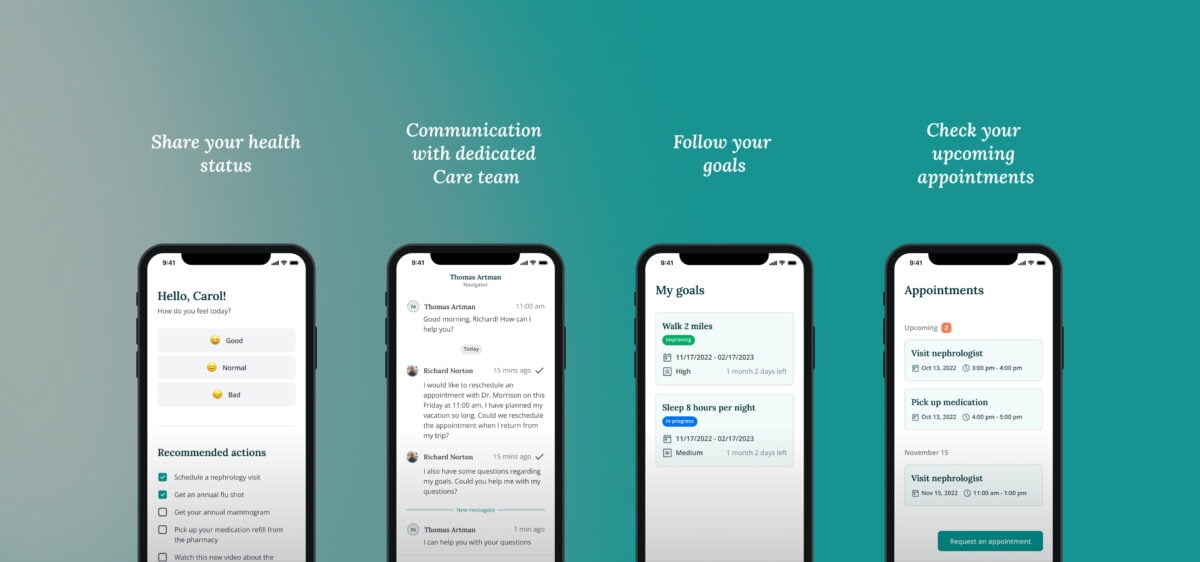
We implemented a HIPAA-compliant messaging system where patients can text their care team directly from the app. The system uses intelligent routing: urgent clinical questions go to a nurse, administrative questions (scheduling, refills) go to a coordinator. This ensures rapid response times without overloading clinical staff.
How we built a digital safety net for chronic kidney disease patients in 3 months
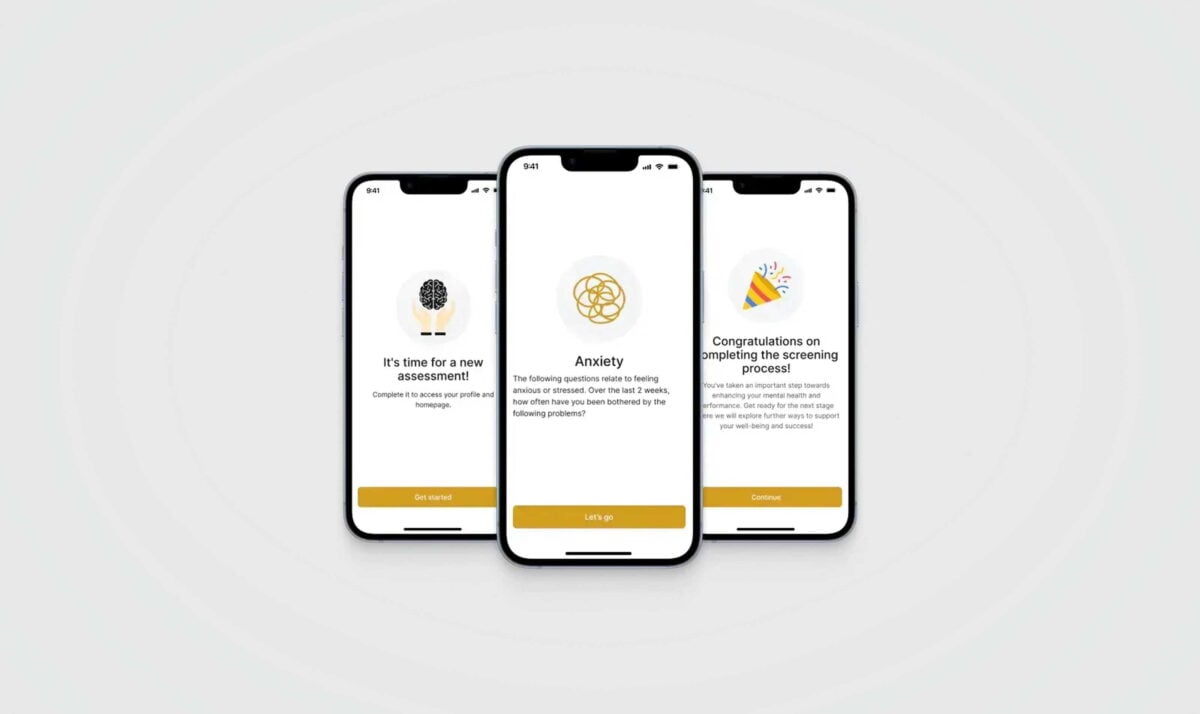
Speed was critical. Duo Health needed a working product in patients’ hands fast. We launched a functional MVP in 3 months covering the critical path: Login → View Care Plan → Message Provider. From there, we expanded based on real user feedback.




Single source of truth
Bidirectional EHR integration ensures that every patient interaction in the app is reflected in the medical record, eliminating data gaps.
90% patient adoption
The accessibility-first design achieved a 90% adoption rate among active patients — a population that typically struggles with standard medical apps.
Early intervention enabled
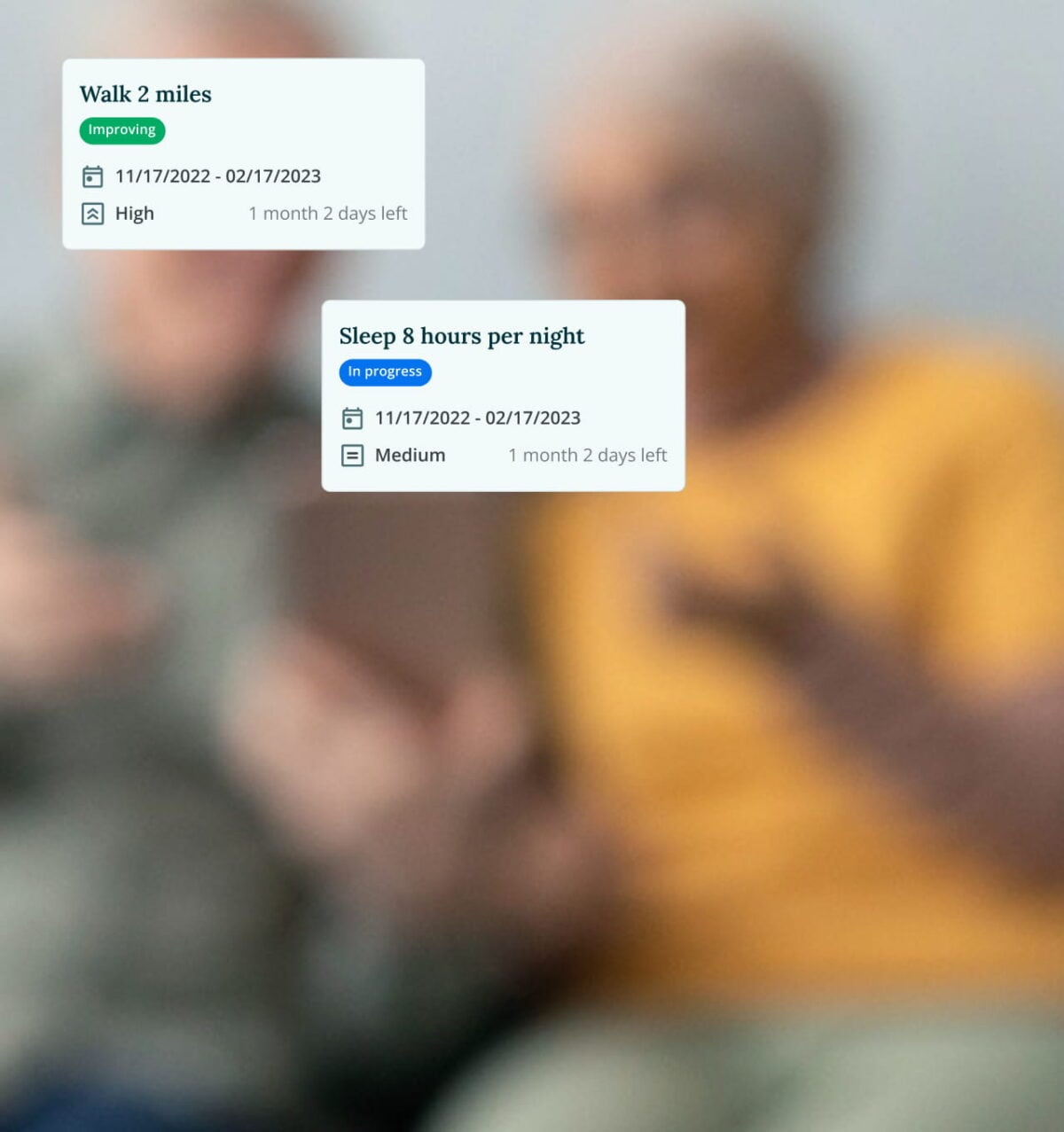
Care teams can now see patient-reported symptoms in real time and intervene before conditions escalate to ER visits.
How we solved the client’s challenges
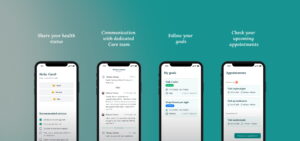
Built a cross-platform portal with symptom reporting, care plan access, and secure messaging
Designed an accessibility-first UI with high contrast, large targets, and simplified flows (90% adoption)
Achieve high adoption among elderly patients with limited tech skills.
Integrated bidirectionally with Canvas EHR via Redox middleware
Sync patient-reported data with the clinical EHR in real time.
Integrated Verato Master Patient Index with referential matching
Prevent duplicate patient records across systems.
Delivered a functional MVP in 3 months covering the critical care path
Launch fast to start collecting real patient feedback.
Ongoing partnership with feature expansion, CRM integration, and accessibility improvements
Continue evolving the platform based on clinical needs.
Client’s Review
Discover key project milestones
Be our next success story. Share details about your project and book a call with us to discuss your goals.
Certifications:

27001 2022 / 27001 2015 / 13485
Advanced IoT Core Delivery / Advanced RDS Delivery / Advanced Tier Delivery
From medical devices to industrial automation — we deliver complete enterprise solutions with regulatory compliance built-in. Everything under one roof.
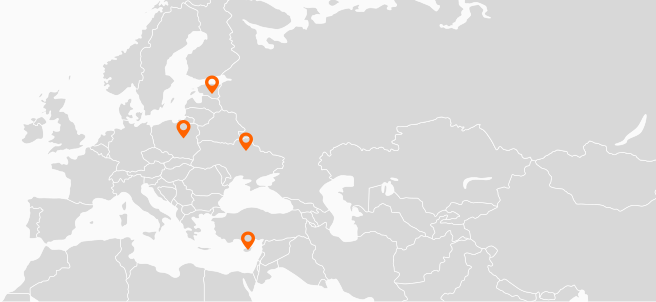
Our offices

Poland
123 al. Jerozolimskie, Warsaw, 00-001

Ukraine
5 Dmytra Yavornytskoho Avenue, Dnipro, 49005

Cyprus
8 Athinon Street, Larnaca, 6023

Estonia
12 Parda, Tallinn, 10151
FAQ
-
Why did you choose React Native instead of native iOS/Android development?
The primary goal was reaching the widest audience in the shortest time. React Native allowed us to ship iOS and Android apps simultaneously from a single codebase, which was essential for a 3-month MVP timeline. The accessibility requirements (large touch targets, high contrast, scalable fonts) are fully achievable in React Native without native-specific workarounds.
-
How does the Canvas EHR integration work technically?
We use Redox as the middleware layer. Patient actions in the app (symptom updates, messages, care plan acknowledgments) trigger API calls to Redox, which translates them into the format Canvas EHR expects and writes them into the medical record. The reverse flow works the same way: EHR updates (new care plans, provider messages) are pushed to the app via webhooks.
-
What makes Verato different from simple name matching for patient identity?
Verato uses referential matching, which cross-references a patient’s identity against billions of real-world records (credit bureaus, public records, etc.) rather than just comparing strings. This means it can correctly match “John Smith” even if the date of birth has a typo or the address has changed. Simple string matching fails in these cases and creates dangerous duplicate records.
-
How did you achieve 90% adoption among elderly patients?
Three factors: the accessibility-first design (high contrast, large targets, minimal navigation depth), the MVP focus on only the most essential functions (care plan + messaging), and the integration with the care team’s workflow so patients received direct communication through the app from their own doctors. When the app delivers immediate personal value, adoption follows.
-
What infrastructure does the platform run on?
Microsoft Azure, aligned with Duo Health’s existing infrastructure. The backend is Node.js. We also integrated with Microsoft Dynamics CRM for appointment scheduling and Google Address Validator for medication delivery logistics.
-
Can this approach be applied to other chronic conditions beyond CKD?
The core architecture – accessibility-first portal with bidirectional EHR integration, secure messaging, and identity matching – is condition-agnostic. The clinical logic (care plan structure, triage routing rules, symptom categories) is configurable. Adapting it to another chronic condition (e.g., diabetes, heart failure) would require clinical workflow configuration, not a rebuild.
Let’s Start from call scheduling
- Schedule a call
- We collect your requirements
- We offer a solution
- We succeed together!
Welcome to Yalantis, please fill out the form and we’ll get back to you.

Thank you for contacting us.
Keep an eye on your inbox. We’ll be in touch shortly
Meanwhile, you can explore our hottest case studies and read
client feedback on Clutch.
We are open for partnerships too
Check out our refferal program. Find out all benefits.