




Fitness data governed once it enters care workflows.
Clinical-Grade Remote Monitoring for Healthfully
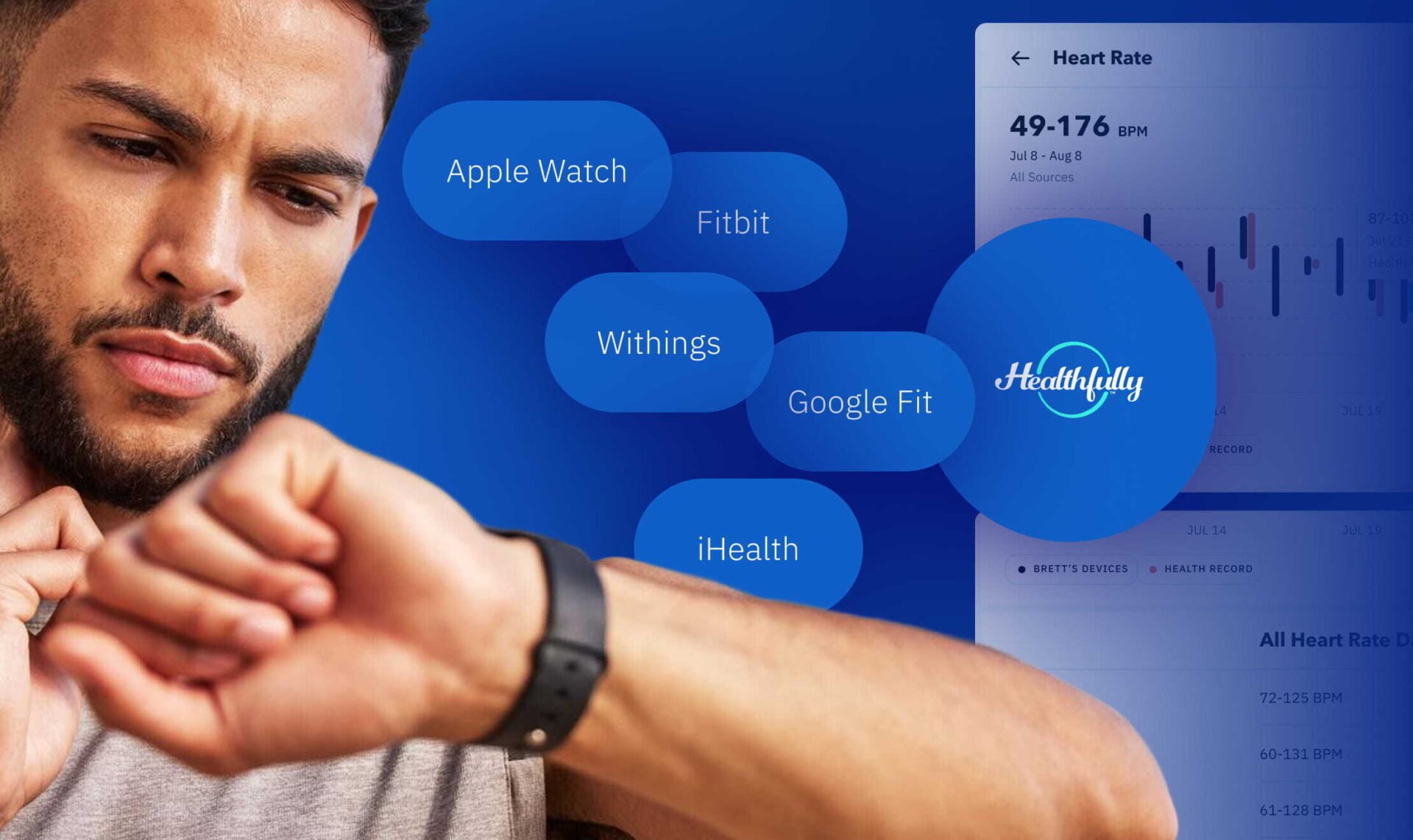
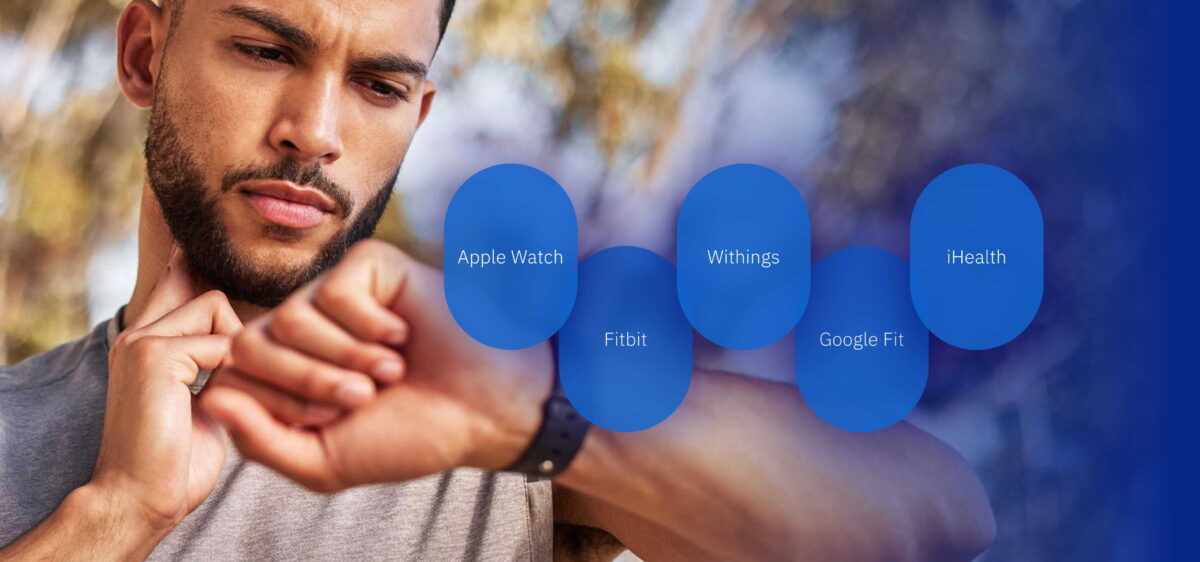
Yalantis integrated Apple Watch, Fitbit, Withings, Google Fit, and iHealth with Healthfully’s patient-facing app, turning consumer wearables into a clinical-grade data source for remote patient monitoring across U.S. hospitals.
5+
Devices integrated
8+
Years of partnership
40+
Specialists on the team



“Healthfully wanted to turn everyday wearables into a data source for clinical decisions. That meant building integrations that work across five different ecosystems while keeping everything HIPAA-compliant.”
– Mykhailo Maidan, CTO at Yalantis
Want to integrate fitness devices with your healthcare platform?
Connect consumer fitness wearables to a clinical application for real-time patient monitoring
Client:
Healthcare solution provider
Headquarters:
California, USA
Industry:
Healthcare
Partnership:
2015 – ongoing
Team:
Project Manager
Business Analyst
UX/UI Designer
Solution Architect
iOS and Android Developers
Backend Developers
Frontend Developers
Quality Assurance
DevOps
Services:
Custom software development
IoT integration
UI/UX design
HIPAA compliance
Ongoing support and maintenance
Healthfully provides hospitals and hospital networks across the U.S. with digital healthcare solutions. During an eight-year partnership, Yalantis developed a wide range of software for the company, including a feature-rich patient-facing application.
The next step was to connect that app with the most popular consumer wearables: Apple Watch, Fitbit, Withings, Google Fit, and iHealth. The idea was to turn devices patients already own into a clinical data source, giving doctors real-time access to health metrics like heart rate, activity levels, and sleep patterns.
But fitness devices aren’t medical devices. Integrating them into a clinical workflow created several challenges:
Each device maker uses a different API, data format, and communication protocol. Some push data automatically, others require polling at set intervals. When a patient uses multiple devices or services, their data has to be merged without duplicating or losing readings. And all of this had to comply with HIPAA and app store regulations.
Healthfully asked Yalantis to solve all of this within the existing patient app, without disrupting the experience for current users.
Client:
Healthcare solution provider
Headquarters:
California, USA
Industry:
Healthcare
Partnership:
2015 – ongoing
Team:
Project Manager
Business Analyst
UX/UI Designer
Solution Architect
iOS and Android Developers
Backend Developers
Frontend Developers
Quality Assurance
DevOps
Services:
Custom software development
IoT integration
UI/UX design
HIPAA compliance
Ongoing support and maintenance
Compliance and regulations
HIPAA boundaries strictly enforced
HealthKit and Google Fit policies met
Platform API terms respected for health use cases.
CMS remote monitoring rules supported
Data capture aligned with RPM billing requirements.
Granular patient consent implemented
Device sharing controlled per data type and source.
HIPAA-compliant wearable device data integration with real-time health data aggregation
1.
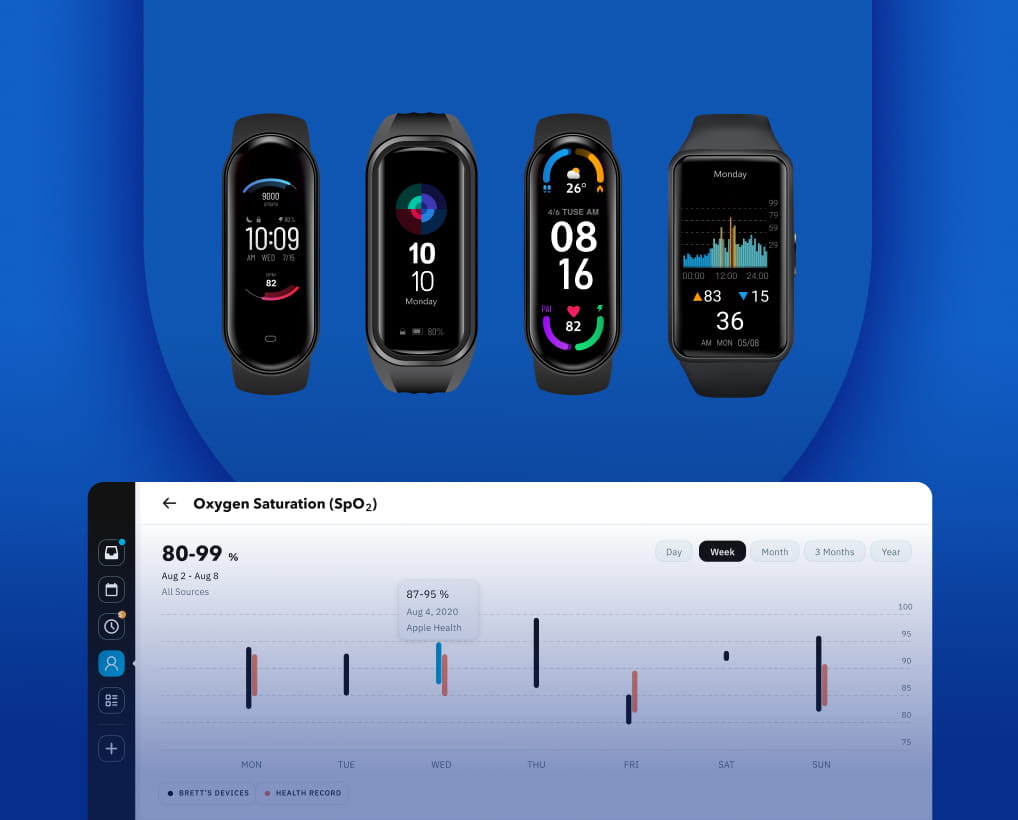
Real-time health data from 5+ wearable devices
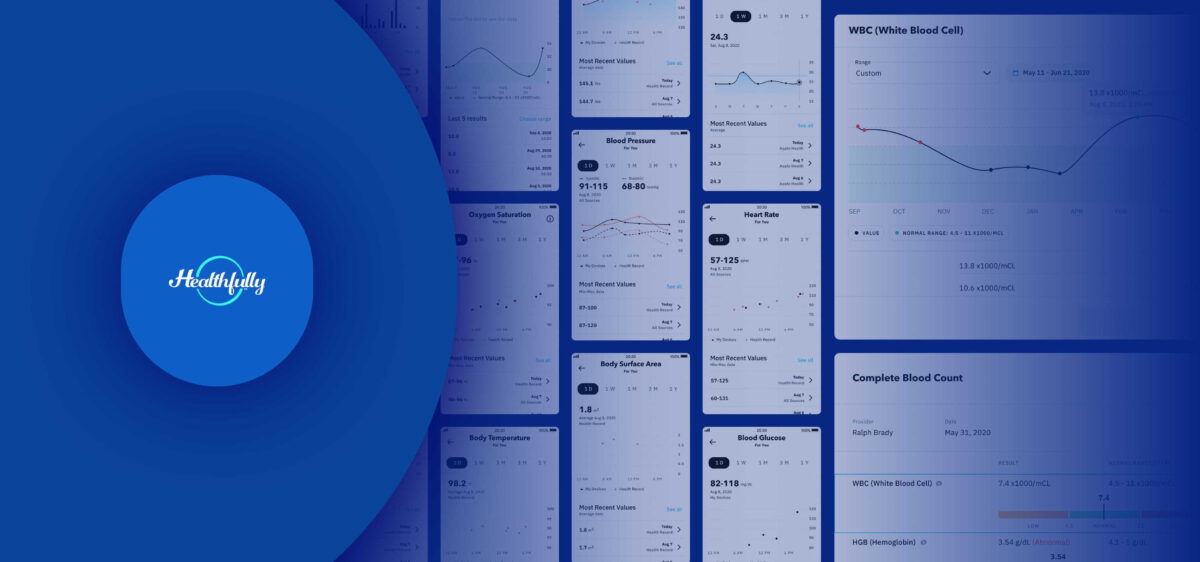
The app collects heart rate, activity, sleep, and other health metrics from Apple Watch, Fitbit, Withings, Google Fit, and iHealth. Patients see their data in one place, and clinicians can reference it when making diagnoses.
2.
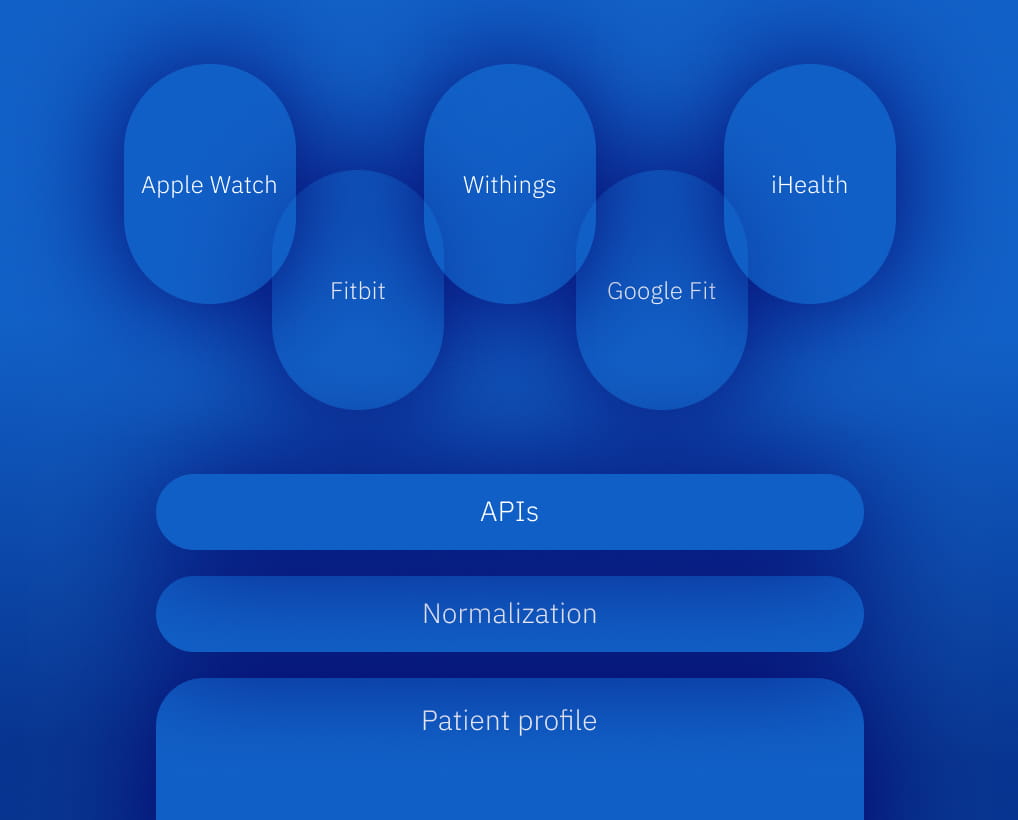
Unified wearable data aggregation from different providers
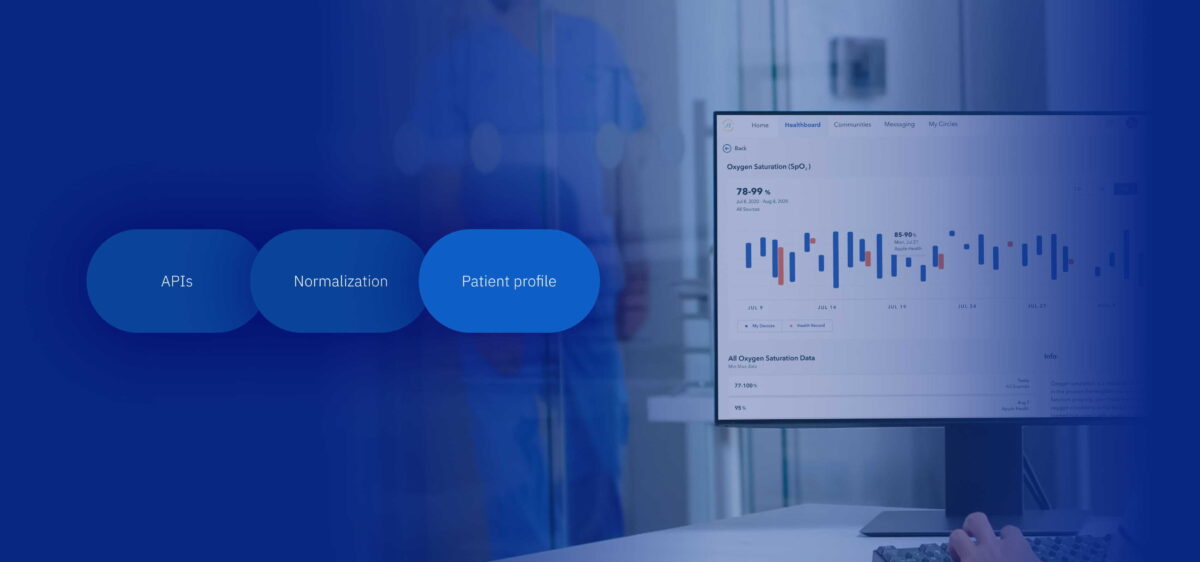
Each device sends data in a different format and at a different frequency. We built a processing layer that normalizes readings, merges data from multiple sources, and eliminates duplicates, so clinicians see a single, consistent health timeline.
3.
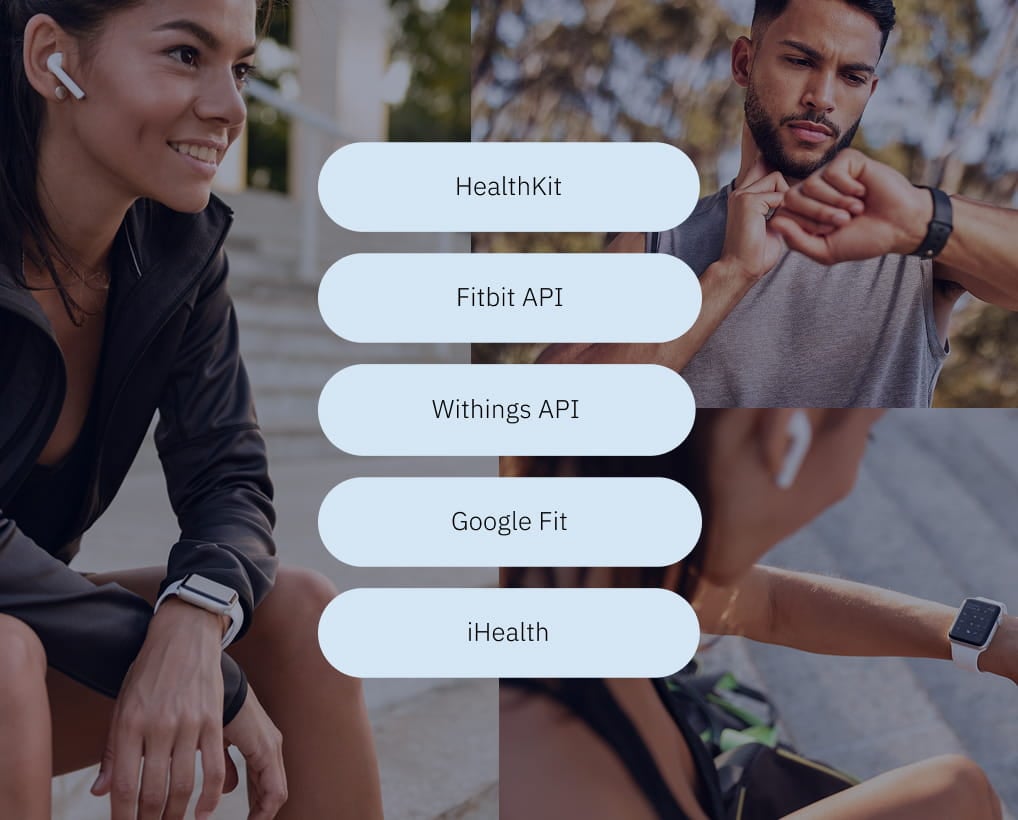
Native API integrations using HealthKit, SwiftUI, and vendor SDKs
Our team studied each device’s documentation to use native solutions. For Apple Watch, we used HealthKit for data retrieval and SwiftUI for the interface. For Fitbit and Withings, we integrated through their cloud APIs with proper OAuth flows.
4.
HIPAA-compliant data access and sharing controls
We implemented encryption protocols for data in transit, secure cloud storage, and role-based access so that only patients and their authorized doctors can view health data.
5.
Intuitive patient interface with device management
Users can connect new wearables, view fitness statistics, track trends over time, and share health insights with clinicians or family members through a clean, accessible interface.
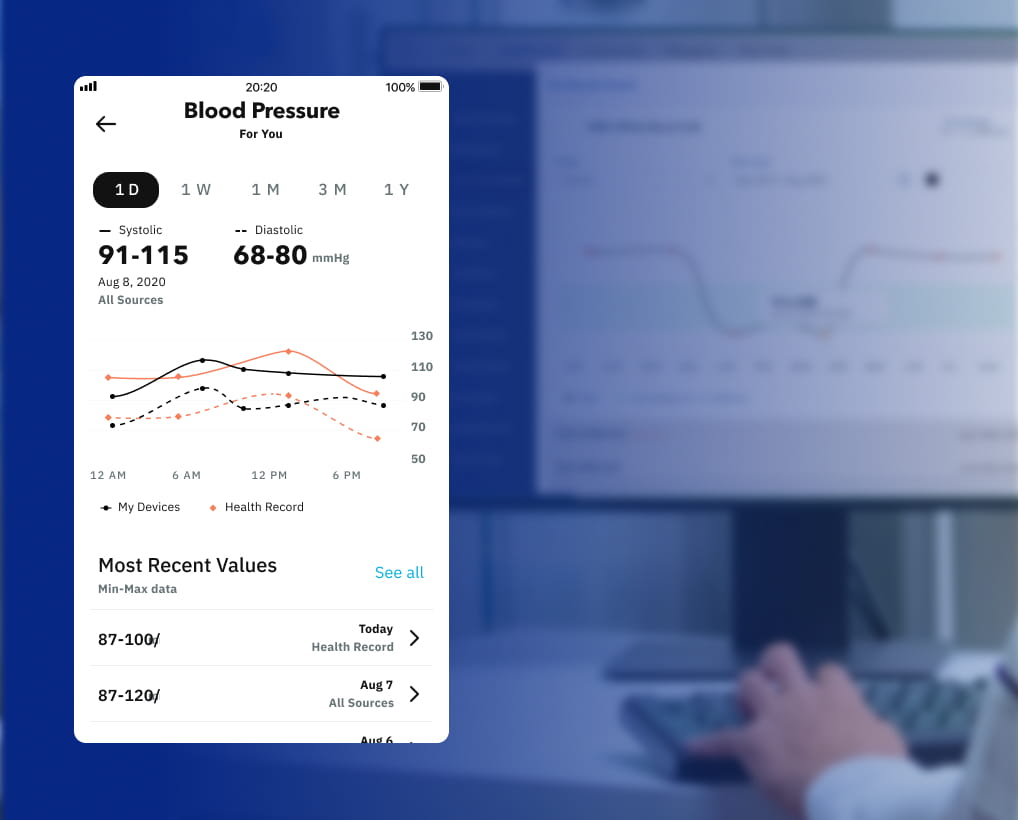
How Yalantis connected consumer wearables to a clinical platform used by U.S. hospitals
As part of an eight-year partnership, we integrated Healthfully’s patient app with five wearable ecosystems. Each integration required its own approach due to differences in APIs, data formats, and device capabilities.
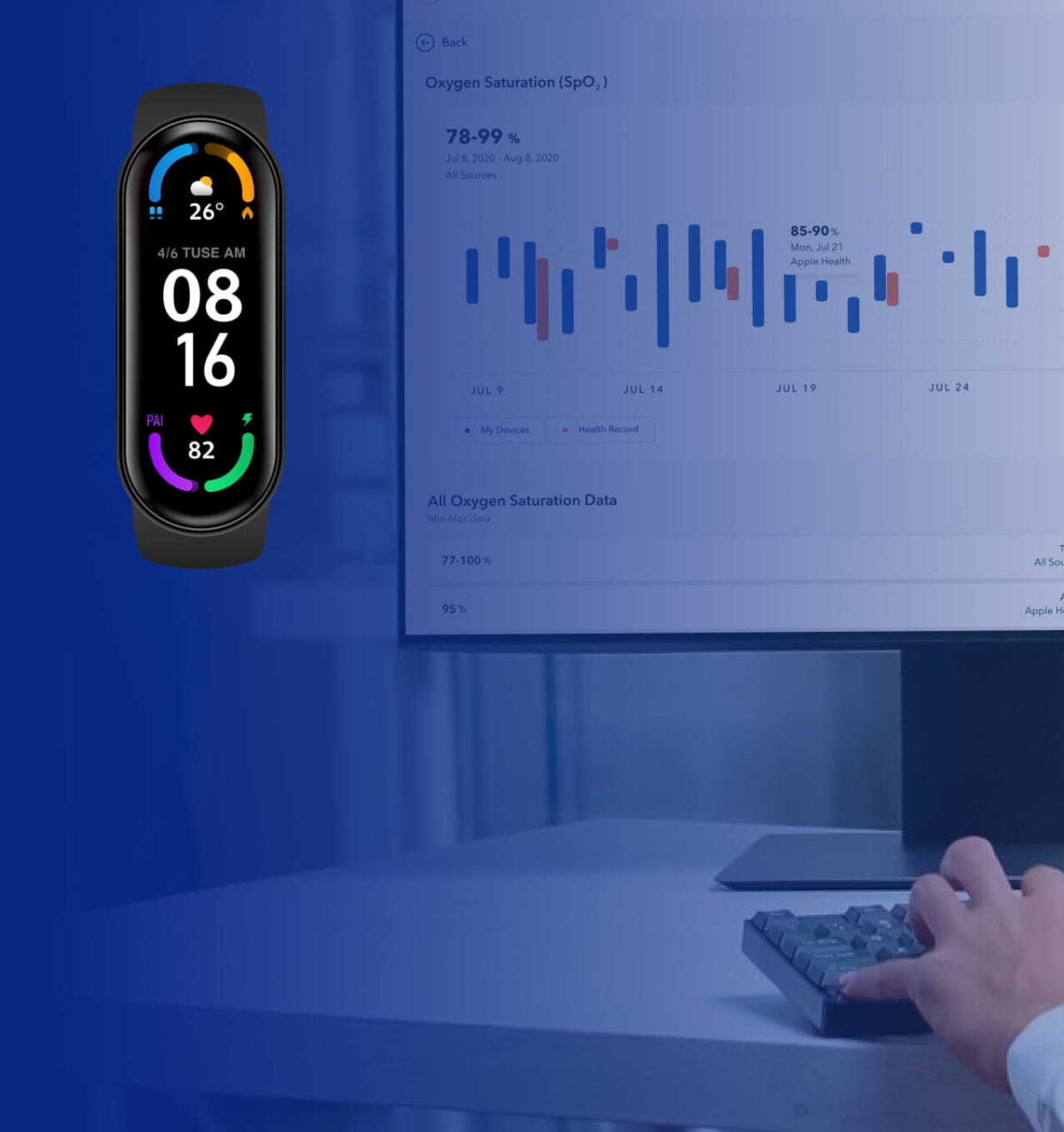
Step 1
We mapped differences between fitness and medical device ecosystems
Fitness devices differ from medical devices in regulatory compliance, hardware configurations, and data exchange protocols. Before writing any code, we mapped each ecosystem’s capabilities and limitations: which devices push data automatically, which require polling, what data types are available, and how each API handles authentication.
This research phase defined the architecture and helped us avoid integration problems later.

Step 2
Our team built native integrations for each device platform
For Apple Watch, we used HealthKit for data retrieval and SwiftUI for the native interface. For Fitbit, Withings, and Google Fit, we integrated through cloud-based REST APIs with OAuth 2.0 authentication. For iHealth, we used their SDK for direct device communication.
Each integration was built as a separate module, so adding new devices in the future wouldn’t require changes to the core application.
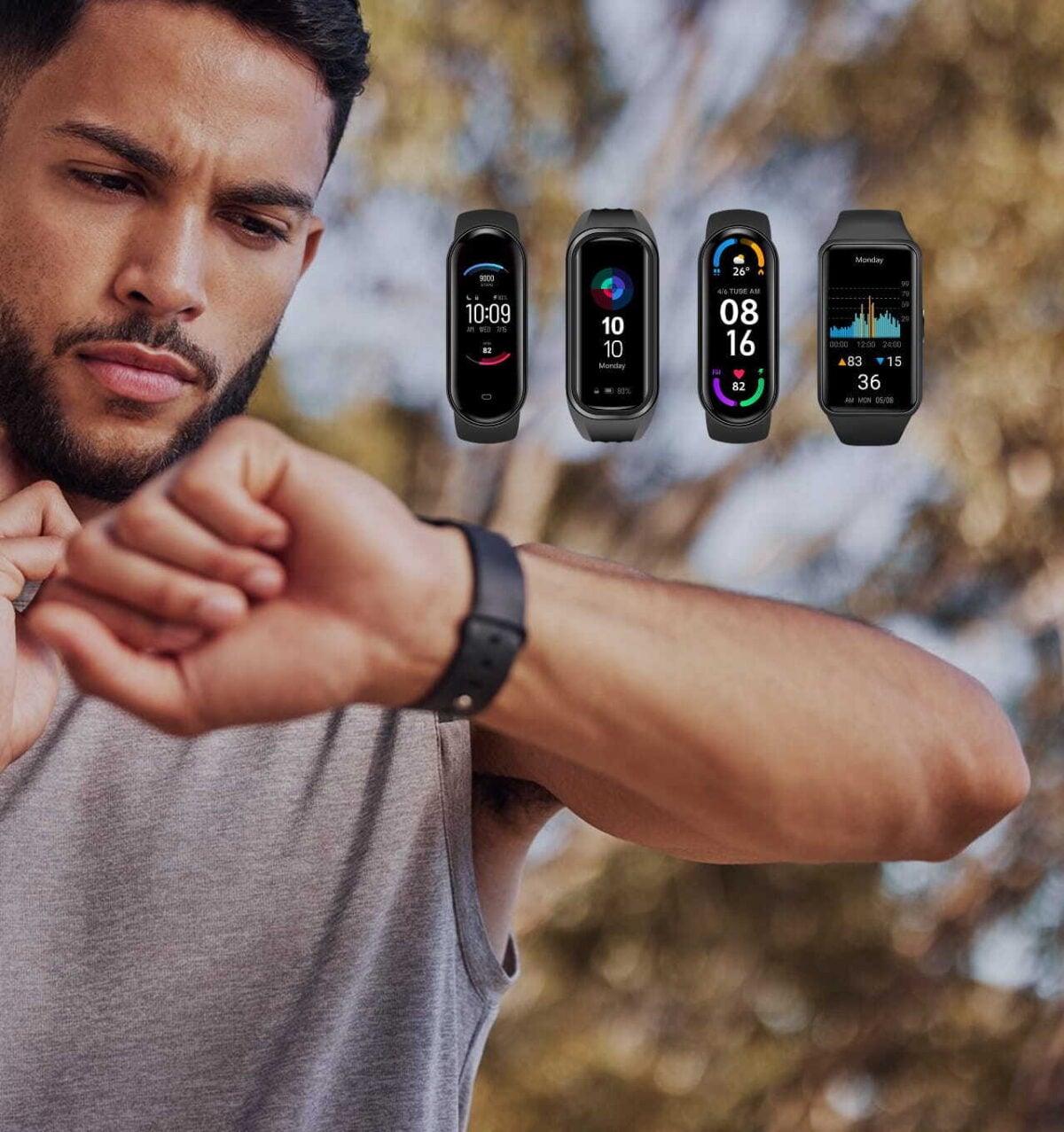
Step 3
We designed a data aggregation flow that merges readings from different sources
A patient might wear an Apple Watch during the day and a Fitbit at night. Some data overlaps, some doesn’t. We built a processing layer that normalizes timestamps, resolves conflicts between overlapping readings, and merges everything into a single patient health timeline.
The aggregation engine runs on the backend, so the patient sees a unified view without needing to manage data manually.

Step 4
Our developers ensured HIPAA compliance across the entire data flow
All health data is encrypted in transit and at rest. We implemented role-based access controls, secure storage for large datasets, and audit trails to meet HIPAA requirements.
The integration also complies with Apple and Google app store health data policies.

Step 5
We ran comprehensive testing across all device combinations
We performed functional, performance, security, and compatibility testing to verify that each integration transmits the correct data in the right format. The testing framework also helped identify edge cases: what happens when a device disconnects mid-sync, when a patient switches devices, or when two services report conflicting readings.

Step 6
Yalantis continues maintaining integrations as devices and APIs evolve
Fitness device APIs change frequently. Apple, Fitbit, and Google release updates that can break existing integrations. Our dedicated support team regularly checks compatibility, applies updates, and ensures the integrations stay functional after each OS and API release.
How we solved the client’s challenges
Built native integrations with Apple Watch, Fitbit, Withings, Google Fit, and iHealth
Integrate the patient app with popular consumer wearables.
Developed a data aggregation engine that normalizes and deduplicates readings from different sources
Merge health data from multiple devices into one view.
Implemented end-to-end encryption, role-based access, and audit trails for all health data
Maintain HIPAA compliance across all integrations.
Delivered real-time health metrics accessible through the existing clinical platform
Enable clinicians to use wearable data for diagnosis.
Provide ongoing support and compatibility testing after each API and OS update
Keep integrations working as device APIs change.
Client’s Review
Yalantis has been a great fit for us because of their experience, responsiveness, value, and time to market. From the very start, they’ve been able to staff an effective development team in no time and perform as expected.
Mark Boudreau, Founder and COO at Healthfully

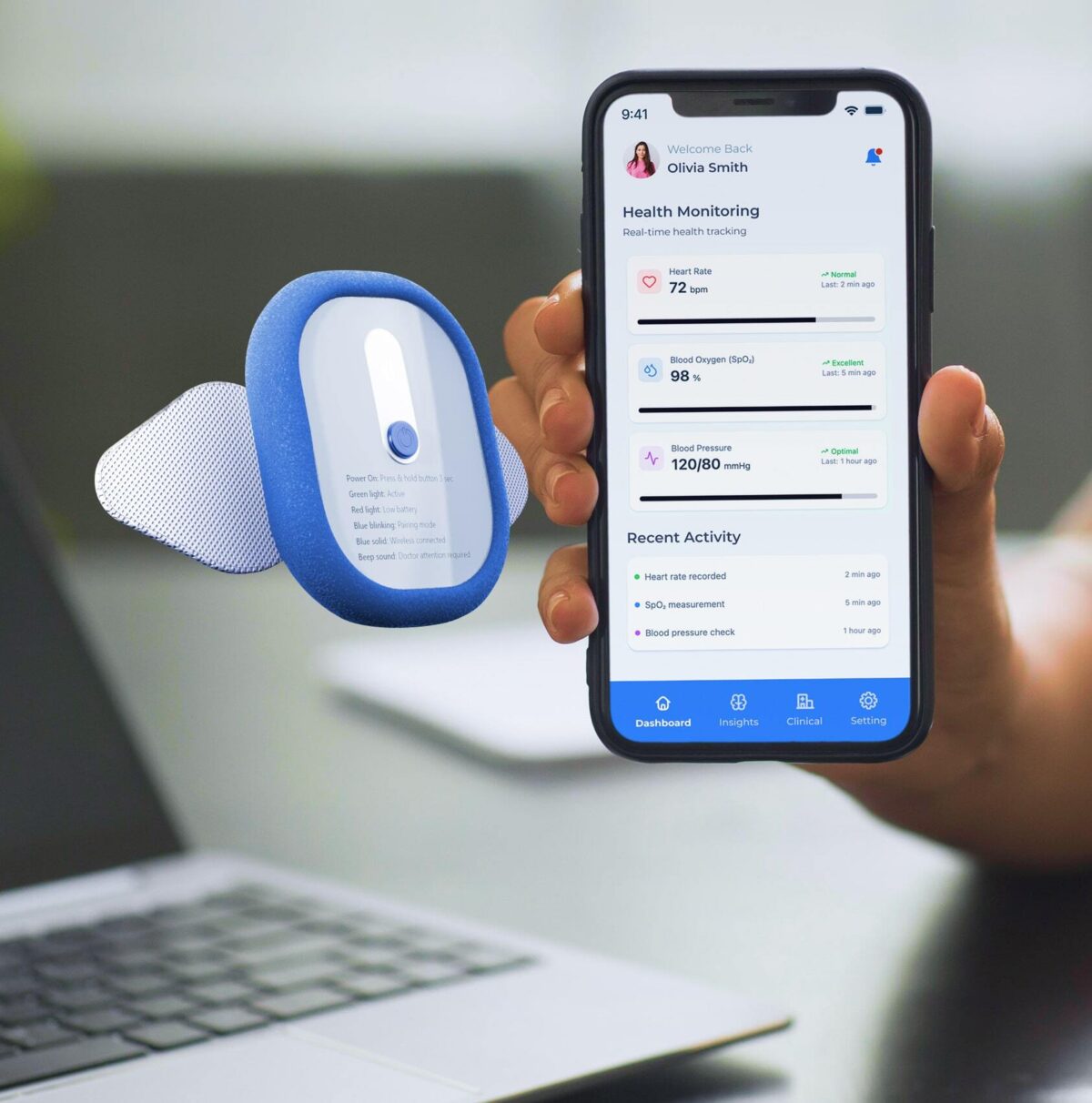
Software Development for Medical Devices
An AI-powered mobile app that syncs clients’ ECG and pulse oximeter wearables with clinic systems across the U.S
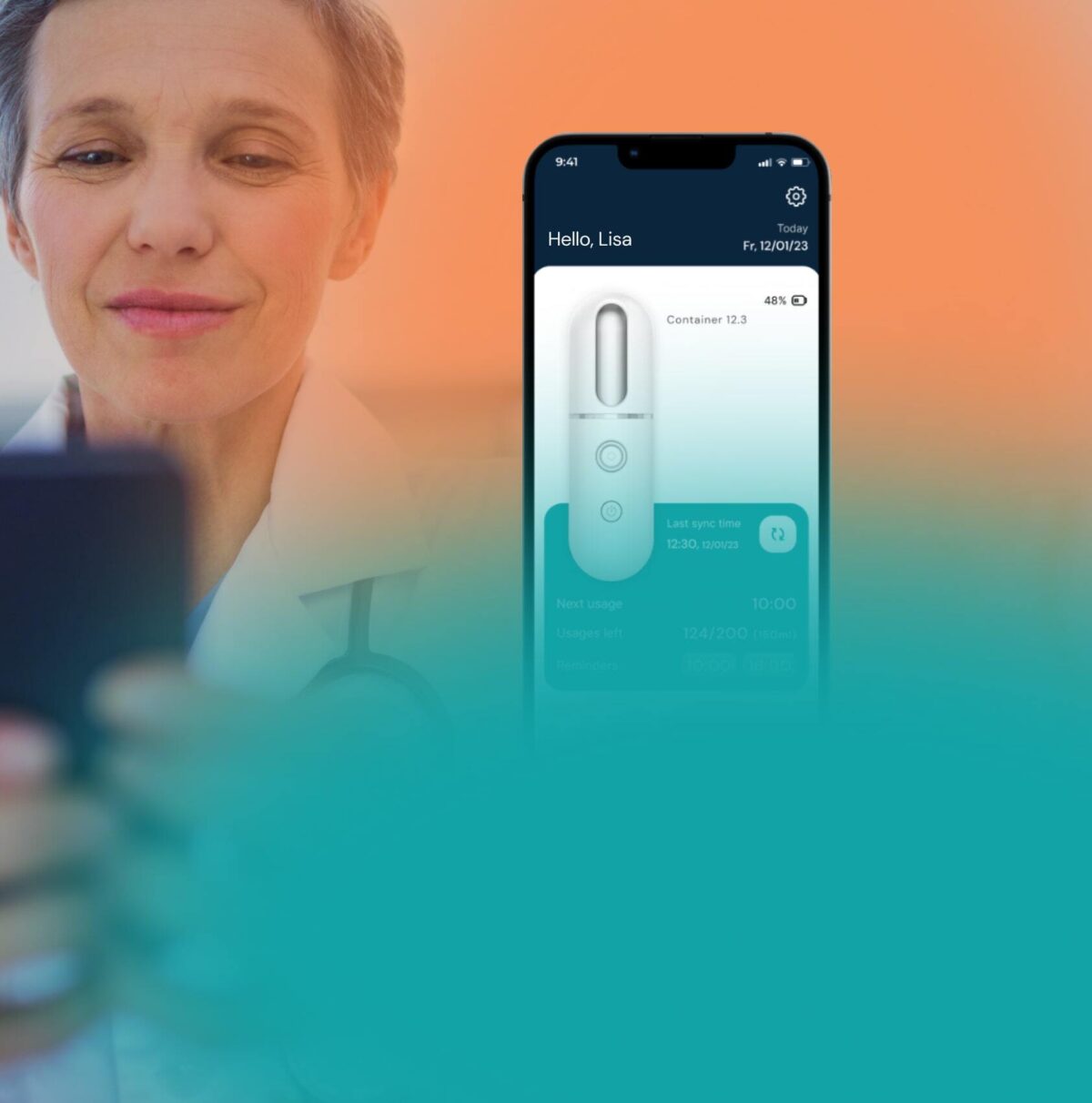
Software as a Medical Device for Accurate Drug Dosage
We helped a specialty pharmacy provider reduce medication errors by developing a Software as a Medical Device (SaMD) product that calculates the optimal medication dosage for each individual patient.
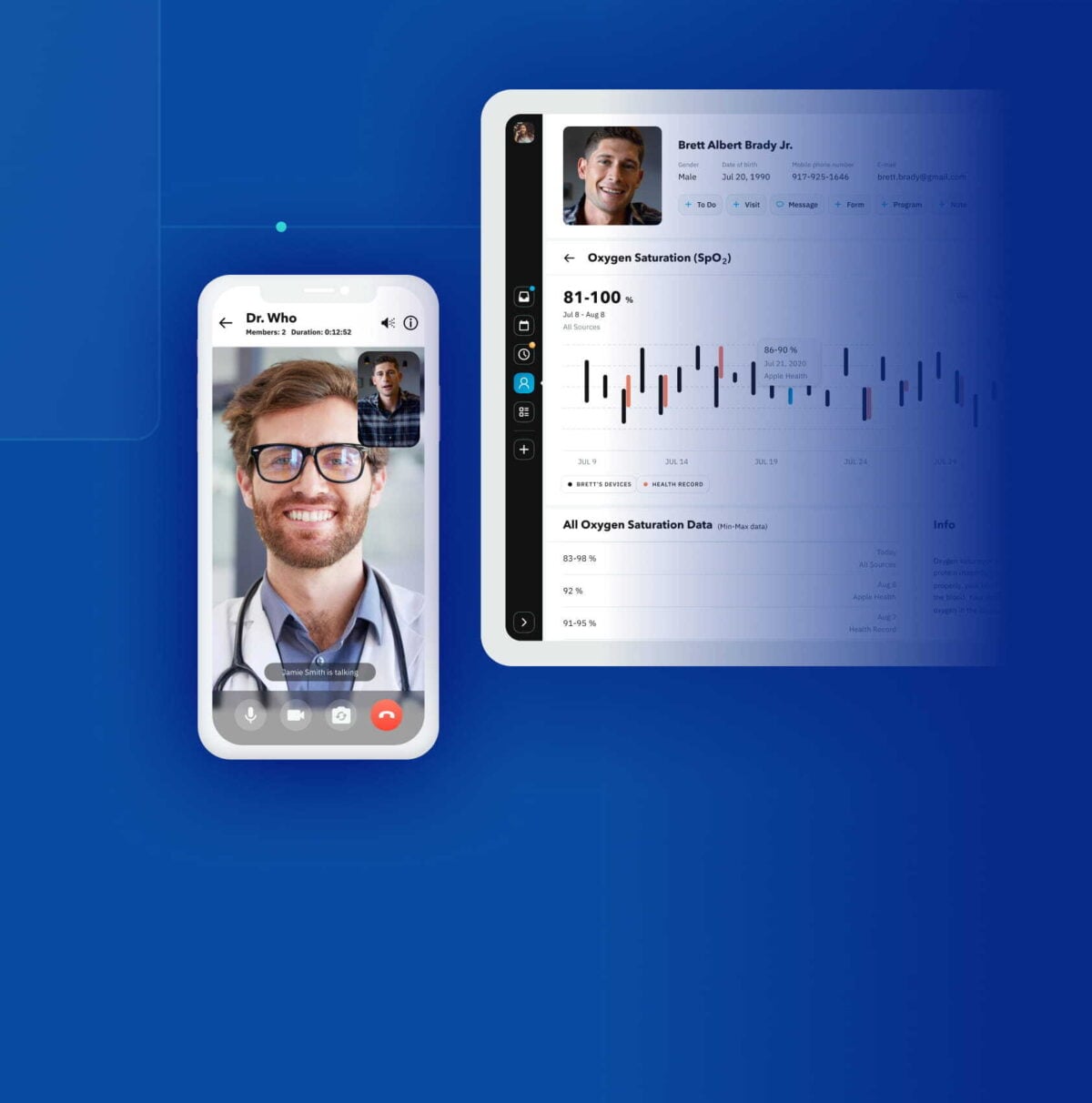
EHR Integration with a Healthcare System
We helped our client expand their healthcare business by integrating their existing patient management system (PMS) with multiple third-party electronic health record (EHR) software solutions.
Discover key project milestones
Be our next success story. Share details about your project and book a call with us to discuss your goals.
Certifications:

27001 2022 / 27001 2015 / 13485

Advanced IoT Core Delivery / Advanced RDS Delivery / Advanced Tier Delivery
From medical devices to industrial automation — we deliver complete enterprise solutions with regulatory compliance built-in. Everything under one roof.
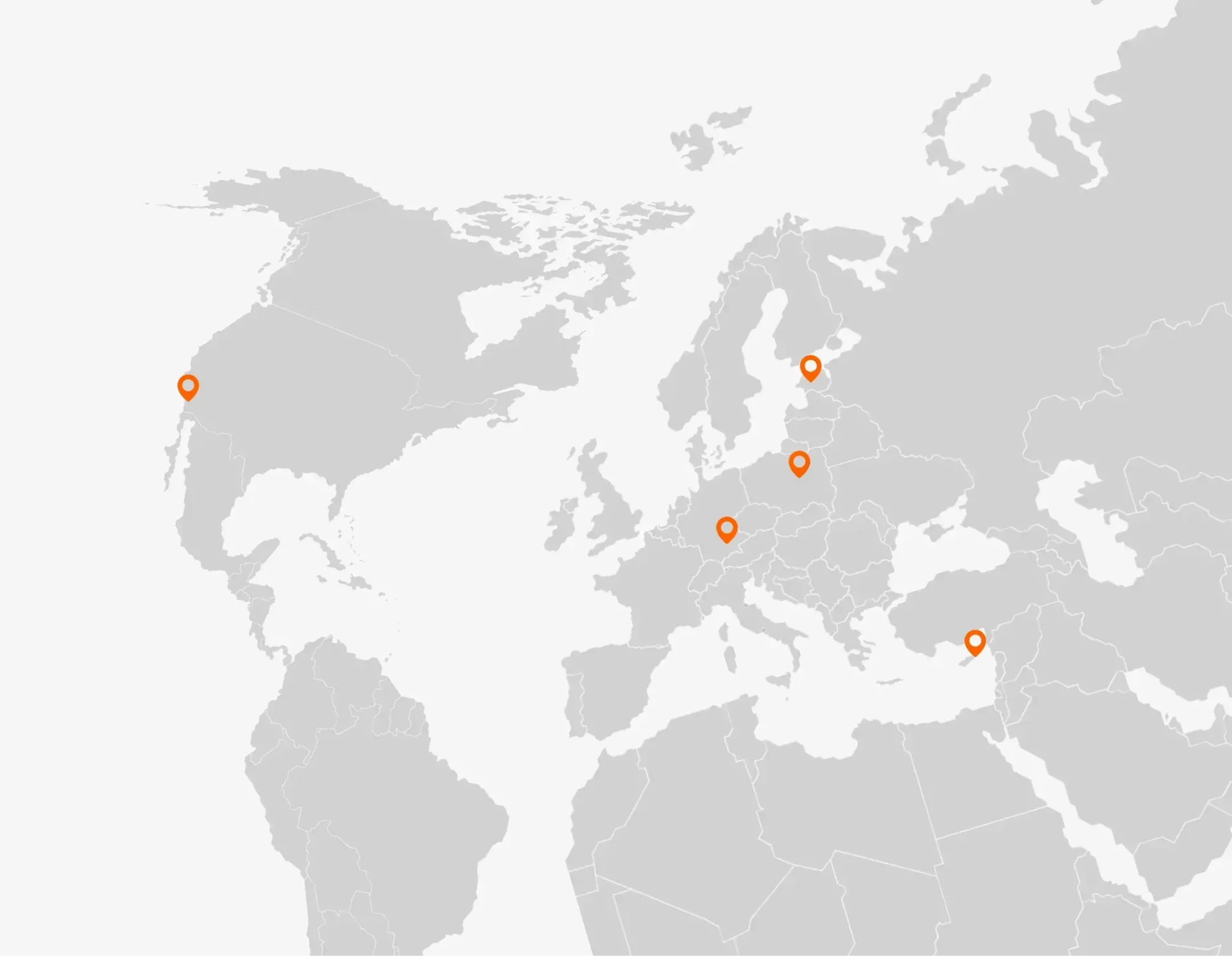
Our offices

Poland
123 al. Jerozolimskie, Warsaw, 00-001

Cyprus
8 Athinon Street, Larnaca, 6023

Estonia
12 Parda, Tallinn, 10151

USA
1080 Ximeno Ave, Long Beach, CA 90804

Germany
Marienplatz 22, Munich 80331
FAQ
-
Which fitness devices and platforms did you integrate?
We integrated Apple Watch (via HealthKit), Fitbit, Withings, Google Fit, and iHealth. Each uses a different API and data format, so we built separate integration modules for each ecosystem.
-
How do you handle data from multiple devices worn by the same patient?
We built a backend aggregation engine that normalizes timestamps, resolves conflicts between overlapping readings, and merges data into a single health timeline. The patient sees one unified view regardless of how many devices they use.
-
How is HIPAA compliance maintained across wearable integrations?
All health data is encrypted in transit and at rest. Role-based access controls ensure only patients and authorized clinicians can view the data. Audit trails track every data access event. The system also complies with app store health data policies.
-
What happens when Apple or Fitbit changes their API?
Our support team monitors API changes from each provider and applies updates proactively. We run compatibility tests after each major OS and API release to ensure integrations remain functional.
-
Can this integration approach be extended to other wearable devices?
Yes. Each integration is built as a standalone module. Adding a new device requires building one new module without touching the core application or existing integrations.
-
How does wearable data reach clinicians in real time?
Data flows from the device to the patient app, then to the cloud backend where it’s processed and stored. Clinicians access it through their existing clinical interface. Depending on the device, data arrives in near-real-time or is synced at configurable intervals.
Let’s Start from call scheduling
- Schedule a call
- We collect your requirements
- We offer a solution
- We succeed together!
Welcome to Yalantis, please fill out the form and we’ll get back to you.

We are open for partnerships too
Check out our refferal program. Find out all benefits.