


Yalantis provides end-to-end computer vision engineering: From optical hardware design and embedded sensor fusion to cloud-native processing. We go beyond software to deploy low-latency visual intelligence for manufacturing, healthcare, and logistics.
Custom Computer Vision Development Services

17+
Years of engineering
experience
400+
Cross-disciplinary
engineers
ISO
9001
ISO
27001
ISO
27701
ISO
13485
NPS
91 aligned
Our Clients





Business challenges computer vision development solves

Manual inspection processes that cannot scale
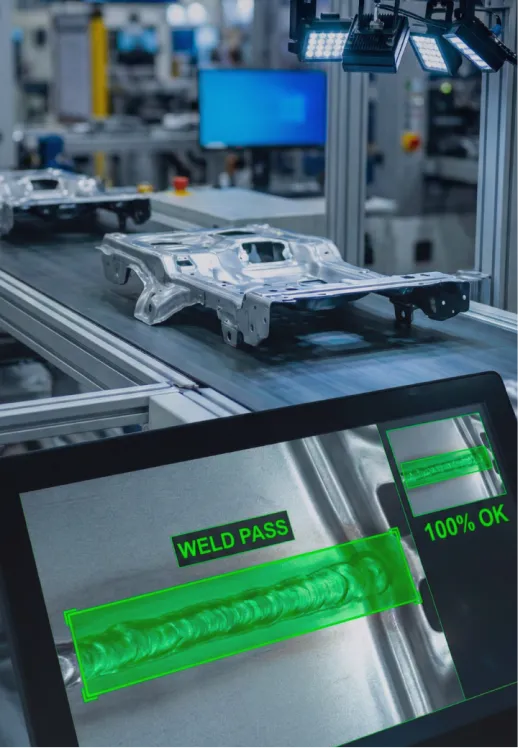
Human QC creates bottlenecks and errors. Our computer vision development services and solutions automate visual tasks like weld seam inspection systems and line clearance verification, ensuring 100% accuracy at full production speed regardless of volume.
Inability to extract structured data from documents
Manual entry slows down logistics. We implement OCR for Logistics Documents, intelligent character recognition, and complex form extraction to automate document processing and data processing end to end. Our computer vision software development transforms unstructured visual data into actionable digital assets and integrates with existing systems such as your WMS and ERP platforms.
Safety and compliance monitoring gaps
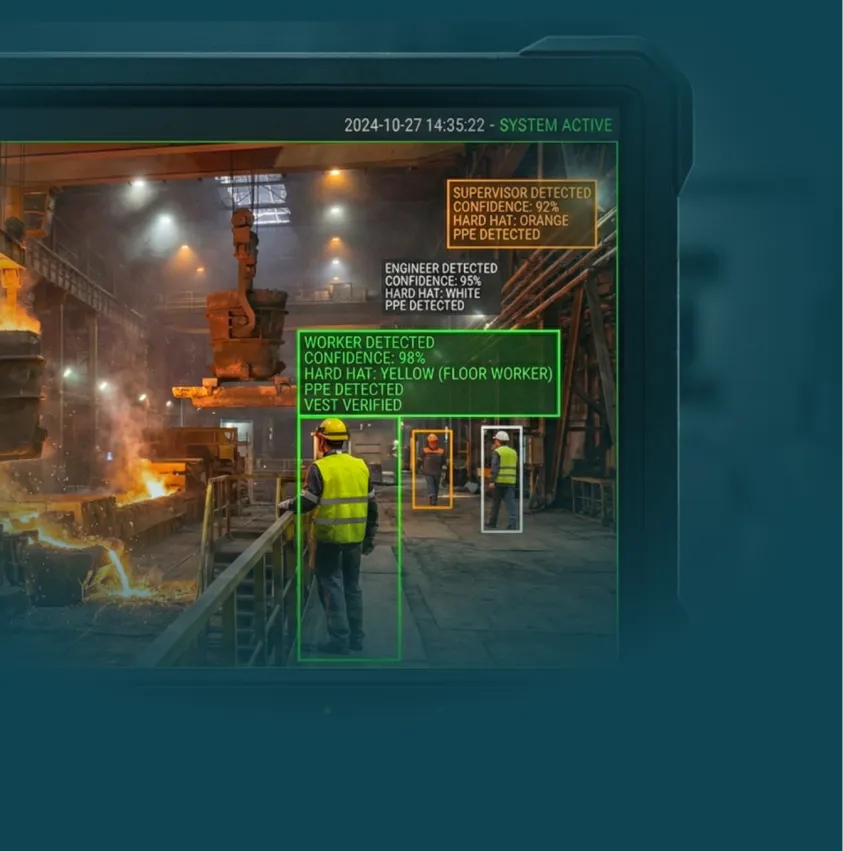
Our computer vision consultants implement compliance-first engineering. We deploy real-time monitoring for PPE usage and hazardous zones, adhering to IEC 62443 and ISO 13485 standards.
High infrastructure costs and cloud latency
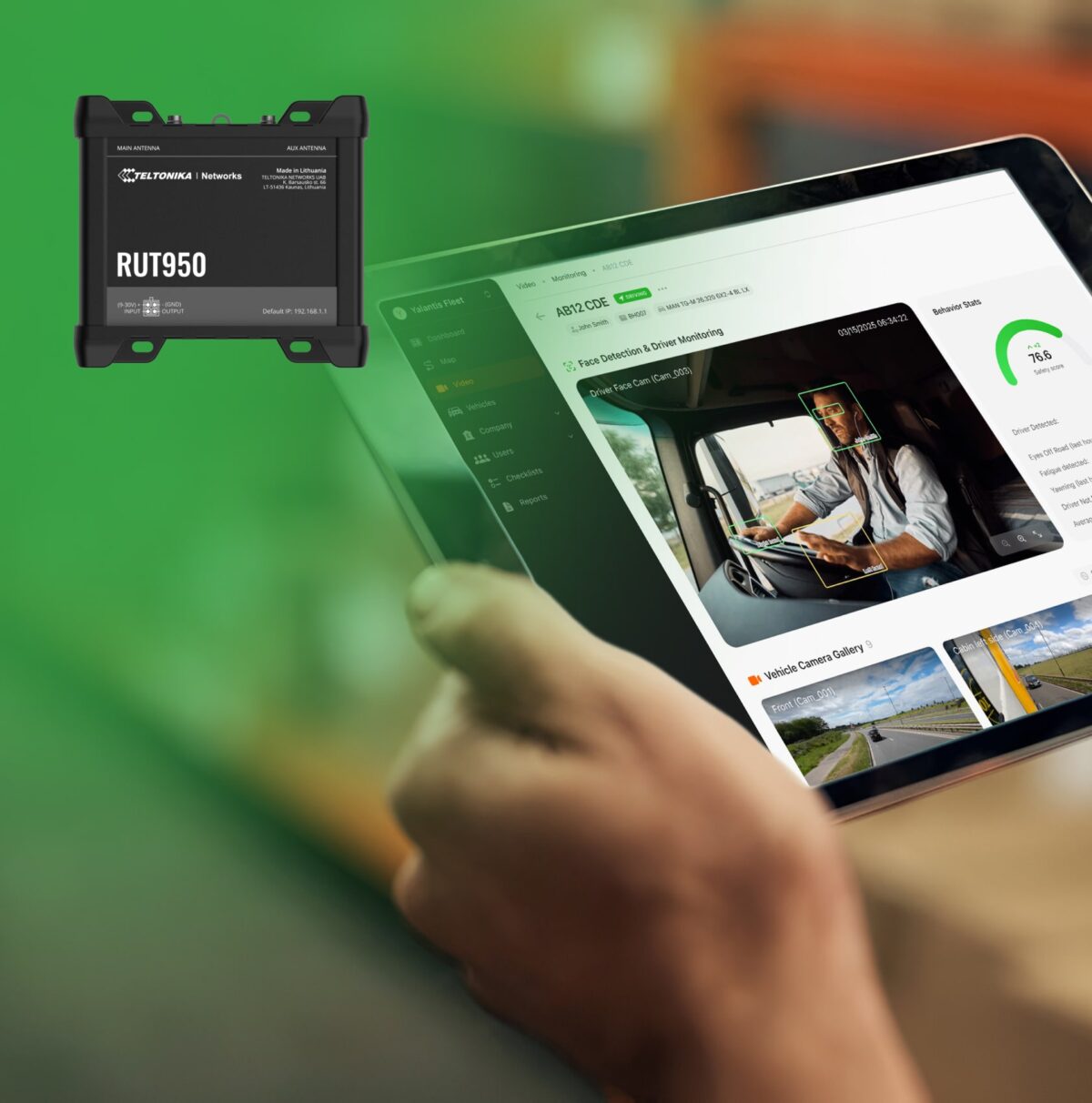
Sending video to the cloud for processing often causes lag and recurring bandwidth costs. We specialize in low-latency edge inference and on-device machine learning, the core difference between edge and cloud computer vision. By optimizing for NVIDIA Jetson Orin/Xavier and FPGA/ASIC vision acceleration, we deliver real-time computer vision on edge devices without ongoing internet dependencies.
Pre-trained models fail on domain-specific tasks
Generic models struggle with niche needs. As a tailored computer vision development company, we train custom models for specific use cases, such as tire tread analyzers or DPM code readers, to ensure high precision on your unique data.
Future-proof OT/IT architecture
With open industrial standards like MQTT and OPC UA, we ensure your computer vision integration is scalable as part of a broader digital transformation roadmap. You can add new edge AI vision nodes or integrate with updated ERP/MES systems without requiring a complete infrastructure overhaul, protecting the operational efficiency gains you have already made.
Get a Free Feasibility Check Before You Commit Budget
Custom computer vision development services at Yalantis
End-to-end computer vision engineering
A turnkey service bridging optical hardware and software. We deliver end-to-end computer vision capabilities, from embedded sensor fusion to cloud-native processing. Our engineers ensure systems withstand harsh environments while integrating seamlessly with legacy industrial protocols like MQTT and OPC UA.
You get:
- Industrial camera selection and enclosure design for consistent image quality.
- Low-level sensor firmware and computer vision software for reliable video processing.
- Direct PLC and SCADA connectivity for low-latency, automated responses.
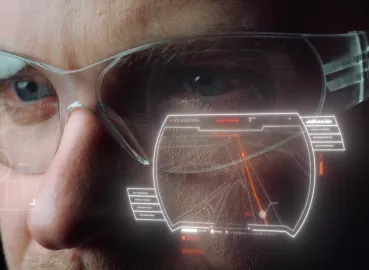
Optical engineering & enclosure design
We design ruggedized hardware in our internal R&D Lab for every computer vision system we build. Beyond selecting off-the-shelf cameras, we engineer tailored PCBs and industrial enclosures to protect optics from dust, heat, and vibration, ensuring 99%+ accuracy before code is written.
You get:
- IP-rated enclosures and custom PCBs built for demanding industrial environments.
- LiDAR, RGB, and thermal sensor fusion for more accurate visual perception.
- Precise sensor and lighting calibration for consistent image quality.
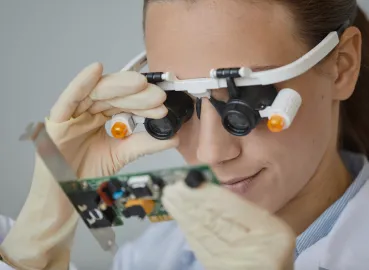
Embedded vision & firmware development
We isolate software from firmware for maximum stability, then apply targeted optimization services to squeeze extra performance from constrained hardware. Our team writes low-level firmware for sensors and optimizes edge AI vision models on NVIDIA Jetson or FPGA accelerators, ensuring low-latency inference without cloud dependencies.
You get:
- Tailored firmware and drivers for reliable control of cameras and sensors.
- Edge-optimized vision models using TensorRT and OpenVINO.
- Low-latency architectures for real-time and safety-critical applications.
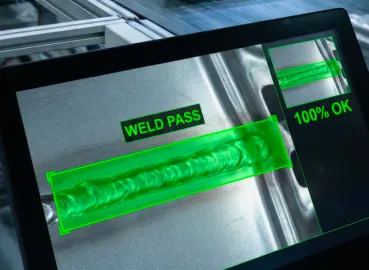
Custom computer vision model development
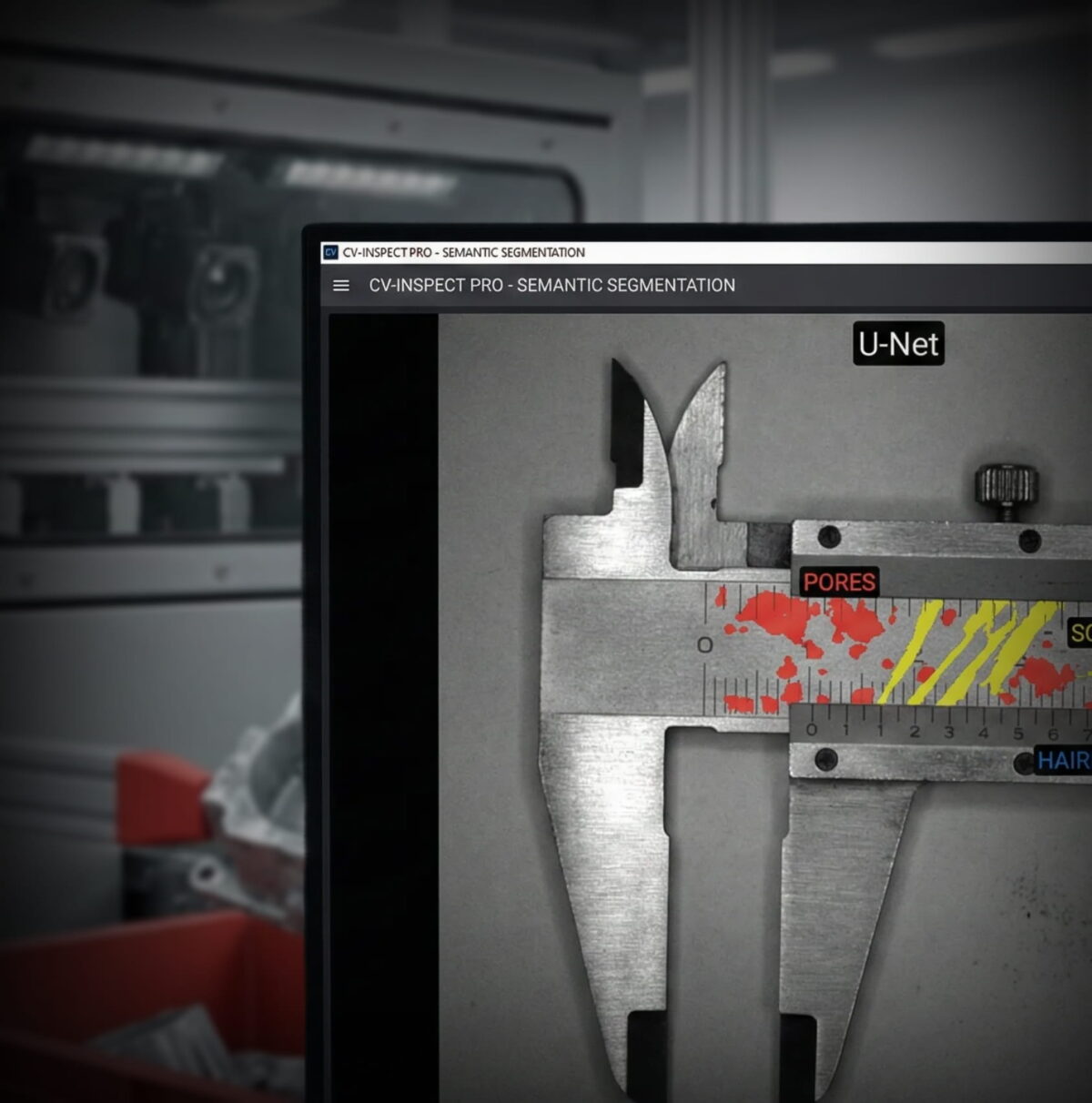
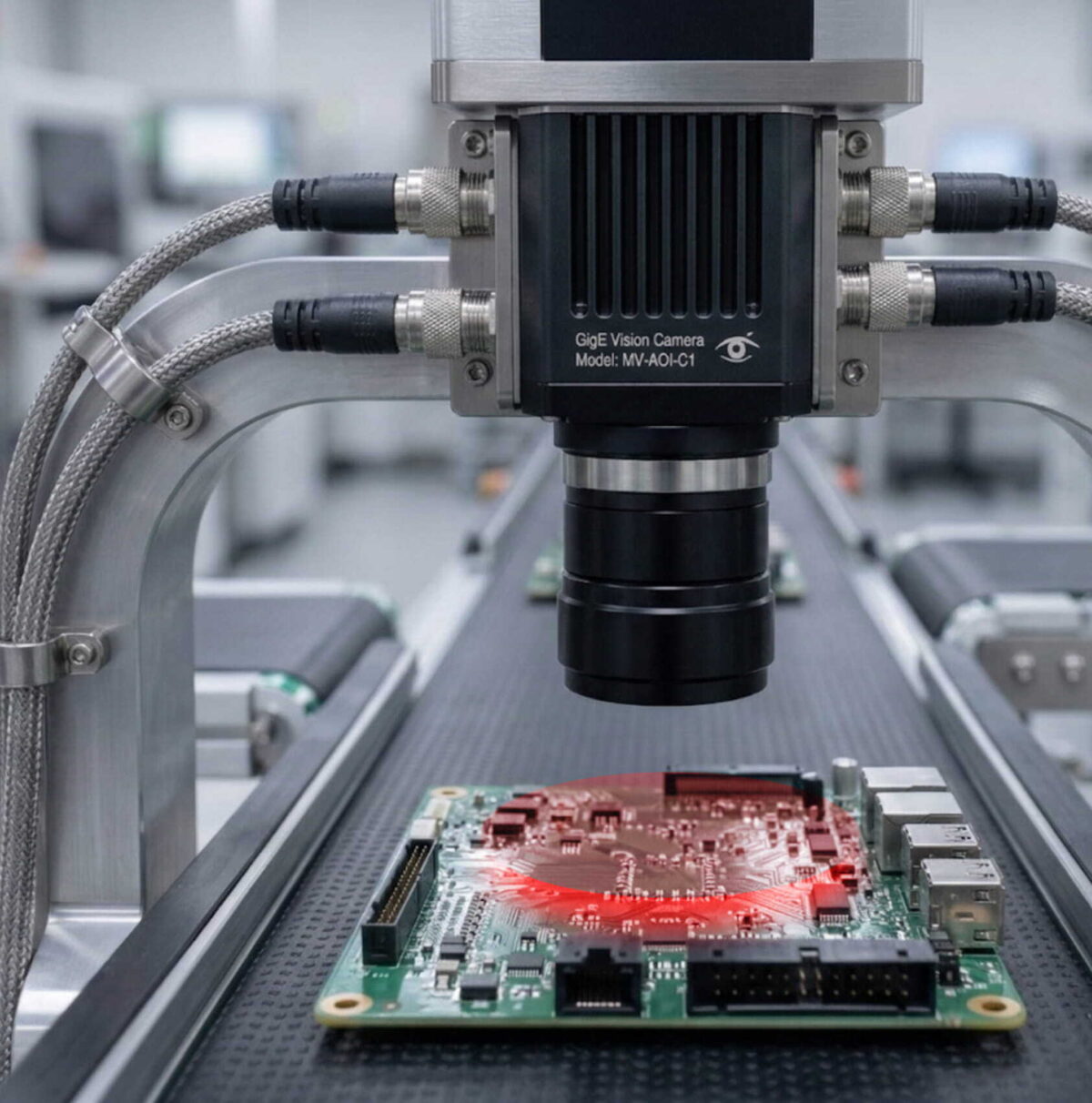
We train proprietary models for high-intent tasks like Automated Optical Inspection (AOI) and Vision-Guided Robotics (VGR), delivering AI computer vision development services that pair optics with domain-specific neural networks, including convolutional neural architectures for image-heavy tasks. Using transfer learning, deep learning, and carefully annotated training data, we handle the full MLOps pipeline to outperform generic pre-trained models.
You get:
- Models trained to detect microscopic defects, scratches, and other visual anomalies.
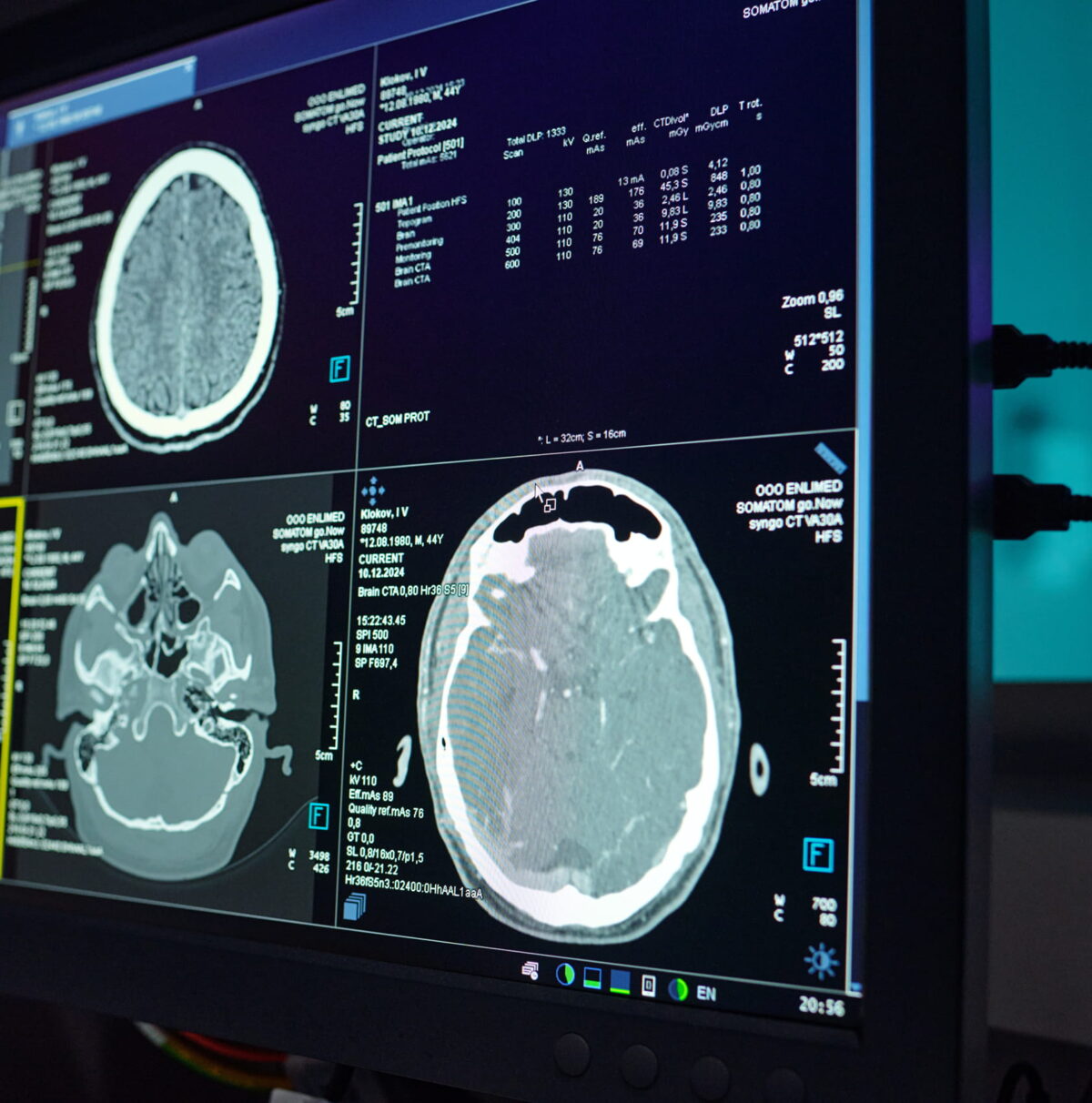
- Domain-specific computer vision models for logistics, medical imaging, and robotics.
- Model validation across lighting changes, occlusions, and other real-world conditions.

Computer vision consulting services
Strategic advisory to de-risk your automation investment before you commit to a full computer vision project. We assess technical viability, define ROI, and select the optimal mix of optical hardware and inference models before full-scale development begins. For teams not ready to staff an in-house team, we also offer computer vision as a service, managing hardware, models, and MLOps under one contract.
You get:
- Technical feasibility and ROI assessment before full-scale development.
- Dataset evaluation and annotation planning for production-ready model performance.
- Vendor-agnostic camera, sensor, and edge hardware recommendations.
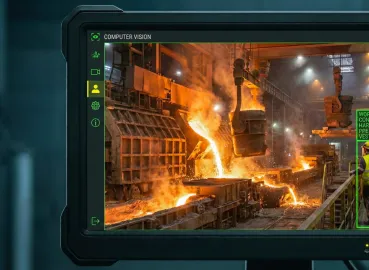
Custom computer vision software development services
We provide custom computer vision software development services to train proprietary neural networks that outperform generic pre-trained models. Our computer vision application development services focus on high-intent engineering use cases like industrial automation and Automated Optical Inspection (AOI), handling the full MLOps pipeline.
You get:
- Specialized AOI models for detecting defects, scratches, and assembly errors.
- Custom vision architectures for logistics OCR and Vision-Guided Robotics.
- Stress testing across edge cases, lighting variations, and occlusions.
Discover industries we work with
How we build computer vision solutions
Every engagement follows the same five-stage delivery path, whether you need a single model or a full optics-to-MLOps build.

Discovery & feasibility
Your existing data, optics, and lighting are assessed through hands-on optical engineering for vision systems to confirm technical feasibility and estimate realistic cost savings before development begins.

Data pipeline & annotation
We audit existing datasets, and where a real-world dataset is too thin, use generative adversarial techniques to synthesize additional edge cases such as lighting variation and occlusion. This annotation strategy ensures the resulting model reaches production-grade accuracy on live data, not just the training set.

Model development & validation
Using transfer learning and domain-specific datasets, our engineers train and stress-test custom models against held-out data to address the accuracy gaps generic pre-trained models can leave for specific use cases.

Edge & hardware integration
The trained model is deployed on your optical hardware and edge computing platform, from NVIDIA Jetson to FPGA and ASIC accelerators, with connections to PLCs, SCADA, or MES over MQTT and OPC UA.

MLOps & monitoring
Continuous monitoring flags accuracy drift caused by lighting or product changes and triggers model retraining when needed, helping maintain consistent computer vision performance after launch.
Ready to scope your build? Book a computer vision consultation with our engineering team
Computer vision solutions by industry
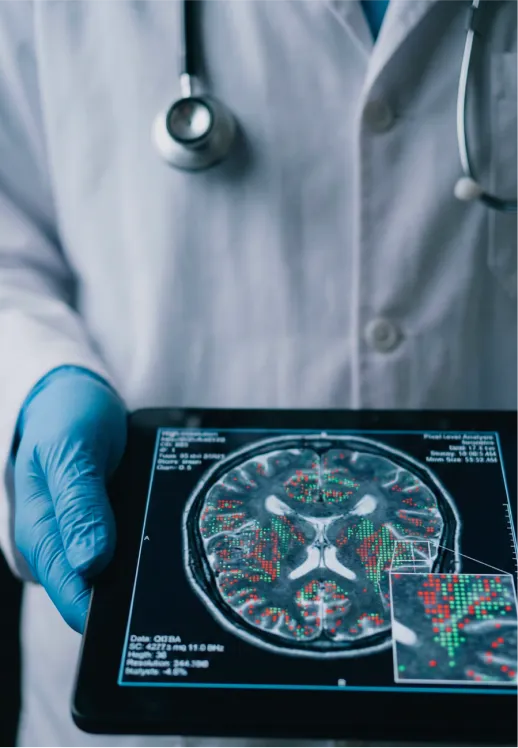
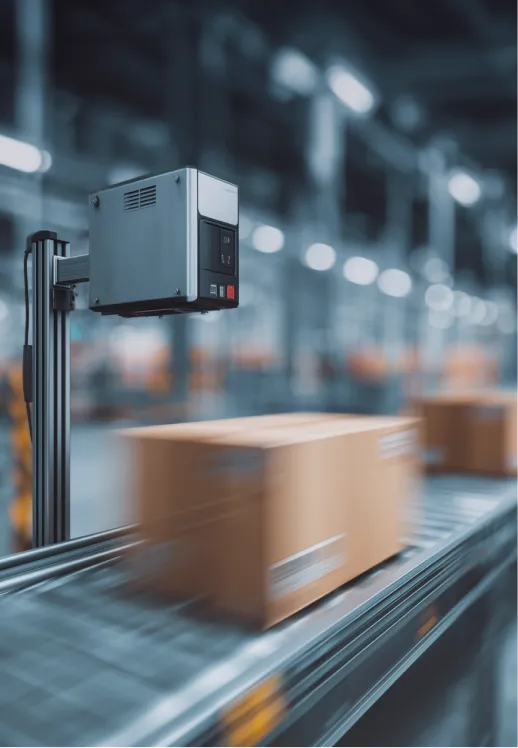
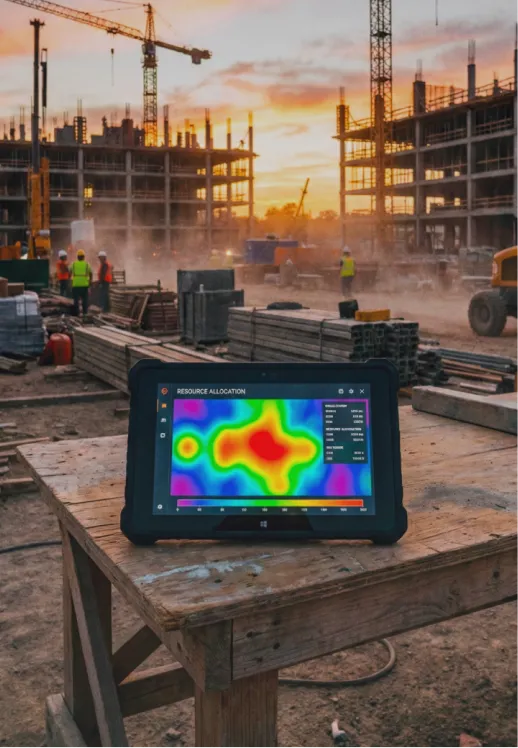
The same engineering team adapts computer vision differently depending on the environment, from clean rooms to construction sites, delivering industry-specific computer vision solutions rather than a one-size-fits-all model.
Core computer vision technologies we deliver
Beyond industry fit, these are the cutting-edge computer vision technologies every engagement draws from, covering the computer vision tasks most deployments need.
Object detection & tracking
Utilize state-of-the-art architectures (YOLO, EfficientDet) for real-time object detection and image analysis. Applications include people counting, perimeter security, and inventory tracking.
Image segmentation & processing
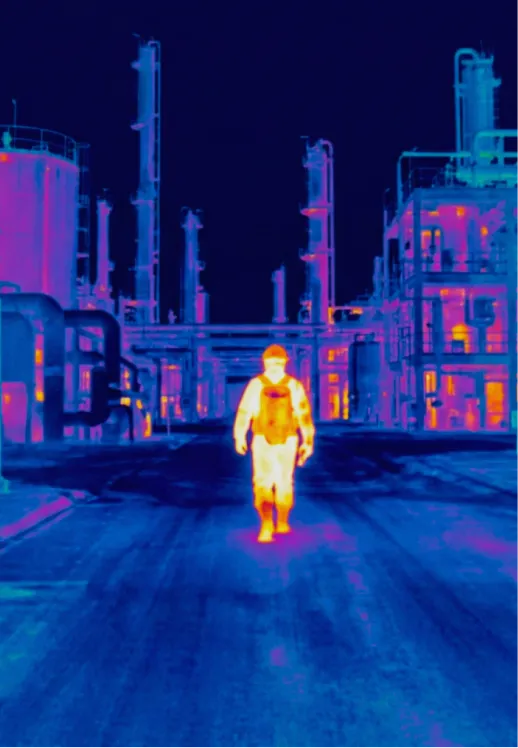
Analyze images at the pixel level for medical and industrial applications. We also use computer vision to clean and process noisy image data from thermal and low-light sensors.
Facial recognition & biometrics
Secure access control with liveness detection and encrypted embeddings. Our face recognition solutions are designed with privacy in mind and built to meet GDPR and HIPAA requirements.
3D vision & depth estimation
Enable robotic precision with Multi-sensor Fusion (LiDAR + RGB) and stereo vision. Our 3D vision solutions power autonomous navigation and bin-picking.
Compliance & сertifications
We build compliance into the architecture rather than bolting it on afterward, applying the same computer vision expertise across every certification we hold.

ISO 9001 2015 ISO 27001 2022

IEC 62443 IEC 61508 IEC 61511 IEC 60529

ISA-95

EU Cyber Resilience Act (CRA)

EU AI Act

FDA 21 CFR Part 1

ATEX

IECEx

CE

FCC

UL
RoHS

IPC-A-610 / IPC CID
Benefits of Yalantis’ custom computer vision solutions
Achieve production-grade accuracy
Move beyond generic APIs with custom computer vision solutions. We engineer high-precision software tailored to your specific environment, utilizing advanced artificial intelligence and deep pattern analysis to identify subtle variations. Our advanced computer vision techniques ensure the 99% accuracy required to automate critical workflows, from dermatology AI to industrial anomaly detection.
Deploy real-time vision on any hardware
Run intelligence where you need it. Our powerful computer vision technology is optimized for edge, cloud, or mobile environments. We ensure optimal performance on limited hardware, enabling process automation tools like drone inventory auditing and mobile asset trackers to function efficiently without internet dependency.
Scale visual automation cost-effectively
Replace labor-intensive tasks to drive business growth. We help you optimize operations like dock turnaround timing through automation. This strategic approach significantly reduces operational costs, allowing you to scale production volume without a proportional increase in headcount or manual oversight.
Maintain performance with MLOps
Prevent accuracy decay with robust MLOps pipelines. Our consulting approach includes automated video analytics monitoring, from customer behavior analysis in retail to defect trends on the line, to ensure systems adapt to lighting changes or product variations. This guarantees your artificial intelligence models maintain reliability and high precision over time without constant manual intervention.
Ensure compliance in regulated industries
Meet strict standards with explainable AI. We deliver software that provides audit trails and bias testing, crucial for enhanced security in finance (including fraud detection) and manufacturing. Our systems rigorously enforce safety protocols, ensuring compliance in regulated sectors like healthcare and heavy industry.
Bridge the talent gap with knowledge transfer
Accelerate deployment without hiring friction. Teams that hire computer vision engineers one at a time often end up with narrow, siloed expertise. Our computer vision developers provide comprehensive training and documentation instead. We help your internal development team master advanced technologies, upskilling them to maintain solutions and build institutional expertise long after the initial development phase is complete.
Testimonials from our clients


Related services and industries
Computer vision development insights
Articles
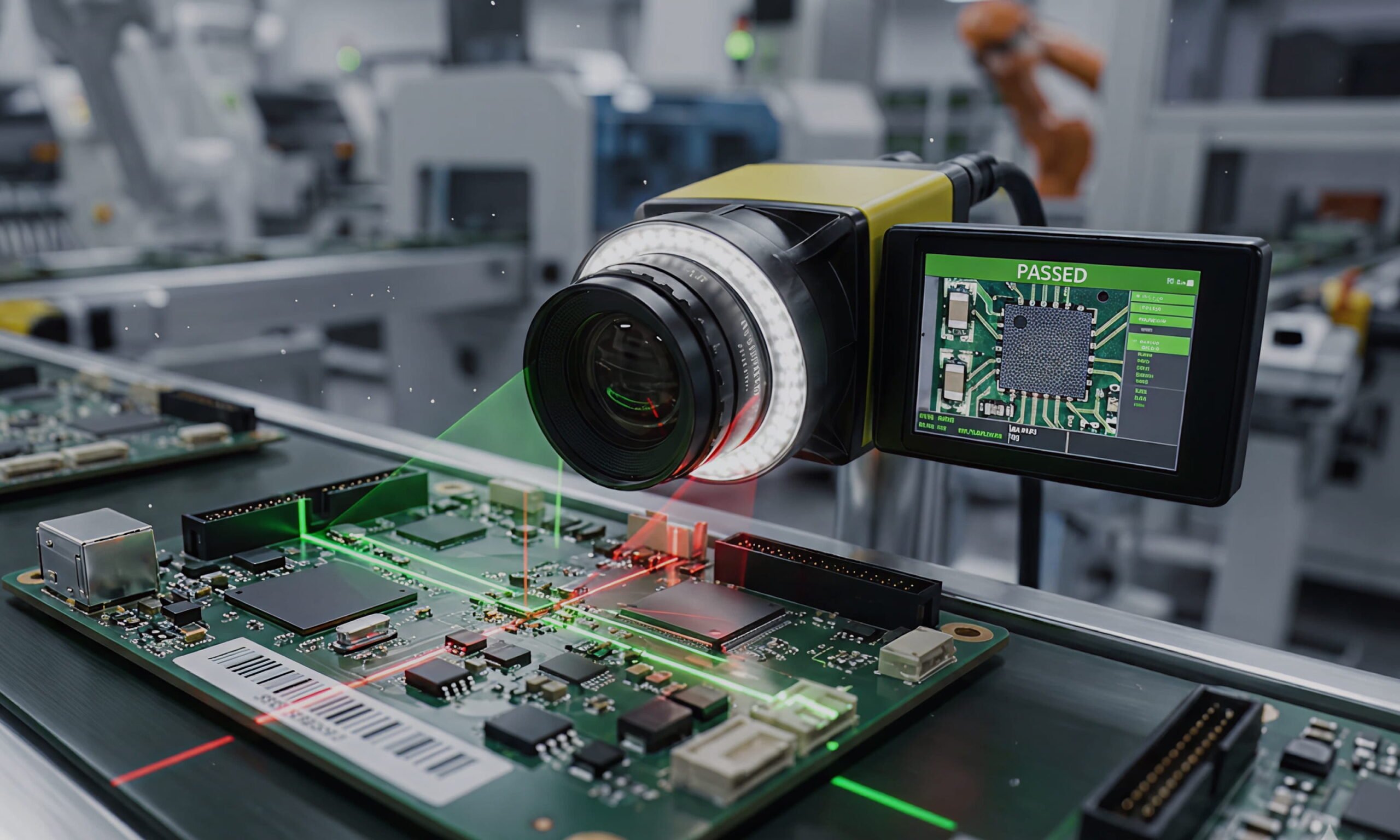
Implementing Computer Vision in Manufacturing: From Defect Detection to Safety
Learn why manufacturers adopt computer vision, what problems it solves on the factory floor, and how to implement and scale it in real production environments
Articles
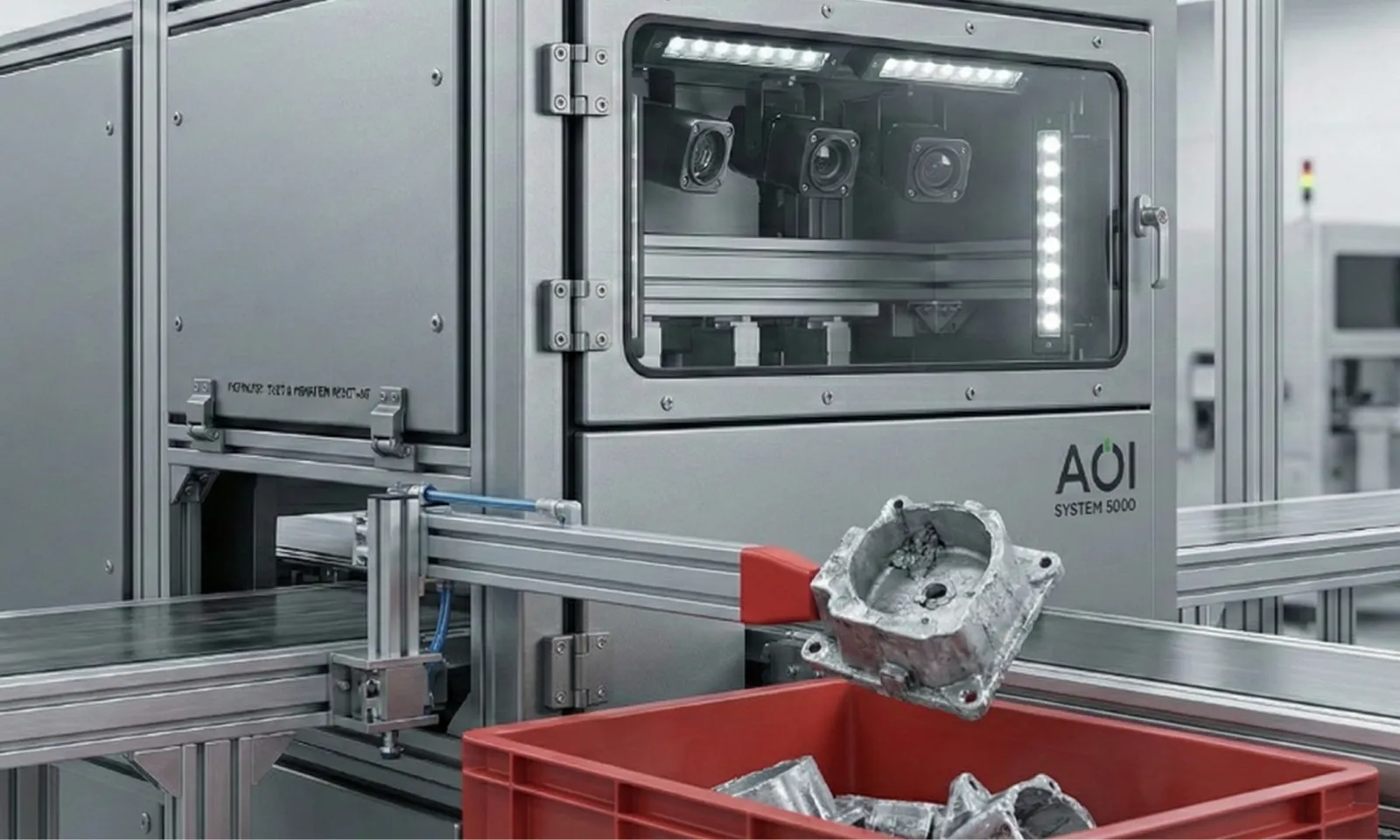
How to Implement Automated Visual Defect Inspection in Manufacturing
Learn the real cost factors, proven implementation steps, and solutions to the challenges that stop most manufacturers from automating visual inspection
Articles
How can IoT suppliers build industrial IoT software to attract new customers?
Learn the specifics of industrial IoT development to cover IoT vendors’ and their customers’ needs related to large-scale industrial IoT monitoring.
FAQ
-
Why choose Yalantis as your custom computer vision development company?
Yalantis is a full-stack software development partner for regulated, high-precision environments. With an in-house Warsaw R&D lab, we design the optics, write the embedded firmware, train the model, and run MLOps in production. One team, one contract, one point of accountability.
This approach is what separates a full-stack engineering partner from a vendor relying on multiple subcontractors. Unlike generic development companies or a computer vision software company that ships only algorithms, our computer vision company brings 17+ years of expertise in computer vision and connected-hardware engineering to every build, accountable for optics, firmware, models, and MLOps alike.
-
Do you build custom computer vision models or use pre-trained ones?
We start with transfer learning from established architectures when applicable, then fine-tune extensively. However, for specialized tasks where generic object recognition fails (rare pathologies or proprietary products) we engineer tailored solutions from scratch. This ensures your unique data is handled correctly to achieve production-grade accuracy requirements on your specific operational conditions.
-
How do you ensure the accuracy and reliability of computer vision models?
Every project undergoes rigorous validation against held-out test datasets. We perform edge case analysis to identify systematic failures and implement advanced computer vision solutions like human-in-the-loop reviews. We also set up continuous monitoring to trigger retraining if accuracy drifts, which is critical for consistent anomaly detection in dynamic environments.
-
Can computer vision solutions work in real time or on edge devices?
Yes, we specialize in real-time computer vision on edge devices through quantization and hardware-specific compilation. By optimizing computer vision technology for platforms like NVIDIA Jetson, we achieve 30-60 FPS with sub-100ms latency. This eliminates cloud dependencies and enables offline operation for applications requiring immediate responses.
-
What industries do you have experience with in computer vision?
We deliver solutions across manufacturing (quality control), healthcare (medical imaging), retail, and logistics, where we often implement optical character recognition (OCR). We also work in automotive (ADAS) and security sectors, focusing on adherence to strict safety protocols. Our team adapts to new domains through deep industry research and domain expert collaboration.
-
How do you handle data security and compliance in computer vision projects?
All projects follow frameworks like HIPAA, GDPR, and ISO 27001. We encrypt data in transit and at rest on AWS or on-premises infrastructure and implement role-based access. For video analysis involving biometrics, we design privacy-preserving architectures. This ensures that while we drive process automation, user data remains secure and compliant with global regulations.
-
Can you integrate computer vision into our existing software systems and workflows?
Yes, our computer vision application development services include integration services built on modular APIs (REST, gRPC) that connect with ERP, MES, or CRM systems. Our computer vision developers build adapter layers for legacy systems and webhooks for event-driven workflows. We provide SDKs and documentation to ensure your team can consume vision capabilities seamlessly regardless of the technology stack.
-
Do you provide hardware recommendations and engineering for vision systems?
Yes, we are a computer vision software development company offering end-to-end consulting that goes beyond software to include optical engineering and hardware selection. Whether you need standard cameras for basic monitoring or specialized sensors for microscopic anomaly detection, we help select the right lenses, lighting, and processors. We design solutions that pair the optimal physical setup with advanced computer vision software, ensuring the entire system functions cohesively in your specific operational environment.
-
What is the difference between edge and cloud computer vision?
Edge computer vision runs inference on local hardware, such as NVIDIA Jetson or an FPGA, so results return in milliseconds without an internet connection. Cloud computer vision sends video to remote servers for processing, trading lower device cost for latency and ongoing bandwidth expense. We deploy whichever model fits your latency and connectivity requirements.
-
How long does a computer vision development project take?
Timelines depend on scope: a feasibility study and proof of concept typically take four to six weeks, and a production-ready custom model adds eight to twelve weeks for data collection, training, and validation, with hardware integration extending the timeline further. We scope an exact schedule during discovery, before any contract is signed.
How to get started with Yalantis
Email us, give us a call, or pick a convenient time to talk.
Prefer to start with a message? Tell us about your project, and we’ll get back to you.

Thank you for contacting us.
Keep an eye on your inbox. We’ll be in touch Meanwhile, you can explore our hottest case studies and read client feedback on https://clutch.co/profile/yalantisu0022 target=u0022_blanku0022 rel=u0022noopeneru0022u003eClutch.u003c/au003eu003c/pu003e