

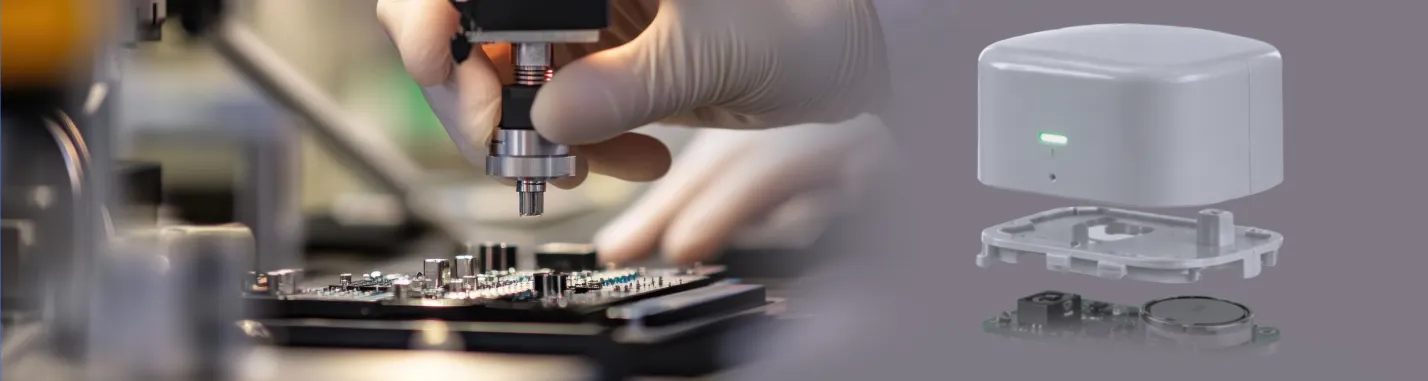
A fixed-scope connected-device prototype engagement. Yalantis takes you from validated concept to a working demo unit — schematic, PCB, firmware on target hardware, cloud connectivity — with security architecture and threat model in place from the first sprint, so your path to certification starts clean instead of being retrofitted later.
Connected device prototype engineering

$80,000
fixed fee
10-12
weeks
duration
6
artifacts
deliverables
Platform
Off-the-shelf
The cost of being wrong is paid in tooling, not sprints.
Hardware prototypes get you committed to a vendor, a chipset, a form factor, a manufacturing path. The wrong call at the prototype stage cascades into months of rework and six-figure tooling costs that don’t have an undo button. This engagement gives you a working unit you can validate before any of that gets locked in.
The production-money trap
Committing to manufacturing before validating the concept is how teams sink $500k+ into tooling for a product the market never wanted. A prototype kills that risk at a fraction of the cost.
The retrofit tax
Bolting security and certification onto a finished device costs 3 to 5 times more than building it in. Most teams discover this only when their first FDA, MDR, or CRA review hits.
The slide-deck dead-end
Investors, regulators, and enterprise buyers don’t fund slides. A working unit on the table changes the conversation in a way no rendering or video ever has.
Prototype deliverables
At week 10, you hold a functioning connected device — not a slide, not a video, not a Figma flow. And you hold the engineering artifacts that turn it into a manufacturable product later: schematic, PCB layout, firmware, cloud integration, and the security work most teams leave until it’s too expensive to redo.
-
1.
Schematic & PCB layout
Production-quality schematic with bill of materials, plus PCB layout ready for fabrication. Built on an off-the-shelf platform (Raspberry Pi Compute Module, STM32, or comparable Arm eval board) so working hardware lands fast.
-
2.
Firmware running on target hardware
The application firmware compiled, flashed, and running on your demo unit. Architected for over-the-air updates from day one, so the path from prototype to fielded product doesn’t require a rewrite.
-
3.
Basic cloud connectivity
Device-to-cloud connection with authenticated telemetry. Enough to demonstrate end-to-end data flow to investors or stakeholders, and enough to validate your cloud architecture choices before scaling them.
-
4.
Working demo unit
A physical device you can put in users’ hands, on a CTO’s desk, or in an investor meeting. Hardware that works, not a 3D render. The single artifact that changes every conversation downstream.
-
5.
Security architecture, SBOM & threat model
A documented security architecture, software bill of materials, and threat model produced alongside the hardware — not retrofitted. This is what sets up CRA, IEC 62443, and FDA cybersecurity expectations to land clean instead of going into remediation.
-
6.
Concept validation report & path to production
What worked, what didn’t, what you learned. A recommended path from prototype to production: design-for-manufacturing scope, certification pathway, EMS partner considerations, and cost-to-build projections.
Most PoCs are throwaway code. This one survives the trip to production
The reason most prototype builds are useless six months later: they were never built to survive. Throwaway firmware, no SBOM, no threat model, no thought about updates, no consideration for compliance. When the team tries to take the working prototype to production, they discover they need to start over. Yalantis builds the prototype so it doesn’t.
Security built-in, not bolted on
Security architecture, SBOM, and threat model are produced alongside the hardware, in the same engagement, by the same team. Not bolted on later. Not a separate audit. Built in from sprint one, so CRA and IEC compliance work later starts clean.
Platform Off-the-shelf, deliberately
We start on a Raspberry Pi Compute Module, STM32, or comparable Arm eval board — Arm-verified partner platforms — rather than custom silicon. You see working hardware in weeks, not after a 9-month ASIC cycle. Custom silicon is a production-stage decision, not a prototype-stage one.
Scope Fixed price, fixed scope
$80,000, 10 weeks, six named deliverables. Not a discovery phase. Not time-and-materials. The scope is what makes the budget approvable in the first place, and what protects you from the “we paid for a prototype and got slides” outcome.
Ten weeks. Three phases. A working unit at the end.
The engagement runs in three phases. Each phase ends with a working artifact, so even if the engagement got cut short tomorrow, you would still have something concrete in your hands. That’s a structural protection against the all-too-common “paid for a prototype, got a slide deck” outcome.

Weeks W1–2 — Architecture & component selection Requirements review, security architecture, and component selection on an off-the-shelf platform. This is the phase that prevents most of the production-stage rework — choose wrong here, and you’ll suffer for a year. The team aligns on a constraint set everyone can defend.

Weeks W3–7 — Hardware bring-up & firmware PCB design and fabrication, board bring-up, and firmware development on target hardware. By the end of this phase, the unit boots, runs the application code, and behaves like a device — not a dev board with jumper wires. Real hardware, real software, real telemetry.

Weeks W8–10 — Cloud, demo unit & threat model Cloud integration, end-to-end telemetry, demo unit polish, plus the threat model and SBOM artifacts that protect the certification path. You finish with a working unit in hand and the documentation a regulator will eventually ask for.
Kickoff within 15 business days of signed scope. Off-the-shelf platforms only at this stage; custom silicon decisions belong to the production engagement, not the prototype.
Built for the team about to spend production money on an unproven device
If you are moving from a validated concept to “does this actually work in physical form” — and the next step is a manufacturing commitment — you are the buyer for this. These are the three groups where Yalantis has seen the fixed-fee prototype produce the most leverage on the decisions that follow.

Medtech & digital-health startups
A working unit for investor demos and early FDA, MDR, or IEC conversations. Security-and-threat-model-from-day-one is the differentiator that matters most here, because it protects the regulatory path.

SaaS entering hardware
You are a software company adding a physical device — a sensor, a tracker, a connected appliance. You have no hardware team in-house. The prototype proves the concept before you commit to hiring an embedded team or signing a production agreement.

New product development
A new connected product inside an existing portfolio. You need to validate before the organization commits production capital. The fixed deliverable de-risks the stage-gate decision and gives engineering a credible artifact to defend in the budget review.
Get a working prototype before you commit production money.
Leave your info and a few words about the project. We’ll review it and reach out to book a call.
Welcome to Yalantis, please fill out the form and we’ll get back to you.

Thank you for contacting us.
Keep an eye on your inbox. We’ll be in touch shortly
Meanwhile, you can explore our hottest case studies and read
client feedback on Clutch.