



Yalantis delivers custom predictive maintenance solutions for manufacturing, logistics, energy, and other industries. We combine AI/ML, IoT, and cloud technologies to reduce downtime and maintenance costs while extending asset life.
Predictive Maintenance Lösungen and Services

Yalantis by the numbers
17+
Jahre
of engineering experience
400+
Ingenieure
across our delivery teams
200+
Projekte geliefert
91%
NPS
from our clients






Challenges predictive maintenance solves
We work with midsize and enterprise healthcare organizations, usually with a CTO or a VP of engineering on the other side of the table.

Unplanned downtime from sudden equipment breakages
Instead of reacting to a breakdown on the production line or a commercial vehicle, which halts output and forces expensive emergency repairs, predictive maintenance provides a forward-looking view. By analyzing sensor data from CNCs, robotics, conveyors, motors, pumps, and other critical assets, it predicts potential component issues before they happen, allowing you to schedule service during planned downtime.
Überschreitung der Wartung durch starre Serviceintervalle
Forget replacing parts on a fixed, time-based schedule or run-hour interval, which often means discarding healthy components. Predictive maintenance shifts to a condition-based approach, so service happens only when data shows it is actually needed, optimizing spend on both parts and labor.
No real-time visibility into asset health
Without clear data, plant managers and fleet managers often oversee the gradual degradation of critical components, such as motors, bearings, engines, and transmissions. Intelligent monitoring turns this ambiguity into awareness, providing a continuous health score for key systems across your entire operation.
Aufgeblähter Ersatzteilbestand aufgrund von Unsicherheit
Maintaining a large, costly inventory of spare parts ties up significant capital. By accurately forecasting when specific components will need replacement, you can move to a just-in-time parts strategy, reducing inventory costs and waste.
Rising costs from subtle performance issues
Minor, undetected problems, such as a drifting calibration on the plant floor or incorrect tire pressure in a vehicle fleet, can slowly raise energy or fuel consumption across an operation. Using predictive analytics, you can catch these subtle anomalies early and flag assets for tuning before losses add up.
High safety risks from undetected mechanical problems
The risk of a breakdown in safety-critical systems is a constant concern for worker safety and liability. Predictive maintenance identifies stress patterns and abnormal wear on critical equipment, providing crucial alerts that flag a potential machine failure before it leads to an incident.

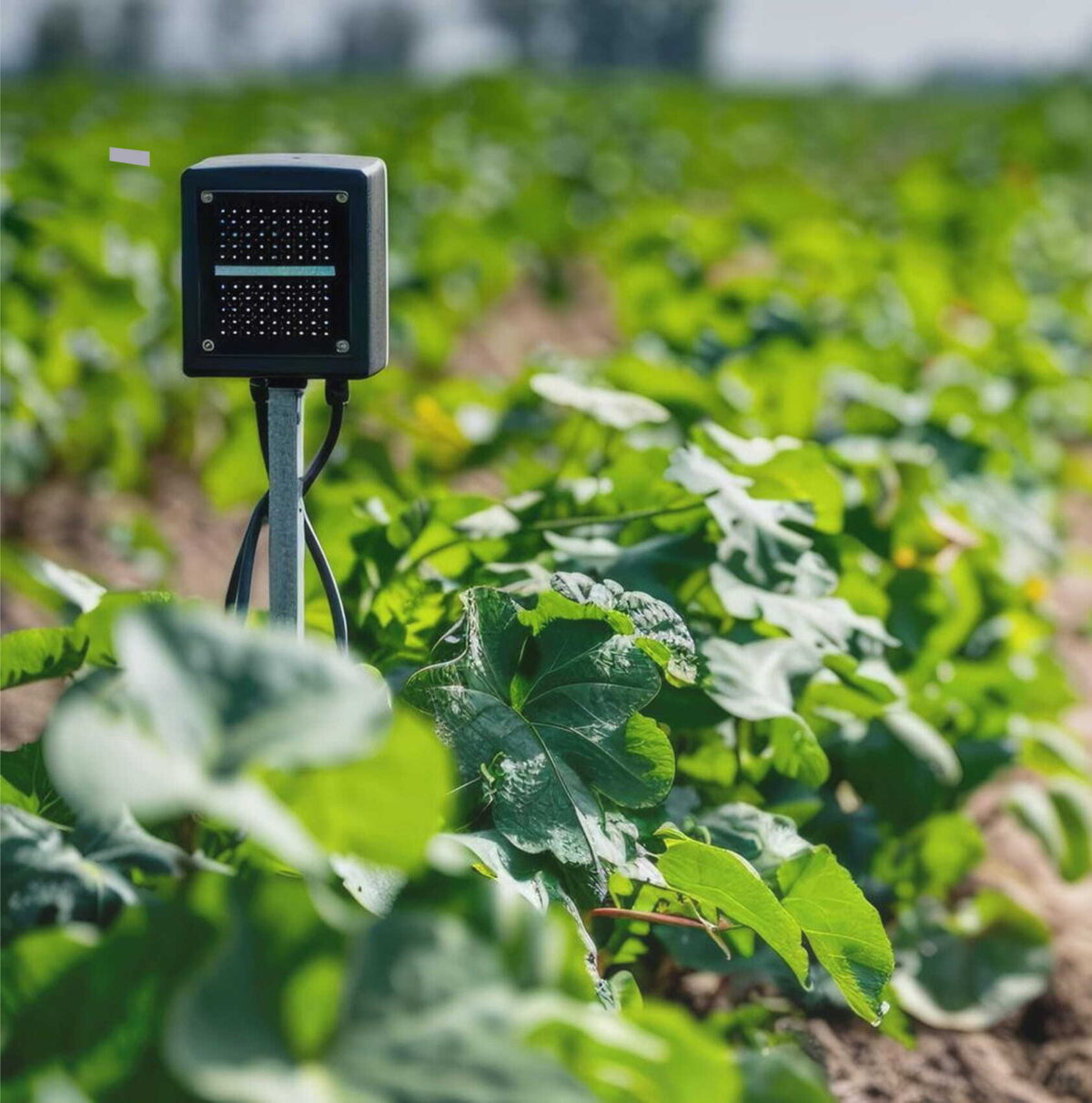


Predictive maintenance solutions and services
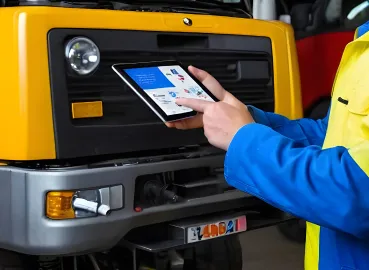
End-to-end predictive maintenance platform development
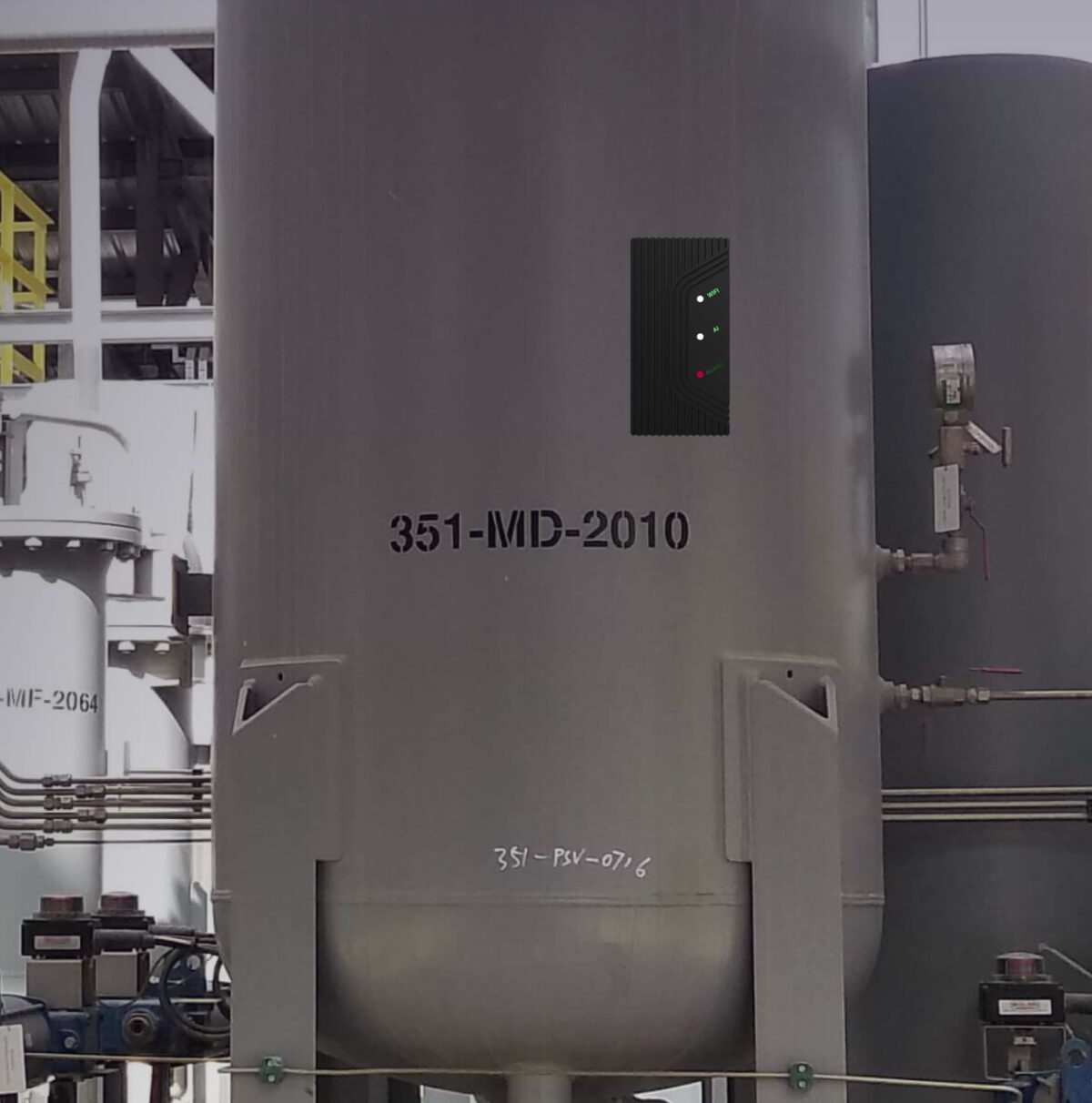
Get one predictive maintenance platform that watches every asset and tells you what needs attention before it fails. We handle sensor installation, data integration, and model deployment, so predictions turn into work orders inside the tools your team already uses. This is our flagship solution and the foundation every other service on this page builds on.
- Sensor & hardware deployment
- Anomaly detection & failure prediction
- Asset health command center
- CMMS & ERP workflow integration

AI/ML predictive maintenance model development
Get predictive models trained on your own historical and live asset data, so predictions reflect how your equipment actually behaves. Our data scientists handle everything from feature engineering to deployment and retraining. For a pre-built starting point that shortens time to your first prediction, see our Predictive ML Model accelerator.
- Data exploration & feature engineering
- Custom model training & validation
- Model deployment & API integration
- Ongoing monitoring & retraining
IoT sensor strategy & deployment
Get the right sensors on the right assets without guesswork or downtime. We identify your highest-value failure modes, select and install the hardware, and validate the data is clean enough to build reliable models on.
- Asset failure mode analysis
- Sensor & hardware selection
- Installation & gateway setup
- Data quality validation
Data integration & pipeline development
Get one analysis-ready storage for data that’s currently scattered across PLCs, sensors, telematics, and computerized maintenance management systems (CMMS). We build the connectors and pipelines that pull it together, clean it, and keep it flowing reliably.
- Multi-source connector development
- Data ingestion & transformation
- Centralized data lake or warehouse
- Pipeline monitoring & maintenance

Standalone root cause analysis (RCA) module
Get to the true anomaly root cause in minutes, not hours. This module plugs into your existing alert systems and upgrades basic alarms with visualization and AI-assisted diagnostics your team can act on right away.
- Interactive data visualization
- Historical & real-time data correlation
- AI-assisted diagnostics
- Collaborative reporting tools
Entdecken Sie unsere Fälle
Wählen Sie Ihren Tarif
Engagement and pricing models
We shape the engagement around your goals, data readiness, and how much of the work you want to own.
Project-based development
A fixed-scope build of a platform, model, or sensor rollout, with clear milestones and deliverables.
Engagiertes Team
An extended team of data scientists and IoT engineers embedded in your roadmap for ongoing development.
Managed predictive maintenance as a service
A fully managed service with 24/7 monitoring, so you get outcomes without building an in-house team or coordinating a third party for every update.
Per-asset and subscription pricing
Cost that scales with the number of monitored equipment, so a pilot stays affordable and an enterprise rollout stays predictable.
Not sure which model fits your operation?
We will help you scope the right approach.
Our predictive maintenance implementation process

Entdeckung und Bewertung
We start with an in-depth predictive maintenance consulting session to understand your specific challenges, key assets, and business goals.

Data and hardware strategy
We devise a comprehensive data and hardware strategy, leveraging any existing data sources and deploying custom IoT sensors where needed.

Model development
Our data scientists build and validate custom machine learning models on your historical and live asset data.

Platform build and integration
Our engineers build the software platform to deliver alerts and insights, then integrate it into your existing CMMS, ERP, SCADA, or MES workflows.

Rollout and training
We roll the solution out to your maintenance team with full training and change-management support, aligned to how your crews already handle maintenance activities.

Ongoing support and retraining
We provide ongoing support and periodically retrain the models against predictive maintenance best practices, so the solution continuously delivers maximum value as conditions change.





Benefits of developing a predictive maintenance solution with Yalantis
Maximize uptime
Our expertise in asset failure modes and custom AI models allows us to forecast equipment failure, transforming costly unplanned downtime into scheduled, low-disruption service events.
Optimize maintenance spend
Our full-stack solution transitions you from rigid, calendar-based service to condition-based maintenance, so you only spend on parts and labor when data shows it’s necessary. That alone tends to lower operational costs without affecting productivity.
Maximize asset value & lifespan
We build systems for smarter asset management, giving you deep visibility into component health so you can address minor issues proactively and extend the lifecycle of your most high-value assets.
Enhance operational safety
Unsere Erfahrung versetzt uns in die Lage, Belastungsmuster in sicherheitskritischen Systemen zu erkennen, wodurch wir Ihrem Team wichtige Frühwarnungen liefern, um mechanische Risiken zu mindern, bevor sie zu einem Zwischenfall führen.
Streamline spare parts inventory
By accurately forecasting component issues, our solutions let you move from a capital-intensive “just-in-case” inventory to a lean, cost-effective “just-in-time” model.
Unlock actionable asset intelligence
We balance advanced AI with practical strategy to transform raw sensor readings into clear, actionable, real-time insights, empowering your team to make smarter, data-driven maintenance decisions.
Work with an experienced predictive maintenance company
With 17+ years of IoT and embedded engineering experience, an in-house R&D lab, and 200+ delivered projects, we bring proven full-stack ownership to your predictive maintenance program.
Technologien, mit denen wir arbeiten
Rust

C
C++

Kotlin
Bootloader

Linux-Kernel

AWS IoT

Arduino

ESP32

STM32
NRF52

Zephyr

LoRaWAN

MQTT
Compliance and security support
What we reach for depends on your compliance requirements and the code you already own.
OT and IT security standards we follow
As industrial systems connect legacy controllers, sensors, and cloud platforms, OT/IT convergence introduces new risk. We build and secure predictive maintenance platforms to the following standards:
- IEC 62443: the leading standard for securing industrial automation and control systems (OT security)
- ISO 27001: our certified framework for information security management
- NIST / CISA guidelines: for hardening the connections between shop-floor systems and cloud infrastructure
Kundenstimmen








Verwandte Dienstleistungen und Branchen
Industrielle IoT-Lösungen
IT-Dienstleistungen für das verarbeitende Gewerbe
Dienstleistungen für die Entwicklung von digitalen Zwillingen
Entwicklung von Computer Vision
Legacy modernization services for manufacturing
Entwicklung von maschinellem Lernen
Data-Science-Beratungsdienste
Edge-KI
Entwicklung von KI-Diensten
Predictive maintenance services insights

Artikel
Wie IoT für vorausschauende Wartung in der Logistik Ihre Flottenvorgänge transformieren kann
Erfahren Sie, wie IoT-Sensoren und Rust-basierte Systeme vorausschauende Wartung in der Logistik ermöglichen. Reduzieren Sie Ausfallzeiten und steigern Sie die Zuverlässigkeit.

Artikel
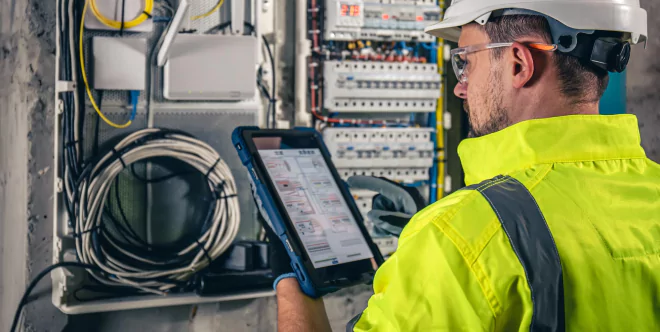
Wie Hersteller das Internet der Dinge (IoT) für die vorausschauende Instandhaltung nutzen
Erfahren Sie mehr über die Vorteile der vorausschauenden Instandhaltung im Internet der Dinge für große Hersteller und darüber, wie eine Webanwendung deren Effektivität steigern kann.
Artikel
Im Voraus informiert sein: IoT-Instandhaltungskonzepte zur vorausschauenden Wartung
Erfahren Sie, wie die vorausschauende Wartung mittels IoT die Anlagenleistung verbessern und Ausfallzeiten reduzieren kann. Lesen Sie jetzt den unverzichtbaren Leitfaden zur Optimierung Ihrer Betriebsabläufe.
Artikel
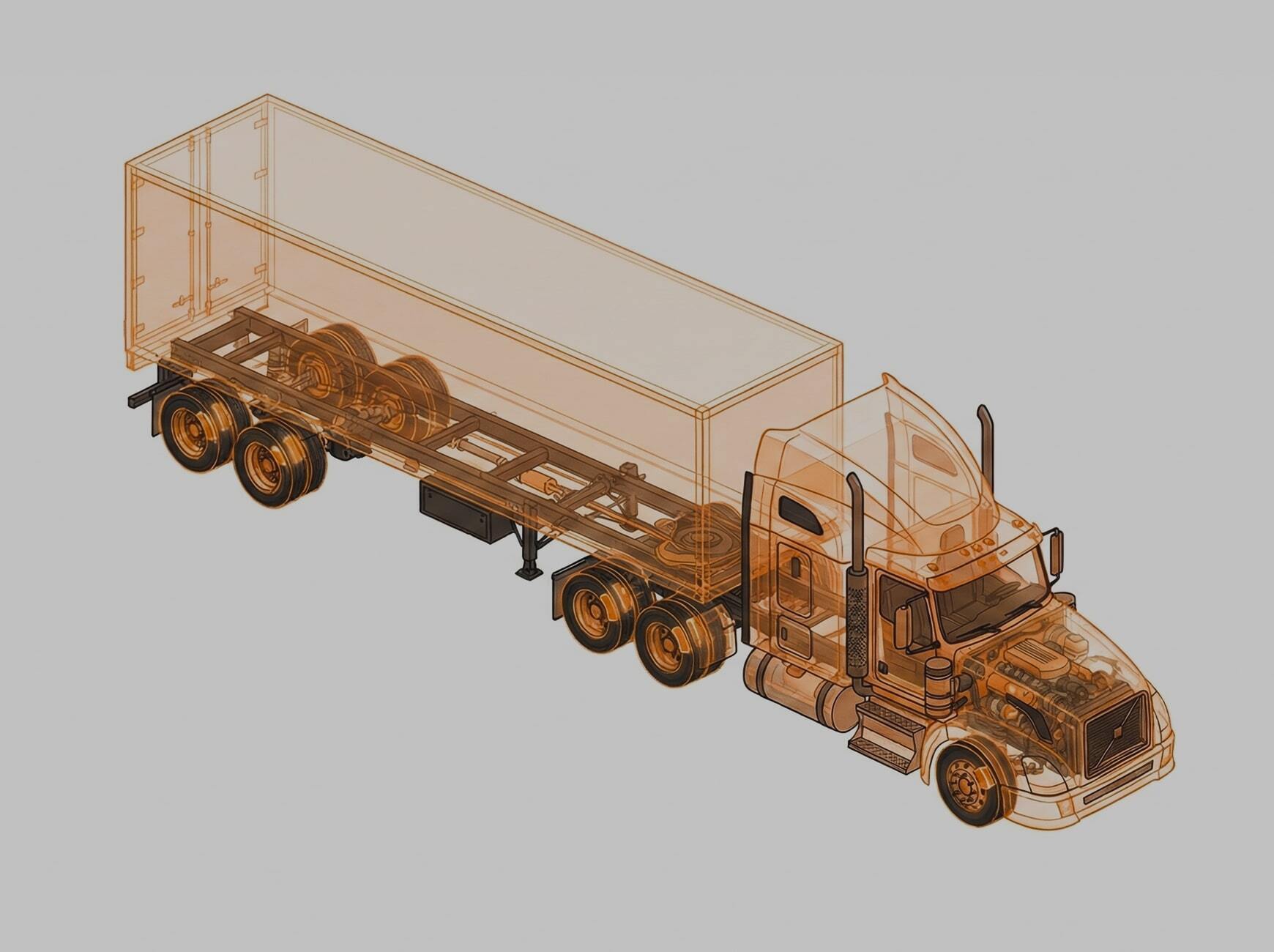
Predictive Maintenance for Commercial Fleets: How Embedded Systems Prevent Costly Breakdowns
Real-time vehicle data can help you detect problems before they disrupt operations. Discover how to make maintenance decisions based on actual vehicle condition to increase uptime and extend equipment lifespan.
FAQ
-
What is predictive maintenance?
Predictive maintenance (PdM) uses sensor data, IoT connectivity, and machine learning to anticipate failures across rotating equipment, motors, and other industrial equipment, so your team can service it just before that happens instead of on a fixed schedule.
Predictive vs. preventive maintenance
Preventive maintenance services equipment on a fixed calendar or run-hour interval, whether or not it actually needs it. Predictive maintenance instead reads the real condition of an asset and schedules service only when data shows it is necessary, which cuts unnecessary part replacements and unexpected stoppage alike.
-
What is the difference between predictive maintenance services and a predictive maintenance platform?
Predictive maintenance services cover the end-to-end work of scoping, building, and integrating a solution: sensor strategy, data pipelines, machine learning models, and platform development. Typically, these are delivered as a project-based or dedicated-team engagement. A predictive maintenance platform is the flagship software product itself, the dashboard, alerts, and APIs that keep running in real time once the build is complete. Most engagements start with services and end with a platform that you own and run, or that we continue to run for you as a managed service.
-
Wie unterscheidet sich die vorausschauende Wartung von der vorbeugenden Wartung, die wir bereits durchführen?
While preventive maintenance is a valuable step, it operates on fixed schedules (time or mileage), often leading to unnecessary service and part replacements on healthy assets. Predictive maintenance is far more intelligent. It uses real-time data from IoT sensors and machine learning to monitor the actual condition of your equipment. Instead of servicing on a schedule, you perform maintenance precisely when it’s needed, just before a potential incident occurs. This data-driven approach maximizes asset lifespan, reduces costs, and drastically improves uptime.
-
Can you build custom predictive maintenance models trained on our own asset data?
Yes. Every model we build is trained on your historical and live asset data rather than a generic off-the-shelf library, so it learns the specific operating patterns, failure modes, and tolerances of your own equipment. Our data scientists handle data exploration, data analysis, feature engineering, model training, validation, and ongoing retraining as conditions on your assets change.
-
Do you offer predictive maintenance as a fully managed service with 24/7 monitoring?
Yes. Beyond project-based development, we offer managed predictive maintenance as a service with 24/7 monitoring, so your team gets continuous asset health tracking and alerts without hiring and staffing an in-house data science or IoT team.
-
Can we outsource AI/ML predictive maintenance software development to your team?
Yes. We work as a dedicated team embedded in your roadmap, or take on discrete, project-based AI/ML predictive maintenance development, from data exploration through model deployment and retraining, so your team can focus on operations rather than building in-house AI expertise from scratch.
-
What industries and equipment do you support?
We build predictive maintenance solutions for industrial and automotive manufacturing (CNCs, robotics, conveyors), logistics and transportation, private fleets, industrial and machinery OEMs, energy and mining, and warehouse and fulfillment operations. On the equipment side, we work with rotating machinery, motors, pumps, conveyors, vehicles, and other critical assets instrumented with vibration, thermal, or telematics sensors.
-
Welche Art von Daten und Ausrüstung benötigen wir, um zu beginnen?
This is a common question, and the answer depends on your current setup. Many modern fleets and facilities already have equipment fitted with sensors and other monitoring technologies that generate valuable data. Our first step is always to assess whether we can leverage your existing data. If there are gaps, our team specializes in end-to-end IoT development, meaning we can design, build, and install the specific sensors and data pipelines required to monitor your critical assets effectively.
-
How do you integrate with our existing sensors, PLCs, SCADA, and MES? (OT/IT integration)
We build custom connectors to your existing PLCs, SCADA systems, MES platforms, and sensor or telematics feeds, and harmonize that data through a dedicated data pipeline. Where legacy controllers use proprietary or older protocols, our IoT engineers design gateways and edge hardware, sized to the available bandwidth, to connect everything from a single sensor node to hundreds of IoT devices, bridging them securely into the cloud without disrupting production.
-
How does a predictive maintenance platform integrate with an existing CMMS or ERP system?
Die nahtlose Integration in Ihre bestehenden Systeme ist nicht nur ein Feature; sie ist von grundlegender Bedeutung für die Operationalisierung von Erkenntnissen und die Maximierung des Wertes. Eine moderne PdM-Plattform fungiert als intelligente Schicht, die Ihr Computerized Maintenance Management System (CMMS) oder Ihre Enterprise-Resource-Planning-Software (ERP) ergänzt. Der Prozess ist eine Einbahnstraße, die durch robuste APIs erleichtert wird. [Hinweis: „two-way street“ bedeutet eigentlich „Zeinbahnstraße/Zwei-Weg-Verkehr“; hier ist die korrekte Übersetzung:] Der Prozess ist ein gegenseitiger Austausch, der durch robuste APIs ermöglicht wird. Ursprünglich liest die PdM-Plattform historische Wartungsaufzeichnungen und Arbeitsauftragsdaten aus Ihrem CMMS/ERP ein, um das Training ihrer Modelle für maschinelles Lernen zu bereichern und zu beschleunigen.
Once operational, the real power becomes evident: when the platform predicts an impending asset failure, it automatically triggers an action in your existing system. This could be generating a detailed work order in your CMMS, checking spare parts availability in your ERP’s inventory module, and even scheduling the required maintenance specialist. This creates a closed-loop workflow that transforms a data-driven prediction into a concrete, scheduled action without manual intervention, turning your CMMS from a simple record-keeping tool into a proactive, intelligent system.
-
What data security and OT standards do you follow?
We follow IEC 62443 for industrial automation and control system security, and we hold ISO 27001 certification for information security management. For clients connecting legacy controllers to the cloud, we also follow NIST and CISA guidance for OT/IT convergence, so shop-floor systems, sensor data, and cloud infrastructure are hardened end to end.
-
Wie lange dauert es, bis sich eine Investition auszahlt (ROI)?
While the full implementation timeline varies based on complexity, initial insights can often be generated within the first few months. The ROI for predictive maintenance is significant and multifaceted, coming from direct cost savings across your operation. You will see returns from less unplanned downtime, lower maintenance costs from eliminating unnecessary service, fewer minor issues escalating into a major repair, and a leaner, just-in-time parts inventory. Furthermore, by ensuring your equipment runs under optimal conditions, you protect your long-term capital investment by extending its lifetime.
-
How quickly can a pilot deliver measurable results?
A well-scoped pilot, focused on a small number of high-value assets with well-understood failure modes, can typically surface its first meaningful signals within a few weeks to a couple of months, depending on how much historical data is already available. That timeline funds the discovery and model-training work described in our implementation process, and it is the fastest path to a clear, defensible business case before an enterprise-wide rollout.
-
Can a predictive maintenance program be scaled from a pilot project to a full enterprise deployment?
Yes, not only is this possible, it is the most effective and recommended strategy for enterprise adoption. A successful deployment begins with a strategic pilot program focused on a small number of high-value, critical assets that have well-understood failure modes. This allows us to quickly demonstrate tangible ROI, refine the machine learning models on a manageable dataset, and establish a clear business case for expansion. The key is to prove value early and create internal champions for the program.Once the pilot is successful, we leverage a scalable cloud architecture and the established data models to create a standardized blueprint for a phased, enterprise-wide rollout. This methodical approach allows your organization to manage change effectively, learn from each phase, and expand the program’s footprint across different facilities or asset classes with confidence. This ensures that the solution grows with your operational needs and delivers compounding value as more assets are brought online.
-
Wie minimieren Ihre maßgeschneiderten Modelle für maschinelles Lernen falsche Positive und Alarmmüdigkeit?
Alert fatigue is a primary reason why generic PdM initiatives fail; if technicians are constantly chasing phantom issues, they will lose trust in the system. We combat this directly through the development of highly specific, custom machine learning models. Unlike off-the-shelf software that uses generic algorithms, our models are trained exclusively on your historical data, allowing them to learn the unique “fingerprint” of each of your assets. They understand that a pressure spike which is normal during a startup sequence is a critical anomaly during steady-state operation that requires diagnostic evaluation.
Darüber hinaus nutzen wir ausgeklügeltes Feature Engineering, um die aussagekräftigsten Datensignale zu isolieren und gleichzeitig Systemrauschen zu ignorieren. Am wichtigsten ist, dass unsere Plattformen einen Human-in-the-Loop-Feedback-Mechanismus beinhalten. Dies ermöglicht es Ihren Fachexperten, Warnmeldungen zu validieren und zu bestätigen, ob eine Vorhersage zutreffend war. Dieses Feedback wird dann verwendet, um die Modelle kontinuierlich neu zu trainieren und zu verfeinern, wodurch ein System entsteht, das mit der Zeit intelligenter und präziser wird und sicherstellt, dass eine ausgelöste Warnmeldung sofortige Aufmerksamkeit erfordert.
-
What is the difference between predictive and prescriptive maintenance, and is that a future capability?
This is an excellent question that gets to the future of industrial maintenance. Think of it as an evolution in intelligence. Predictive maintenance excels at answering the questions, “What will likely fail?” and “When will it likely fail?” It provides a forecast, a probability, and a time window, enabling you to plan and schedule maintenance proactively. For example: “Alert: Bearing B-123 on Conveyor 4 shows a 75% probability of failure in the next 150 operating hours.”
Prescriptive maintenance is the next logical step, answering the crucial follow-up question: “What should I do about it?” It analyzes the prediction in the context of broader data and provides a specific recommendation. The same alert in a prescriptive system might read: “Alert: Bearing B-123 will likely fail. We recommend replacing it during the scheduled plant-wide downtime on Tuesday. The required part (PN-X) is in stock at the primary warehouse. Click here to automatically generate a work order and allocate the part.” The robust data infrastructure and accurate models we build for your predictive solution are the essential foundation required to unlock prescriptive capabilities in the future.
Lass uns einen Anruf vereinbaren
Schreiben Sie uns eine E-Mail, rufen Sie uns an oder wählen Sie einen passenden Zeitpunkt für ein Gespräch.
Möchten Sie lieber mit einer Nachricht beginnen? Erzählen Sie uns von Ihrem Projekt, und wir werden uns bei Ihnen melden.

Vielen Dank, dass Sie uns kontaktiert haben.
Behalten Sie Ihren Posteingang im Auge. Wir werden uns in Kürze bei Ihnen melden. In der Zwischenzeit können Sie sich unsere besten Fallstudien ansehen und Kundenfeedback auf https://clutch.co/profile/yalantisu0022 target=u0022_blanku0022 rel=u0022noopeneru0022u003eClutch.u003c/au003eu003c/pu003e lesen.