




Adherence data encrypted from inhaler to physician dashboard.
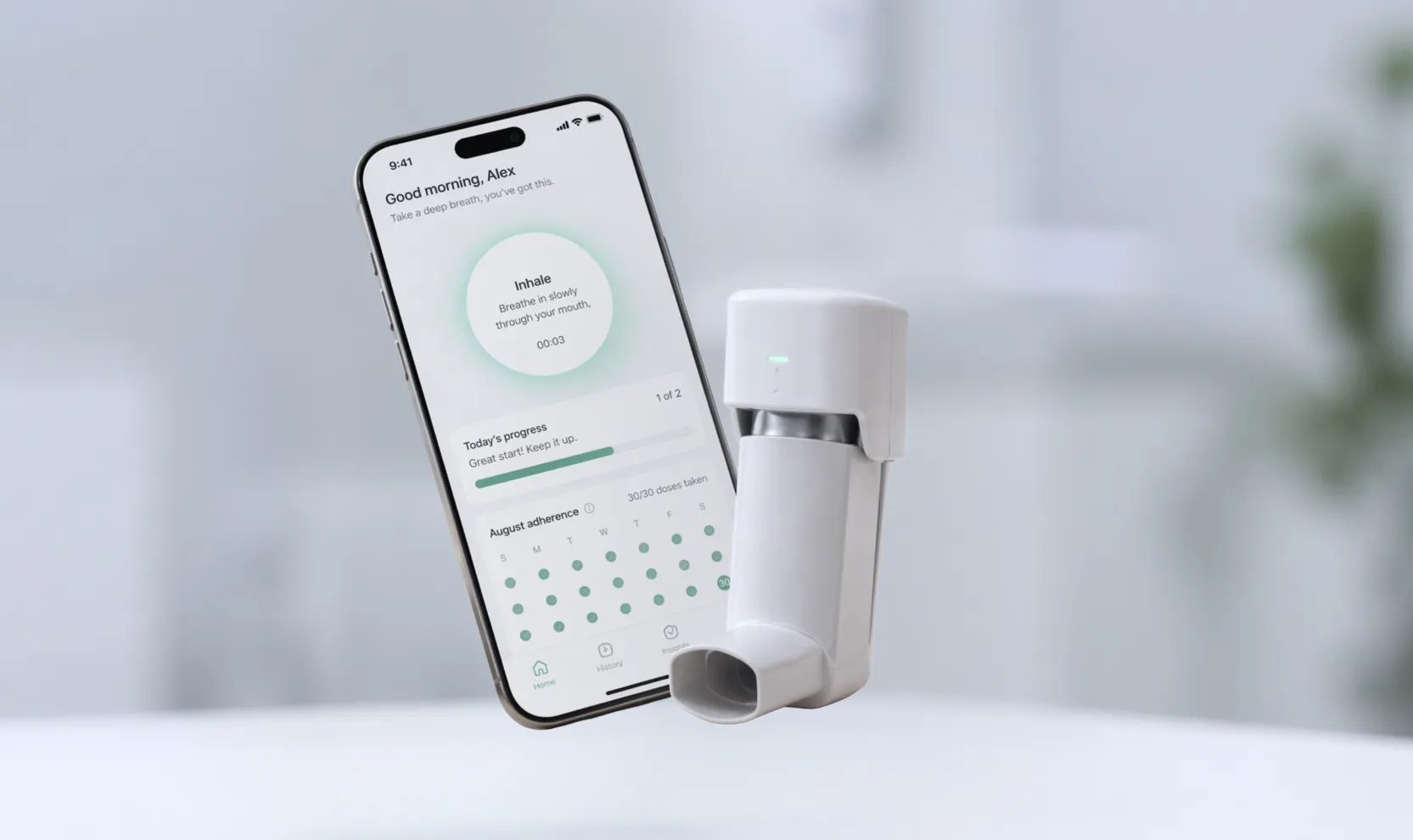
Respiratory Therapeutics Company Lifts Patient Adherence from 61% to 78% with Smart Inhaler
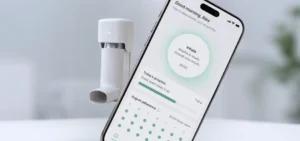
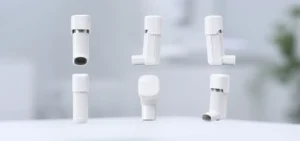
Yalantis developed a connected inhaler sensor with technique coaching and adherence monitoring – achieving FDA 510(k) clearance and EU MDR certification while optimizing unit economics for 180K devices/year.
12
Months battery life (CR2032)
≥90%
Technique error detection
<3s
App sync time
“The client’s real problem wasn’t the drug – it was proving patients were actually using it correctly. Payers wanted evidence. Pulmonologists wanted visibility. Patients needed technique coaching. We built one device that solved all three.”
– Mykhailo Maidan, CTO at Yalantis
Building a connected drug delivery device? We handle firmware through FDA submission.
61% adherence on a $2,800/year therapy was costing payers millions – and threatening the client’s value-based contracts
Client:
Respiratory therapeutics company (~430 employees)
Headquarters:
United Kingdom
Industry:
Medical devices / Respiratory
Device class:
FDA Class II (510(k)), EU MDR Class IIa
Partnership:
24 months to commercial launch
Team:
Project Manager
Solution Architect
Embedded Eng. (2)
Mobile Developer
Backend Developer
Regulatory Engineer
QA Engineer
Services:
IoT device development
Mobile app
Regulatory compliance
Human factors engineering
Cybersecurity
The client markets a high-value inhaled corticosteroid/LABA combination therapy for severe asthma – the kind of drug that keeps patients out of emergency rooms and off $30K+/year biologics. The problem: patients weren’t taking it.
At month 12, only 61% of patients showed adequate adherence. Poor adherence correlated directly with exacerbations, ER visits, and step-up to biologics – exactly the outcomes the therapy was supposed to prevent.
For payers covering $2,800 per patient per year, the math was painful. They started pushing for value-based contracts: demonstrate adherence, or lose reimbursement positioning. Without objective adherence data, the client had no way to prove their therapy was being used correctly.
Beyond missed doses, technique errors were silently undermining efficacy. Insufficient inhalation flow rate, premature breath release, failing to hold – problems invisible to both patient and physician until the next exacerbation.
The client needed a smart inhaler add-on that could:
- Log every actuation with timestamp and technique metrics
- Detect inhalation errors: insufficient flow, premature release, inadequate breath hold
- Feed adherence dashboards for pulmonologists and payers (with consent)
- Run 12 months on a coin cell – matching the prescription refill cycle
- Scale to 180K units/year with optimized unit economics
That’s when they partnered with Yalantis to design a connected inhaler sensor from firmware through regulatory clearance.
Client:
Respiratory therapeutics company (~430 employees)
Headquarters:
United Kingdom
Industry:
Medical devices / Respiratory
Device class:
FDA Class II (510(k)), EU MDR Class IIa
Partnership:
24 months to commercial launch
Team:
Project Manager
Solution Architect
Embedded Eng. (2)
Mobile Developer
Backend Developer
Regulatory Engineer
QA Engineer
Services:
IoT device development
Mobile app
Regulatory compliance
Human factors engineering
Cybersecurity
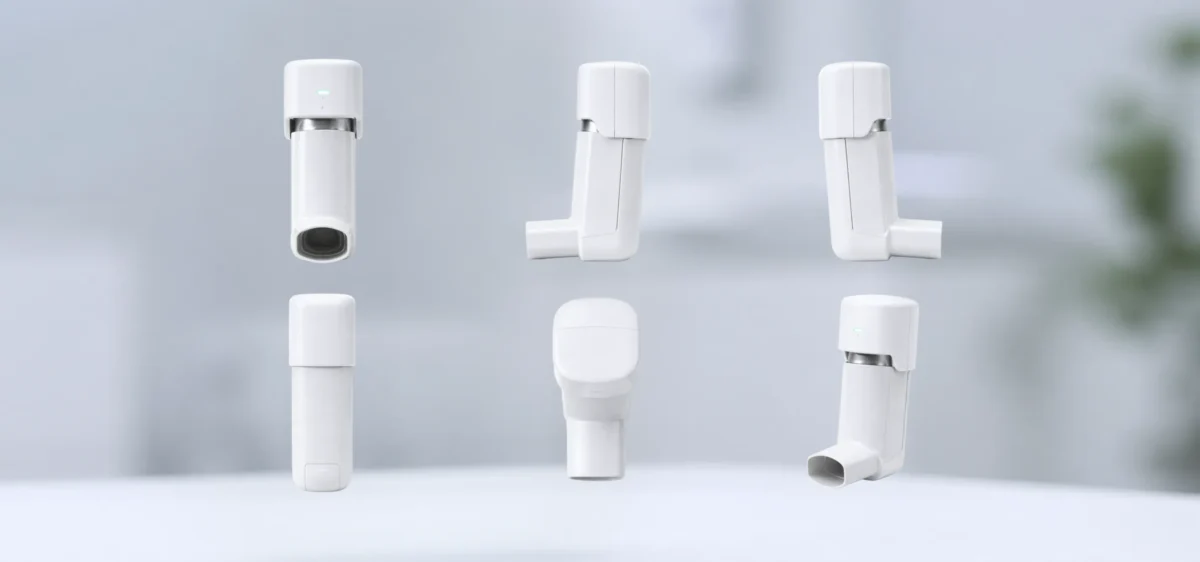
Connected inhaler sensor with technique coaching, multi-stakeholder dashboards, and payer-grade adherence evidence
1.
Actuation and inhalation flow sensing
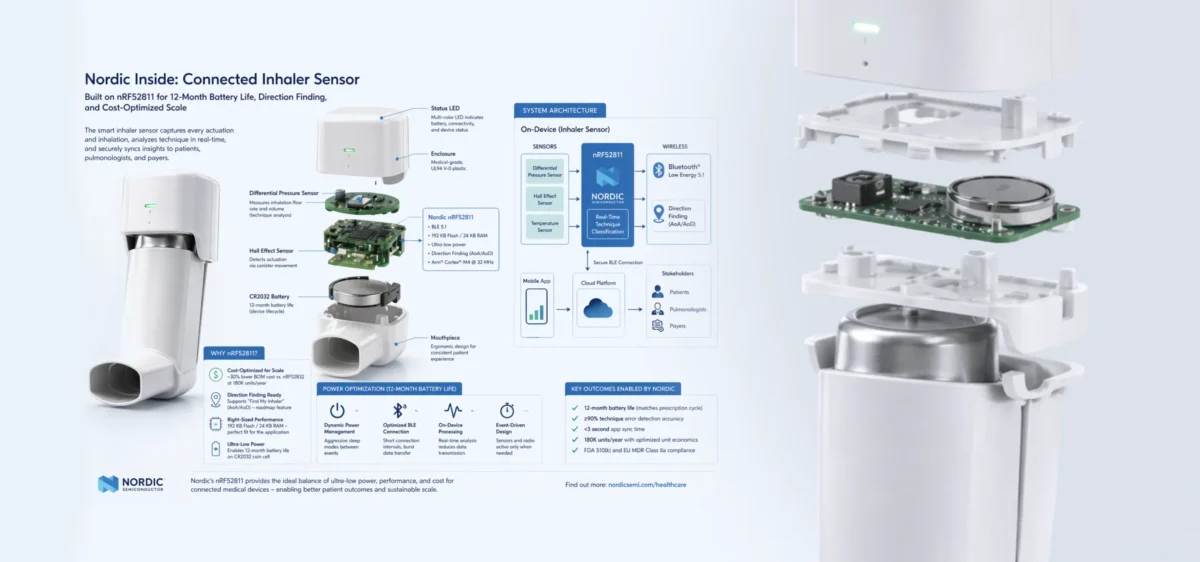
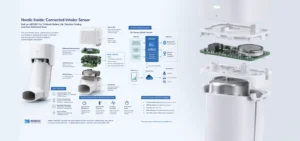
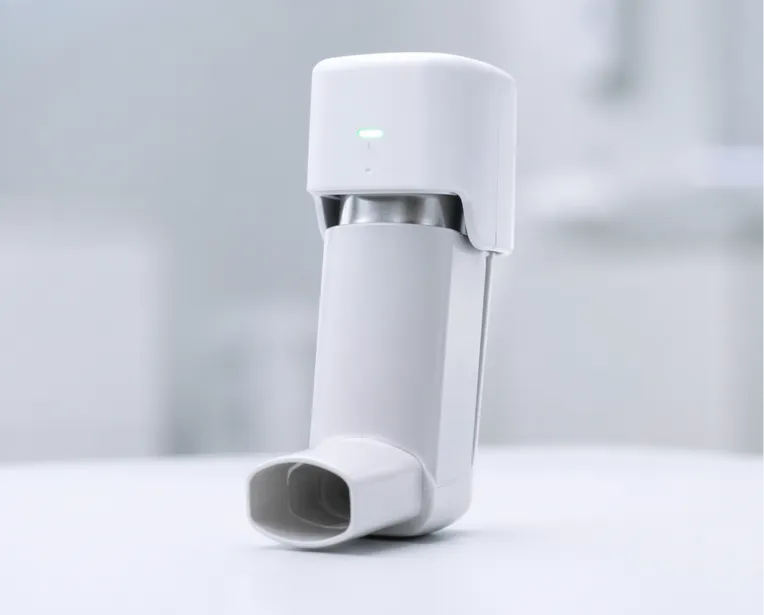
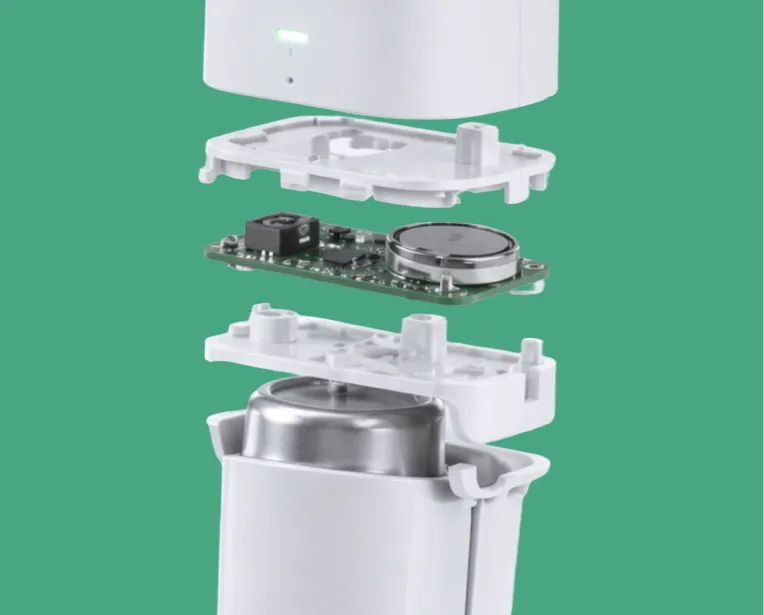
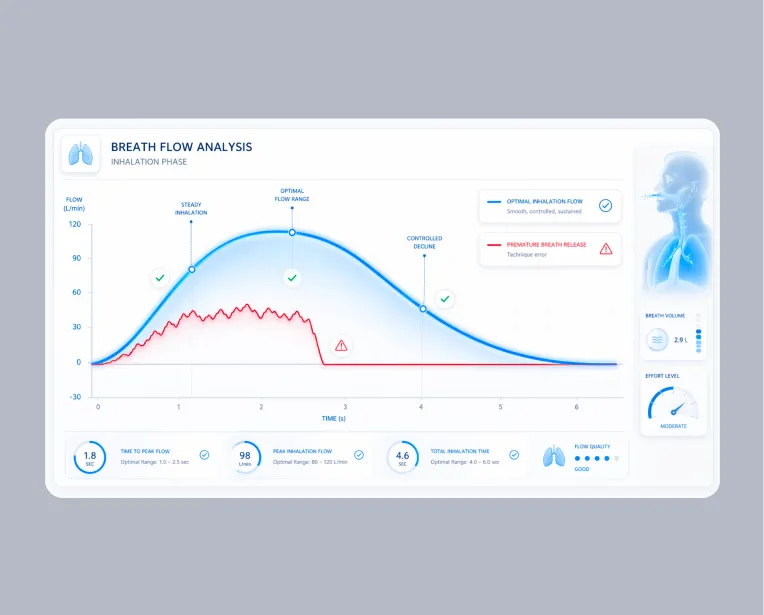
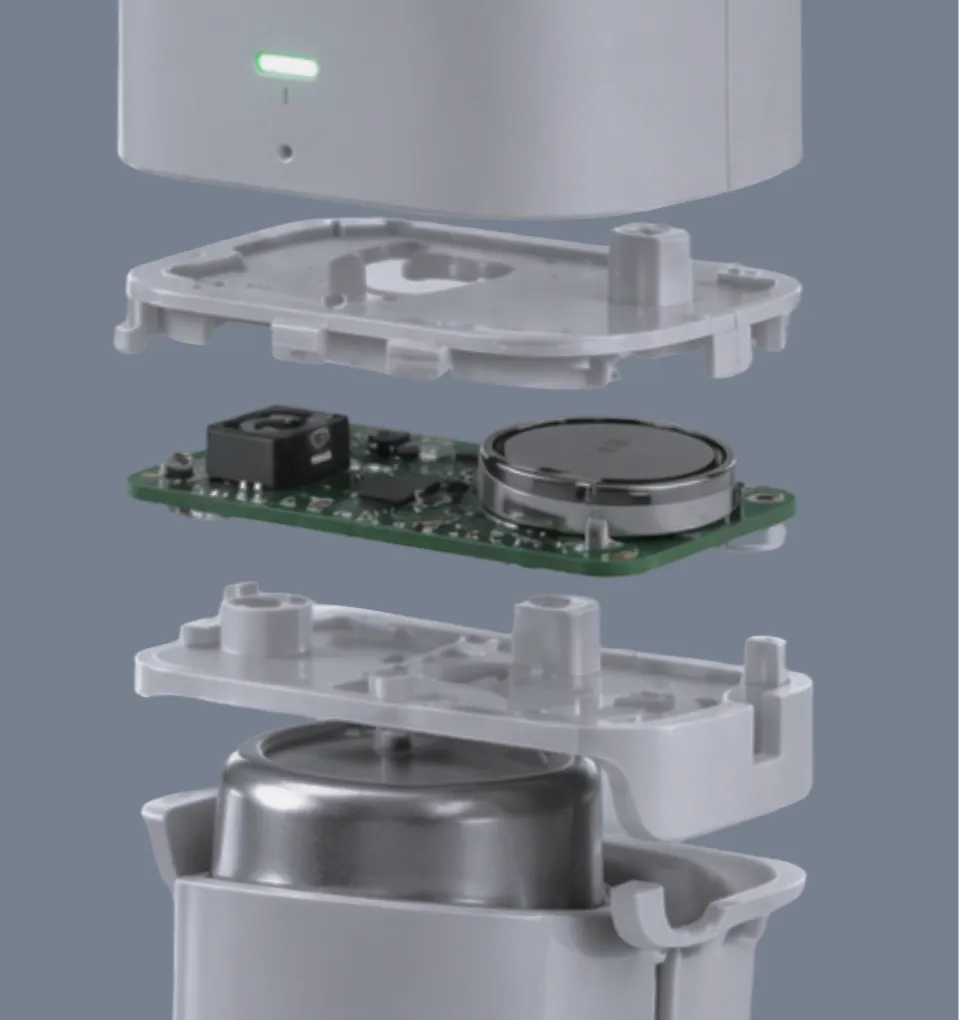
The sensor module detects each actuation via Hall effect sensor and measures inhalation flow through a differential pressure sensor. Every dose is timestamped, with technique metrics captured during the ~3-second inhalation window.
2.
On-device technique classification
Firmware extracts flow features from the differential pressure signal and runs them through a lightweight decision-tree classifier trained on a labeled set of inhalations ground-truthed against synchronized spirometry. Each event is graded against three questions: was the flow rate sufficient, was the breath held long enough, was the release premature? Validated at ≥90% sensitivity against the spirometry reference, the algorithm catches technique errors that silently undermine drug efficacy.
3.
12-month coin cell battery life
Aggressive BLE power management achieves 12-month battery life on a CR2032 – matching the prescription refill cycle. Battery replacement equals device replacement, eliminating patient-facing battery swaps and the human factors risks they introduce.
4.
Patient mobile app with technique coaching
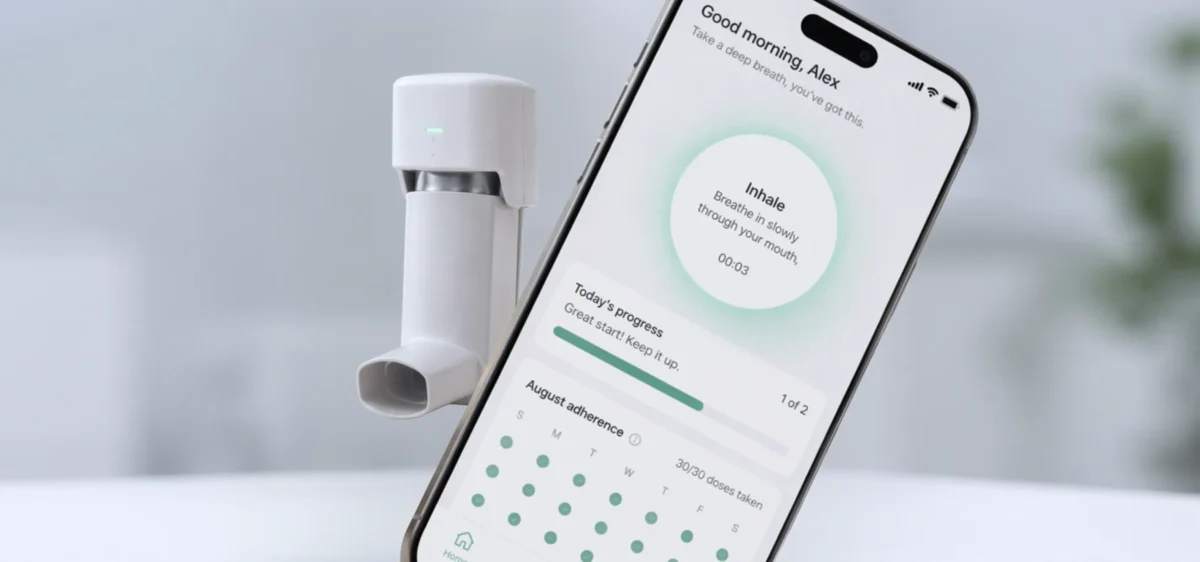
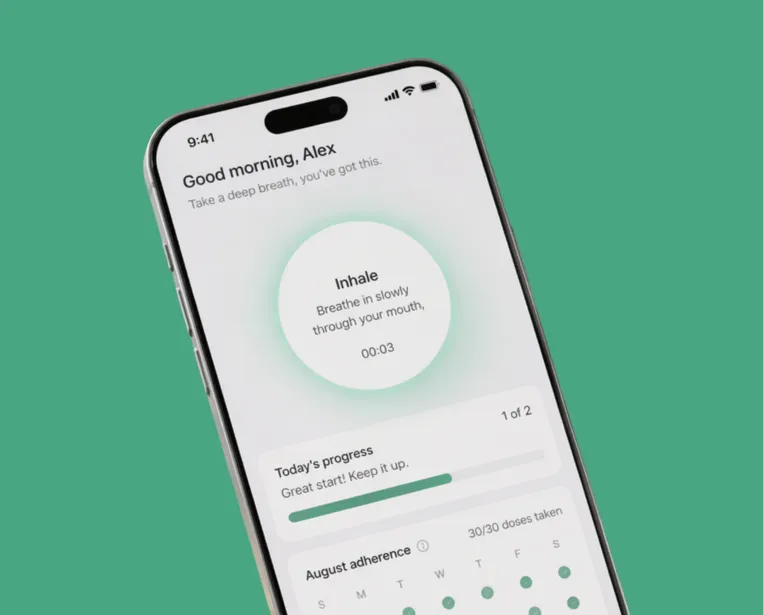
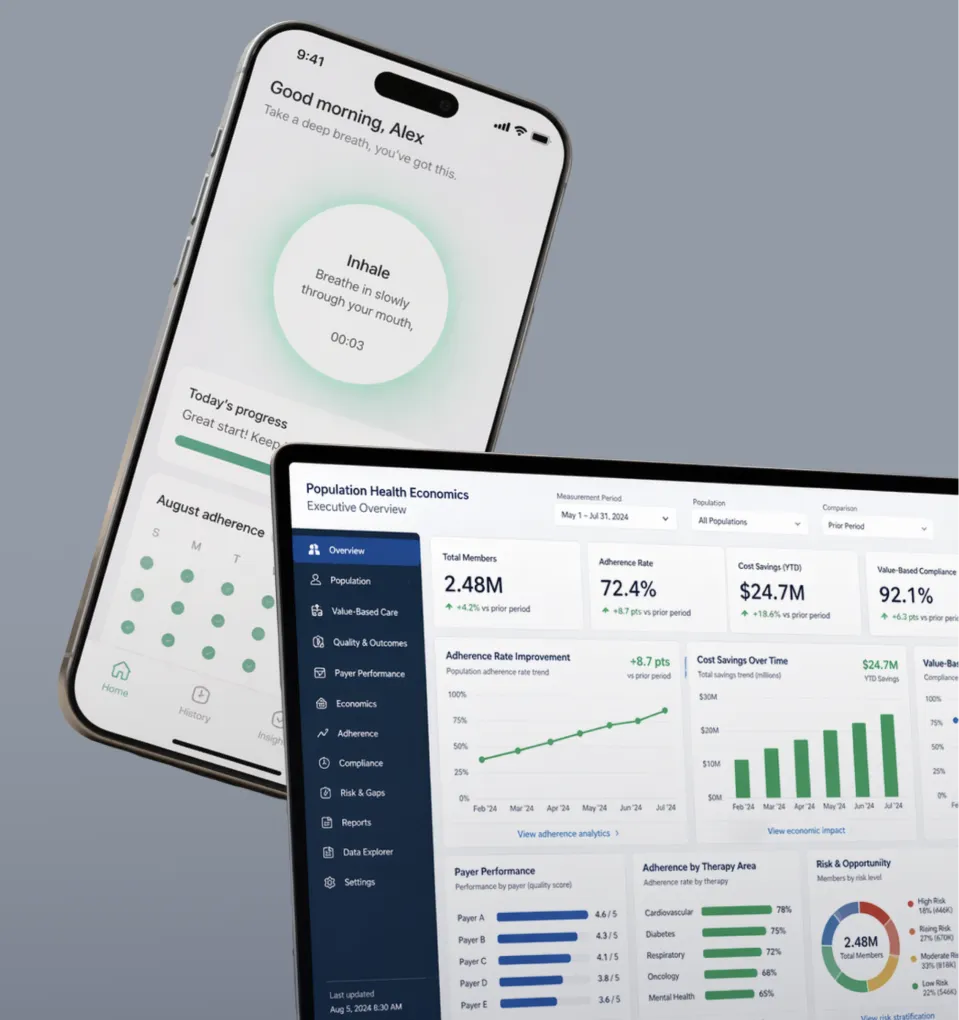
The companion app syncs in <3 seconds after each inhalation event, providing real-time flow feedback during use and animated technique coaching. Patients see their adherence streaks, missed dose alerts, and improvement over time.
5.
Pulmonologist portal with population views
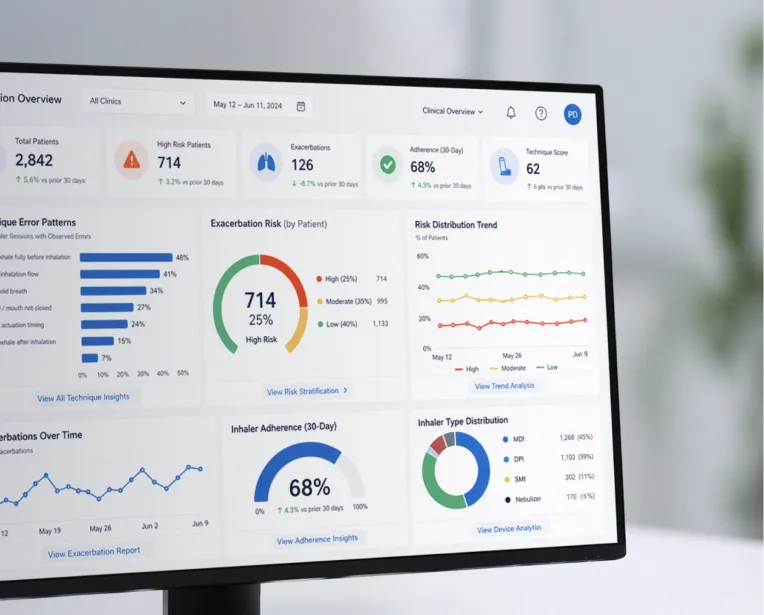
Prescribing physicians see patient-level adherence trends, technique error patterns, and exacerbation-risk scoring. Population-level views help practices identify which patients need intervention before their next ER visit.
6.
Payer-facing adherence evidence pipeline
With patient consent, anonymized adherence data feeds value-based contract reporting that meets CMS evidence standards. Patient support program triggers escalate missed doses through SMS and call workflows before gaps become exacerbations.

Compliance and regulations
HIPAA safeguards fully implemented
IEC 62304 lifecycle requirements met
Firmware and companion app built under medical-grade processes.
FCC and CE radio requirements addressed
BLE module designed for US and EU markets.
FDA 510(k) documentation ready
Technical file structured for premarket submission.
How Yalantis delivered FDA 510(k) clearance and EU MDR certification in 18 months, with commercial launch at 24 months
The project moved through four phases: sensor development, mobile app and cloud platform, regulatory submission, and commercial launch preparation. Human factors engineering (IEC 62366-1) ran throughout – inhalers have historically high use-error rates.
Step 1
Sensor module firmware and technique algorithm (months 1–8)
We started with the sensing challenge: detecting actuation via Hall effect sensor and measuring inhalation flow through differential pressure. The technique classification algorithm went through multiple iterations, validated against spirometry reference data until we achieved ≥90% sensitivity for common errors.
Power management was critical. The target – 12-month battery life on CR2032 – required aggressive sleep scheduling. The device wakes for ~3 seconds during inhalation events, then returns to deep sleep. BLE advertising is minimal; sync happens when the patient opens the app or comes within range of a home gateway.
Step 2
Mobile app, portals, and cloud platform (months 6–14)
The patient app was built with technique coaching at its core: animated guidance, real-time flow feedback during inhalation, adherence streaks, and missed-dose reminders. The pulmonologist portal provides patient-level views with exacerbation-risk scoring and population analytics.
For payers, we built an anonymized adherence reporting pipeline meeting CMS evidence standards. Patient support program integrations enable automated SMS/call escalation when doses are missed – intervention before gaps become hospitalizations.

Step 3
Regulatory submission – FDA 510(k) and EU MDR (months 12–18)
The device follows predicate devices including Propeller Health and Adherium Hailie sensors under 21 CFR 868.5640. We prepared the full 510(k) submission with human factors engineering documentation per IEC 62366-1 – critical for inhalers, which have historically high use-error rates.
For EU MDR Class IIa (Rule 11), we delivered the technical file with cybersecurity documentation aligned to FDA 2023 premarket guidance and MDCG 2019-16. Both clearances were achieved at month 18.

Step 4
Commercial launch preparation (months 18–24)
With clearances in hand, the final six months focused on manufacturing scale-up, supply chain qualification, and integration with the client’s existing patient support program infrastructure. The device launched commercially aligned with the next drug refresh cycle.
A post-launch real-world evidence study tracked adherence lift. At month 12, patients using the smart inhaler showed 78% adherence – up from 61% baseline. That 17-point improvement became the evidence package for value-based payer contract negotiations.
Technicl deep dive: why the NORDIC nRF52811?
The nRF52811 is a less-obvious choice than the nRF52832, but better-matched for a consumable-adjacent device at 180K units/year:
1. Ultra-low BOM cost at scale
The nRF52811 is Nordic’s cost-optimized BLE 5 chip. At 180K units/year, the ~30% cost delta vs. the nRF52832 is material. The device ships with every new prescription fill cycle (12-month lifecycle, then replaced), so unit economics dominate the technical decision. Over 180K units, the savings fund three engineers.
2. BLE Direction Finding support for future “find my inhaler”
A top-10 patient complaint is losing the device. The client’s roadmap includes a “find my inhaler” feature. The nRF52811 supports Direction Finding; the cheaper nRF52810 and nRF52805 don’t.
3. Right-sized memory (192 KB Flash / 24 KB RAM)
The application is genuinely lightweight: detect actuation, sample pressure sensor during ~3-second inhalation window, classify, store in ring buffer, sync on BLE connect. No mesh, no audio, no complex DSP. The nRF52811’s memory is sufficient.
4. Long Range (Coded PHY) for reliable home sync
Long Range allows the inhaler to sync to a home hub (tablet or gateway) at room distances even through walls. Without it, BLE range in cluttered home environments is unreliable for background sync – and missed syncs look like missed doses in the adherence data.
Why not alternatives?
- nRF52832: Adds NFC and more memory that aren’t needed, at higher unit cost.
- nRF52810: Cheaper, but drops Direction Finding and Long Range – foreclosing roadmap features and reliable home sync.
- nRF52805: Even smaller/cheaper but drops Long Range and has fewer GPIOs than the pressure-sensor + Hall-sensor + LED indicator design needs.
- nRF5340: Wildly overkill. Dual-core, TrustZone, and CryptoCell-312 provide no value for a device that logs 2–4 actuations per day and syncs a few hundred bytes.
The smart inhaler launched, delivering measurable results.
Adherence lifted from 61% to 78%
at month 12 in post-launch real-world evidence study.
12-month battery life achieved
on CR2032, matching prescription refill cycle.
≥90% technique error detection sensitivity
validated against spirometry reference.
FDA 510(k) clearance and EU MDR certificate
achieved at month 18.
Value-based payer contracts enabled
with CMS-grade adherence evidence.
<3 second app sync
after each inhalation event.
180K units/year scale
supported with cost-optimized BOM.
Key milestones of our R&D collaboration.
Be our next success story. Share details about your project and book a call with us to discuss your goals.
Certifications:

27001 2022 / 27001 2015 / 13485

Advanced IoT Core Delivery / Advanced RDS Delivery / Advanced Tier Delivery
From medical devices to industrial automation — we deliver complete enterprise solutions with regulatory compliance built-in. Everything under one roof.
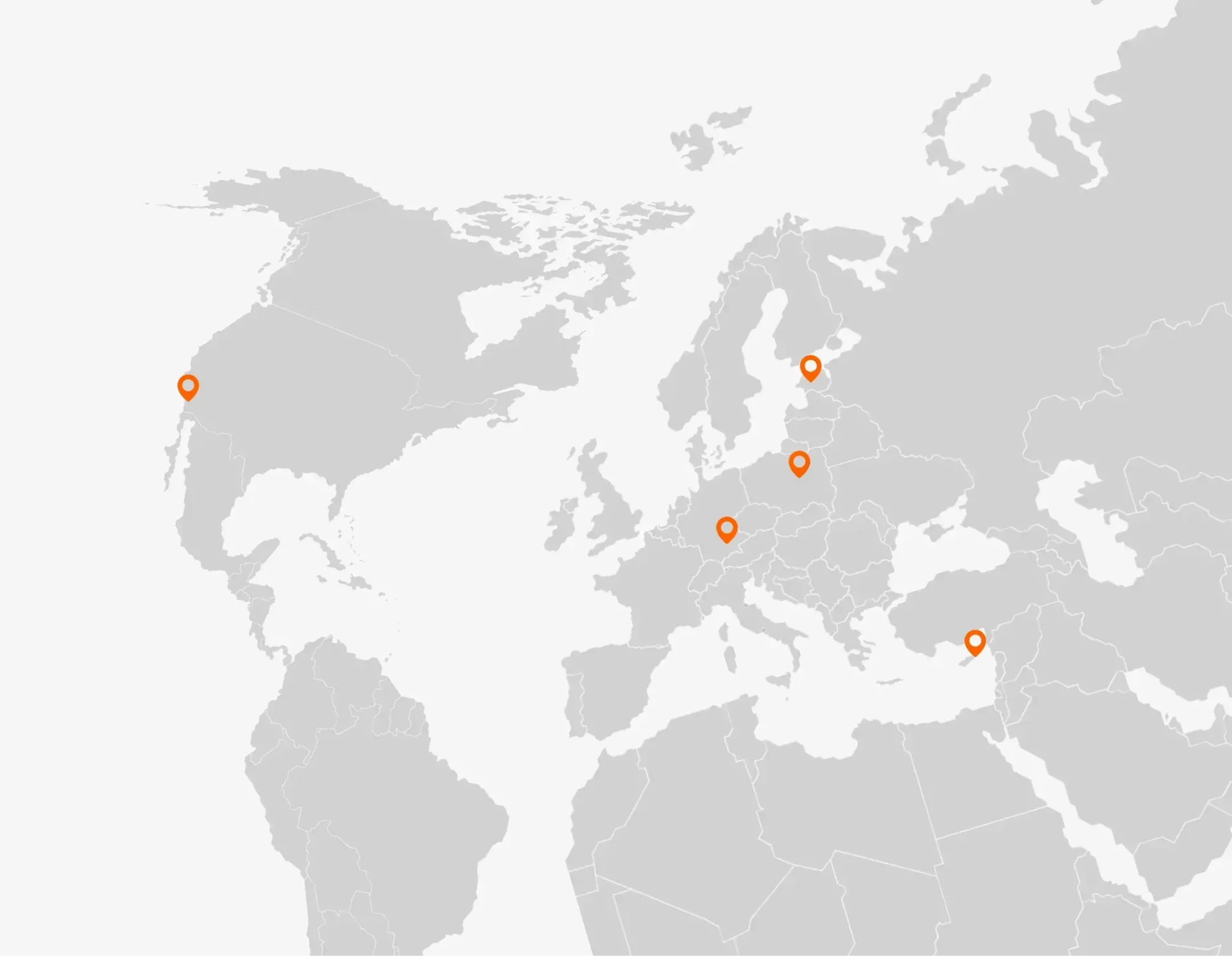
Our offices

Poland
123 al. Jerozolimskie, Warsaw, 00-001

Cyprus
8 Athinon Street, Larnaca, 6023

Estonia
12 Parda, Tallinn, 10151

USA
1080 Ximeno Ave, Long Beach, CA 90804

Germany
Marienplatz 22, Munich, 80331
Let’s set up a call
Leave your info and a few words about the project. We’ll review it and reach out to book a call.
Welcome to Yalantis, please fill out the form and we’ll get back to you.

We are open for partnerships too
Check out our refferal program. Find out all benefits.