



Remote IoT device management is now one of the most practical uses of the Internet of Things (IoT), a concept that has been around for more than two decades. The term was invented in 1999 to promote radio-frequency identification (RFID) technology. From 2008 to 2009, the number of things connected to the internet surpassed the number of individuals using it. Today, IoT remote management is a core capability for any organization running connected devices at scale.
Since then, interconnected devices have become mainstream. Apple, Cisco, General Motors, and other tech giants are producing IoT sensors and devices. IoT technology has been adopted by nearly every industry: manufacturing, healthcare, logistics, energy, agriculture, smart cities… the list goes on.
As these devices become more integral to our daily operations, it’s crucial to have the ability to manage them efficiently from anywhere. An IoT platform with remote access makes this possible, letting users remotely access and handle devices even when they’re far from the site.
In this post, we cover everything from how IoT systems work and the cloud infrastructure that powers remote access, to the security practices and step-by-step approach that make large-scale IoT remote device management reliable. Whether you need to control IoT-Geräte remotely across a handful of sites or thousands, the fundamentals are the same.
Read on to get the full picture.
What makes IoT remote management work: sensors, gateways, and the firmware in between
An IoT remote management setup typically involves two layers working together: sensors that capture data from the physical world, and gateways (or routers) that aggregate that data and push it to the cloud. Sensors handle readings like temperature, humidity, pressure, and motion. Gateways collect those readings over protocols like LoRaWAN, Bluetooth, or Sigfox, then relay everything to a central server for processing. Because sensors are designed to be cheap, low-power, and long-lasting, they generally can’t connect to the internet on their own. That’s where gateways come in. A single gateway can serve thousands of sensors, and with enough computing power onboard, it also lets administrators manage remote IoT devices without having to physically access the hardware.
How Rust firmware and modern gateways are changing remote IoT device management
The need for reliable IoT remote device management has pushed both cloud technology and firmware engineering forward. On the firmware side, there’s a clear shift toward memory-safe languages like Rust and performance-oriented C++ for building gateway software. Memory safety directly reduces the risk of remote exploitation, which matters when managing thousands of devices you can’t physically touch.
These improvements help organizations manage remote IoT devices more confidently across large and distributed networks.
Where IoT remote management saves the most: real results across 4 industries
Historically, many IoT vendors have required users to be in close physical proximity to IoT equipment for setup and maintenance. This is because an IoT gateway, like an internet router, requires a user to be in the coverage area to connect to it.
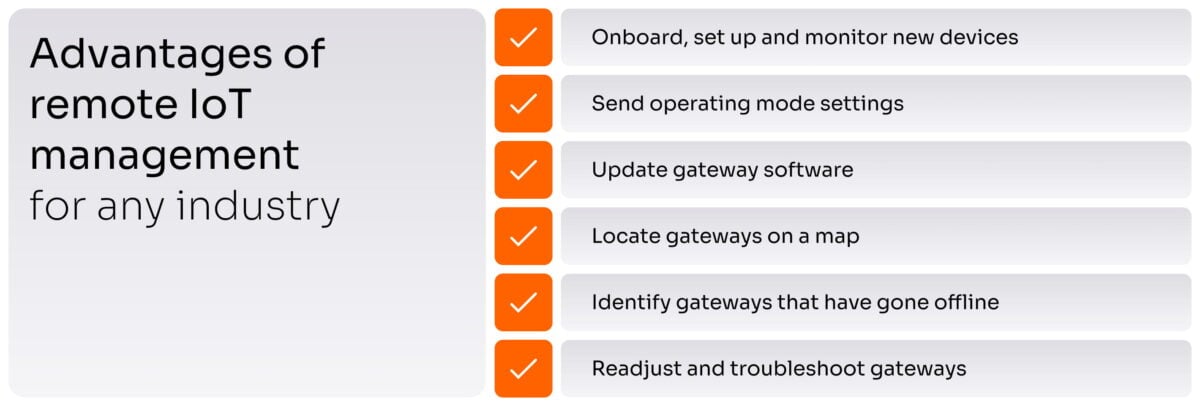
But in the case of enterprises, dozens of gateways are often installed in many hard-to-access and dispersed locations in order to connect with thousands of nodes. All these gateways still require constant setup and monitoring. Can we operate IoT devices remotely? Certainly, we can. Modern IoT remote management platforms let users monitor, configure, and manage remote IoT devices from one place, regardless of where the hardware is physically located.
Let’s check out how enterprises can benefit from remote IoT system management based on examples from the logistics, agriculture, and manufacturing domains.
Logistics: fleet tracking and warehouse monitoring at scale
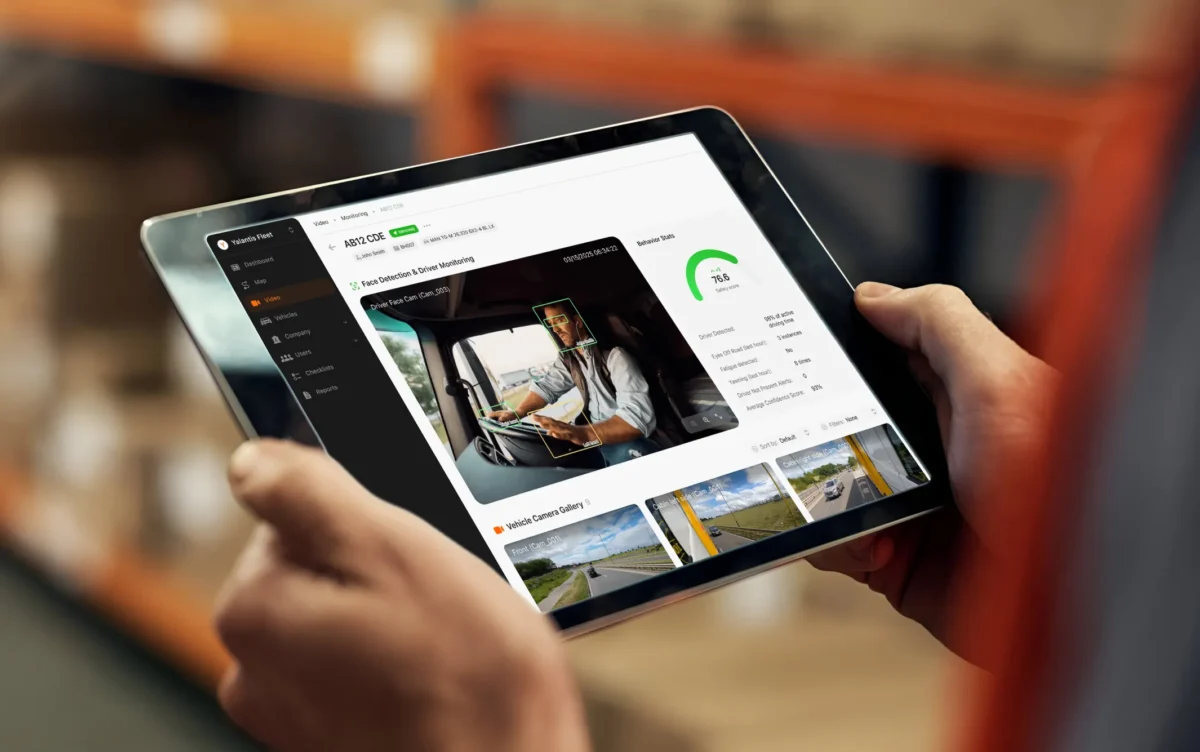
Laut dem IoT in Logistics Market Research Report by Research and Markets, the global IoT in supply chain market is predicted to advance at a 13.2 percent CAGR from 2020 to 2030. The following supply chain divisions will benefit most from the ability to manage physical IoT remote control:
- How one gateway per warehouse replaces manual condition checks
Forklifts, pallets, and other equipment can be tagged with sensors for easy locating. For condition monitoring, organizations can allocate sensors within a facility to track temperature, air quality, humidity, smoke, etc. Remote IoT system management usually requires one gateway per warehouse and stable IoT remote device access so teams can check data without being there.
- Why logistics companies invest in IoT sensors
A report by Research and Markets points out that IoT fleet management contributed the most revenue to the logistics market among all other divisions of the IoT in logistics market from 2014 to 2019. This is partly due to enabling real-time fleet visibility. Vehicles, containers, and even valuable parcels can be equipped with sensors.
For identifying locations, logistics companies use private or public IoT networks. If using private networks, companies can place gateways in warehouses between which vehicles travel. When using public networks, companies usually get data from operator platform gateways put on roadside posts. With the implementation of an IoT data analytics platform, these systems can provide deeper insights into the collected data, optimizing operations further.
- Catching temperature excursions before they cost you
Temperature-sensitive goods like pharmaceuticals, food, and biological samples need continuous monitoring from warehouse to destination. With IoT remote monitoring, sensors inside refrigerated containers track temperature in real time and generate alerts the moment readings fall outside acceptable ranges. This kind of setup reduces product loss and helps logistics providers meet regulatory requirements around traceability. In cold chain operations that follow GS1 standards, every data point along the route becomes part of a verifiable audit trail, which is especially valuable for tracking critical events and proving compliance during inspections.
Agriculture: why farmers stopped driving to every field
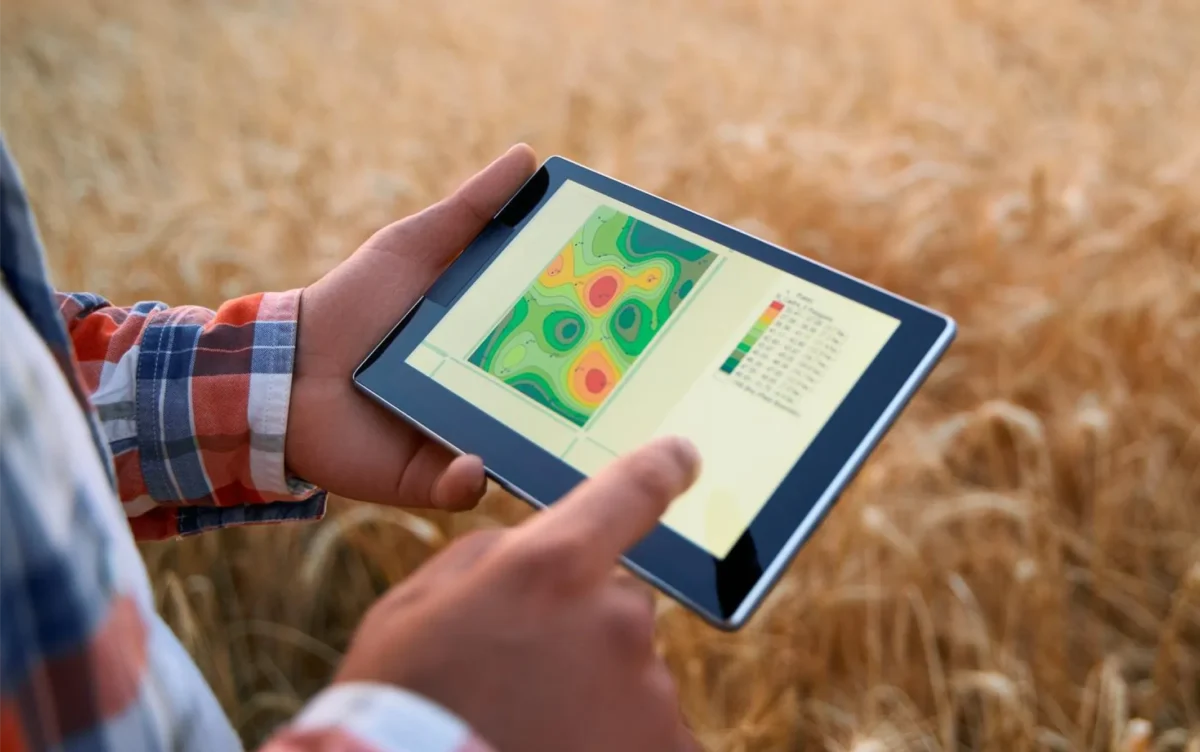
An agribusiness might have several fields 10 to 100 hectares in size. To ensure effective irrigation, it should consider current weather conditions, and to make that possible, sensors that monitor soil moisture und temperature can be dug into the ground.
To transmit data to gateways, sensors can use radio frequency bands that are good for agricultural purposes as they cover large areas, easily go through soil, and are energy efficient. The last characteristic ensures that such a sensor can work for several years. A gateway might be placed on a pole and is usually enough for a field.
With tools to manage IoT devices remotely, farmers don’t need to travel to each remote location to get sensor data.
Manufacturing: cutting downtime and meeting IEC 62443 compliance remotely
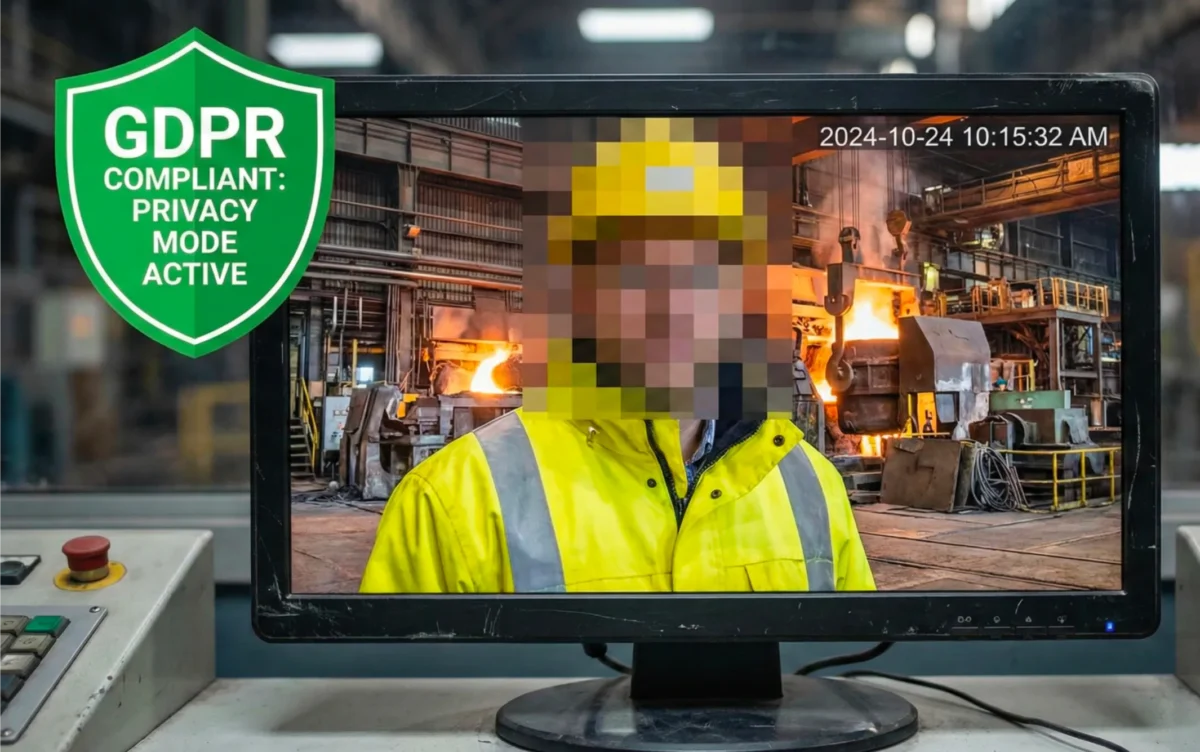
According to Statista, in 2020, 57 percent of global IoT manufacturing spending was on devices responsible for factory automation. This is because effective field device management helps reduce costs and improve operational efficiency across equipment maintenance and daily operations.
One use case for remote management in IoT of field devices is in factories that have to follow strict clean air rules. Equipment like filters and turbines must be adjusted to ensure the required level of air purity.
To remotely monitor device performance and spot anomalies early, sensors measuring air noise and pressure, the presence of microparticles, and other readings can be placed all over the equipment. A gateway, usually put on the ceiling, can then send this data to employees responsible for the equipment monitoring, helping to prevent costly consequences of air pollution.
This kind of setup is part of a growing trend in industrial IoT solutions, where connected systems help factories operate more efficiently and respond to issues faster, making IoT predictive maintenance for manufacturers an increasingly viable and valuable strategy.
For manufacturers operating in regulated environments, IoT remote management also plays a role in meeting cybersecurity standards like IEC 62443. This standard defines security levels for industrial automation and control systems, and having the ability to remotely monitor and update devices helps organizations stay compliant without scheduling constant on-site audits. The convergence of operational technology (OT) and information technology (IT) makes this even more relevant. Legacy equipment that was never designed for network connectivity now sits alongside modern IoT sensors, and managing that mix remotely requires careful planning around network segmentation, access control, and firmware updates.
Remote management in IoT also supports Prädiktive Instandhaltung strategies that deliver measurable returns. Instead of replacing parts on a fixed schedule or waiting for something to break, teams can track vibration patterns, thermal readings, and power consumption trends remotely. When the data suggests a component is approaching failure, maintenance gets scheduled proactively to minimize downtime. For large manufacturing operations, this approach can cut unplanned downtime by 30 to 50 percent and deliver significant cost savings on spare parts inventory.
Healthcare: managing FDA-regulated devices without setting foot on-site
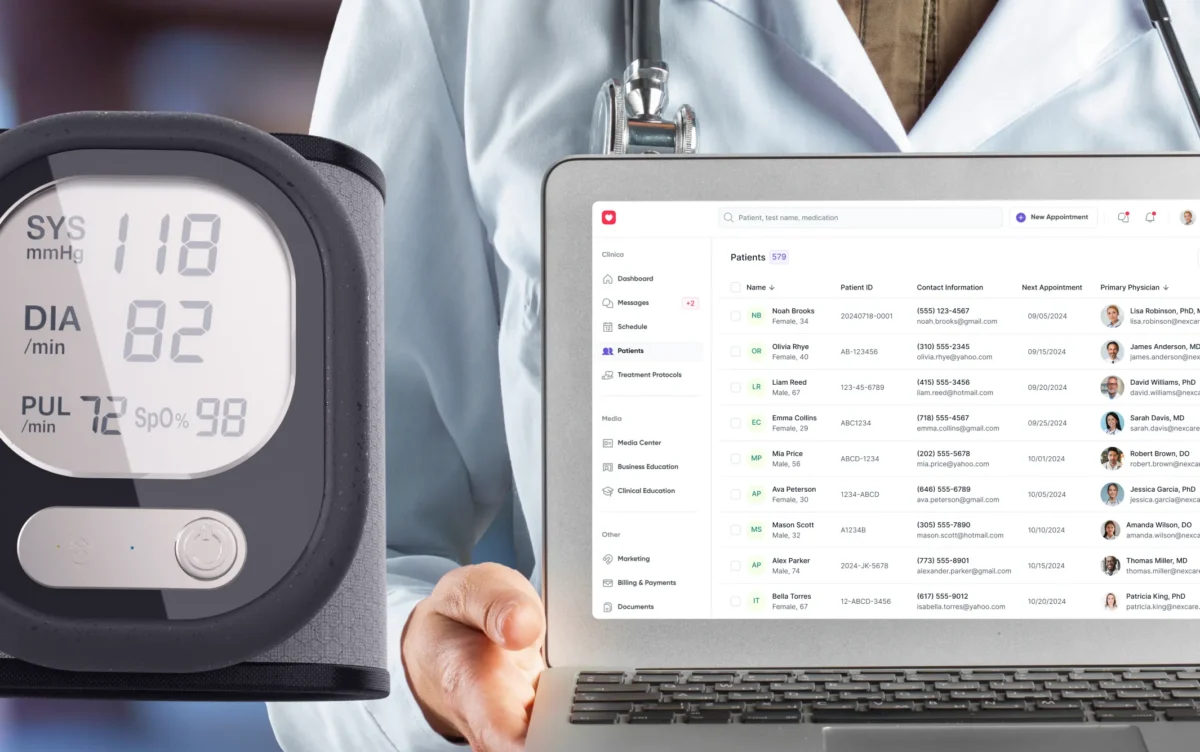
Healthcare is one of the fastest-growing areas for remote IoT device management. Hospitals and clinics rely on connected equipment for patient monitoring, infusion pumps, imaging systems, and diagnostic tools. These devices need regular software updates and configuration changes, but physical access can be limited, especially in sterile environments or across multiple locations.
For medical device manufacturers, the ability to manage IoT devices remotely also ties directly into regulatory obligations. In the US, FDA regulations around Klasse II und Klasse III devices require detailed records of every software change, which means audit trails and version control are not optional. In Europe, the Medical Device Regulation (MDR) imposes similar requirements. Organizations that build their remote management systems with ISO 13485 compliance in mind from the start avoid costly rework down the line. HIPAA adds another layer for any system that touches patient data, requiring encryption in transit and at rest, access logging, and role-based permissions.
IoT vendors are increasingly ensuring the above-mentioned capabilities of remote device management to meet the growing demands and expand their business. That’s where cloud platforms give a helping hand.
Why cloud platforms are the backbone of scalable IoT remote management
Leading cloud providers like AWS, Microsoft Azure, and Google Cloud offer specialized cloud infrastructure and approaches to organizing remote IoT network management. These systems are called IoT management platforms, and they provide users with the following key benefits.
How device shadows keep your IoT fleet in sync around the clock
Along with data centers, cloud providers allow their customers to use a range of services for IoT infrastructure maintenance. These services help to ensure quality synchronization between software and physical devices. For example, AWS provides its IoT Device Shadow service.
As part of this service, a so-called “shadow” is assigned to each gateway in a network. This shadow is literally a cloud infrastructure counterpart of a particular device. The shadow constantly synchronizes with its device and has a list of all parameters that need to be set. Respectively, the gateway reports to the shadow the gateway’s current settings and statistics, while the shadow sends updates to the gateway.
Want a simpler way to manage your connected devices?
Our IoT remote management solutions are built to do just that.
From one-by-one to one-click: automating gateway management at scale
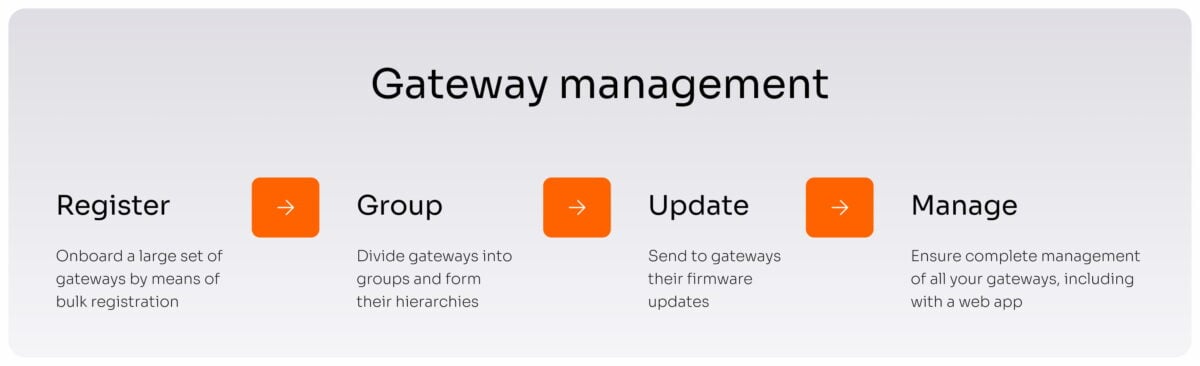
Before moving to the cloud, technologies didn’t allow for automated multiple gateway management. But manually setting up large sets of gateways one by one is extremely time-consuming.
Cloud technology helps an organization see all its gateways and ensure various business flows. These flows may include combining gateways in networks and tagging gateways to group them by different parameters (indoor or outdoor, with or without a GPS module, old or new). Through grouping gateways by different parameters, an organization can perform large-scale setup in just one click.
An IoT manufacturer can see all gateways it has produced, remotely connect IoT devices over the internet, and push security patches and emergency firmware updates when vulnerabilities are detected. In turn, customers can download firmware updates from a centralized place. This setup also supports remote IoT device update, so changes can be applied without on-site access.
What happens when a gateway goes offline (and why it still gets the update)
Gateways might periodically go offline due to signal fluctuations. However, if a gateway is offline when settings are sent, those settings will not be received by the gateway. A cloud system that’s available 24/7, however, can receive and record all data. When the gateway comes back online, it can synchronize with the cloud to get all the updates it missed.
To benefit from the abovementioned advantages, an IoT provider needs to follow the cloud migration strategy we talk about next.
Managing a platform with growing demands?
Our IoT systems already support 1M+ devices worldwide. Ready to set up something similar?
How to keep IoT remote management secure and compliant in regulated industries
As more industries adopt IoT remote management, security and compliance have moved from nice-to-have to non-negotiable. When you can control IoT devices remotely across thousands of endpoints, every connection point becomes a potential vulnerability. Organizations in regulated industries face an additional layer of complexity because they need to ensure compliance with the specific standards that govern their industry.
Why trusting your network perimeter no longer works for IoT
The traditional approach of trusting everything inside a network perimeter does not hold up when devices are scattered across warehouses, factories, hospitals, and fields. A Zero Trust model treats every device, user, and connection as potentially compromised until proven otherwise. In practice, this means every IoT device authenticates individually before accessing any cloud resource. There are no blanket permissions. Each gateway verifies its identity through certificate-based authentication, and every request goes through policy checks, and where possible multi factor authentication, before anything happens. This approach is particularly important for organizations that need to manage remote IoT devices across multiple sites with different security postures.
Scaling certificate management across thousands of remote IoT devices
Public Key Infrastructure (PKI) is the backbone of secure IoT remote connection between devices and the cloud. Each device gets a unique certificate during manufacturing or provisioning, and that certificate is what allows it to establish an encrypted channel with the cloud platform. But certificate management at scale is its own challenge. Certificates expire, need to be rotated, and sometimes need to be revoked if a device is compromised. Automating this process is critical. Manual certificate management across thousands of remote IoT devices is not realistic, and a single expired certificate can take an entire site offline.
Which compliance frameworks apply to your IoT deployment
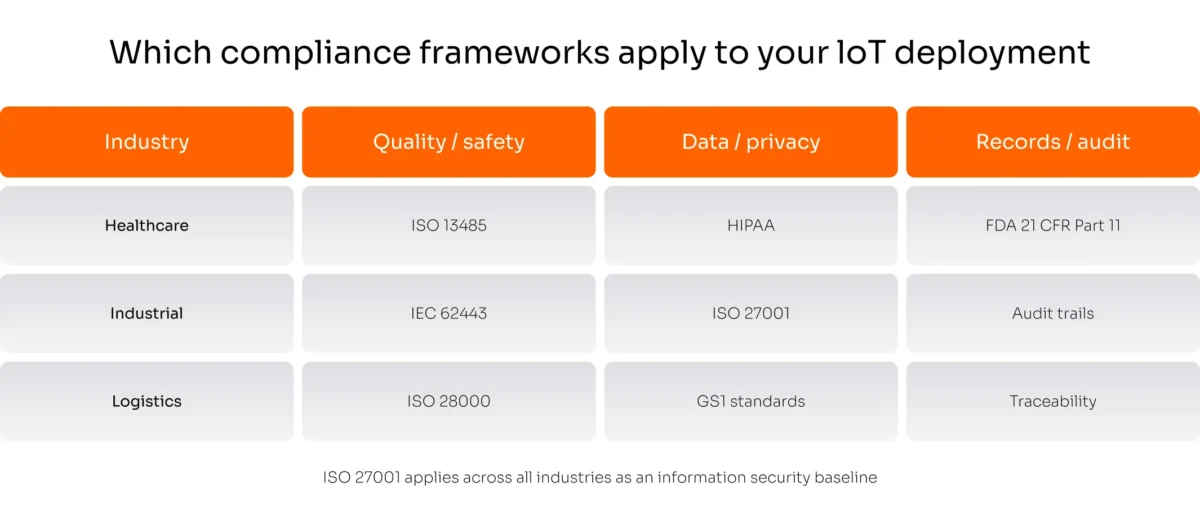
Different industries apply different compliance frameworks to their IoT deployments, and understanding which ones matter for your use case is essential before you start building. In healthcare, ISO 13485 covers quality management for medical devices, while FDA 21 CFR Part 11 governs electronic records and signatures. Any system that lets you manage IoT devices remotely in a clinical setting needs to satisfy both. In industrial settings, IEC 62443 is the go-to standard for securing industrial automation and control systems. It defines security levels, risk assessment methods, and technical requirements that apply directly to how you handle remote access to factory floor equipment. ISO 27001 applies more broadly to information security management and is often a baseline requirement for any organization handling sensitive operational data. For logistics, ISO 28000 addresses supply chain security, and GS1 standards cover traceability and data exchange.
Why every configuration change needs a tamper-proof record
In regulated industries, being able to prove what happened, when, and who authorized it is just as important as the action itself. Every configuration change, firmware update, and access event needs to be logged in a tamper-proof audit trail. This is not just about passing audits. It is about having the evidence you need when something goes wrong. A solid audit trail also supports root cause analysis, helping teams figure out whether a device failure was caused by a bad update, a configuration error, or a hardware issue. For organizations that need to manage remote IoT devices in compliance-heavy environments, building audit logging into the architecture from the start saves significant effort compared to bolting it on later.
3 steps to set up IoT remote device management from scratch
IoT vendors like RAKwireless, Wanesy Management Center, and Gemtek have already managed to provide their customers with remote IoT device management platforms that are in active use. Such IoT providers also enable customers to perform automated gateway setup and maintenance. This is especially helpful for large organizations that manage multiple large-scale and fast-growing networks of remote internet access IoT devices in different locations.
Such software solutions are tailored to network administration experts, not requiring specialists with IoT infrastructure expertise within an organization. These remote IoT management solutions incorporate ready-to-use tools for managing IoT infrastructure as well as give users practical insights into how to remotely manage IoT devices at scale.
To ensure such IoT network management, an IoT provider needs to take three important steps. Let’s look at them one by one.
Step 1. Expand your IoT infrastructure
As a starting point, an IoT provider might have only hardware infrastructure. The provider may manufacture gateways and have an R&D department that develops firmware — software installed on a gateway’s memory chip that turns the gateway into a smart device. To expand this infrastructure, an IoT provider starts using an IoT management platform offered by a cloud provider. Companies can also invest in embedded firmware development for IoT devices to create robust and secure firmware for gateways, ensuring smooth remote management across large-scale networks.
Step 2. Ensure synchronization between the cloud and gateways
Although an IoT management platform like AWS provides tools for ensuring synchronization, your gateway firmware needs to know its shadow, how to accept settings from it, how to report data to it, and how to perform this synchronization in a reliable, secure manner.
This requires you to tune your gateway firmware and set up cloud services to enable two-way synchronization, as this service usually isn’t offered by a cloud provider. Independent technology providers with IoT expertise like Yalantis can set up your IoT management platform.
Enabling synchronization between a cloud service and gateways allows any external software service — for example, a gateway onboarding platform — to communicate with a gateway. This is ensured via the cloud service, which is always online and whose connection rules are clear.
As part of this step, it is also important to set up certificate-based authentication for every gateway. Each device should have its own unique certificate that it uses to establish a secure channel with the cloud. Without this, you are leaving the door open for unauthorized devices to connect to your system. Rollenbasierte Zugriffskontrolle should also be configured at this stage, so that only the right people can make changes to the right devices.
When you’ve achieved the goal of quality synchronization between the cloud, shadows, and your gateways, proceed to the next step.
Step 3. Enable users to remotely manage devices and gateways
An IoT provider needs to offer customers an effective tool for easy IoT network management. This tool should help network administrators from the customer’s side manage all the company’s IoT networks and control each IoT device remotely, without depending on physical access to each site. A well-designed iot remote management system makes this possible even for teams with limited IoT-specific expertise.
Overall, such a remote IoT management system has to:
- have specific features like different scales of device maintenance
- offer reporting capabilities and troubleshooting tools
- be secure by providing audit logs and user permissions
How to push firmware updates to remote IoT devices without bricking them
Over-the-air (OTA) updates are one of the biggest advantages of IoT remote device management, but they also carry real risk. A bad update pushed to thousands of devices at once can brick hardware, introduce security holes, revert previous bug fixes, or cause unexpected behavior in production environments. Getting OTA updates right requires careful engineering at every step.
Why every firmware package needs a cryptographic signature
Every firmware package should be cryptographically signed before distribution. The device verifies the signature before applying the update, which prevents tampered or unauthorized firmware from being installed. This is especially critical for remote IoT devices that operate in environments where physical tampering is possible. If someone manages to intercept an update in transit, the signature check ensures that corrupted or malicious code never runs on the device.
A/B partitions: how devices recover from a bad update on their own
No matter how much testing goes into a firmware release, things can still go wrong in the field. A/B partition strategies give each device two firmware slots. The device boots from one partition while the other holds the previous working version. If the new firmware fails to boot or passes a health check, the device automatically rolls back to the known good version. This kind of failsafe is especially important when you manage IoT devices remotely and cannot send a technician to every location that has a problem.
Why pushing updates to your entire fleet at once is a risk you can avoid
Pushing an update to your entire fleet at once is risky. A progressive rollout starts with a small group of devices, monitors their behavior, and only then expands to the rest. This approach limits the blast radius if something goes wrong. Typical rollout strategies move through stages: a canary group of 1 to 5 percent of devices, then 25 percent, then 50 percent, and finally the full fleet. At each stage, the system runs anomaly detection checks for error rates, connectivity issues, and performance problems before moving forward. For organizations in regulated industries, progressive rollouts also provide documentation that due diligence was performed before a change reached production devices.
Building IoT firmware that needs to be secure and memory-safe?
Our team builds IoT firmware in Rust and C++ for gateways and embedded systems, so your devices stay secure, performant, and ready for remote updates at scale.
What can go wrong with IoT remote management (and how to prevent it)
How to control IoT devices in a secure and reliable manner? Enabling your customers to take advantage of remote IoT management is a challenging task with lots of hidden pitfalls. In general, they are related to the following aspects.
How moving to the cloud changes your attack surface
Before moving to the cloud, you had to be close to a gateway and know its local password to manage it. But with the cloud, your system becomes vulnerable to cyber threats like unauthorized access and malware. In addition to implementing strict user permissions dictating which user can detect and manage a particular gateway, consider these practices.
To enable a gateway to securely communicate with the cloud, you should establish a secure communication channel. One way to do this is to exchange certificates between a gateway and the cloud. Thereby, other hardware can’t address the cloud provider’s account because it lacks the correct certificate. These layers of protection are critical. They often rely on well-designed IoT-Sicherheit that address the unique risks of connected systems.
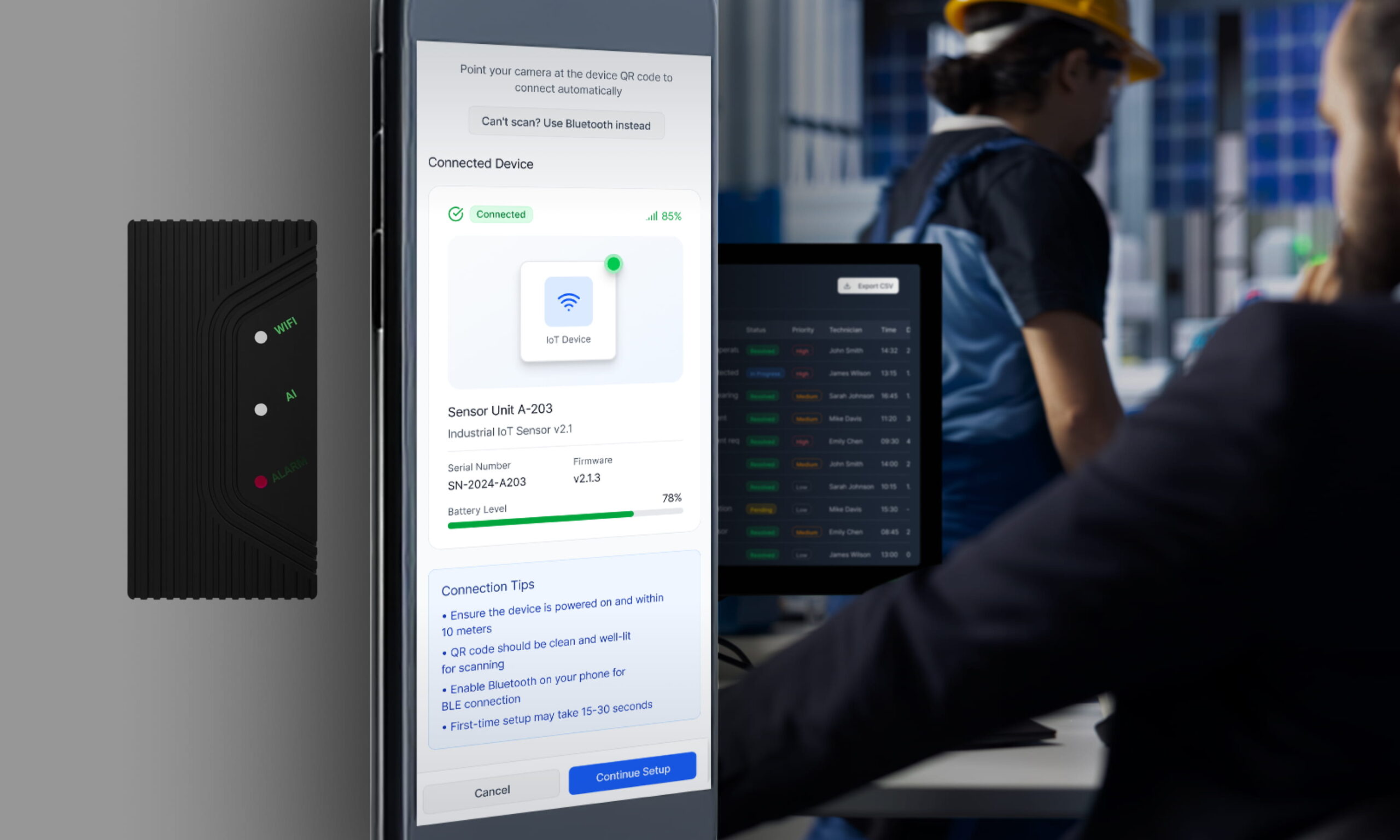
To establish a secure channel between the cloud and a client-facing app, your gateway should be able to auto-provision, register in the cloud, and ask the cloud for service. Then the end user needs to be able to onboard their gateway via the user-facing app. To do that, the user enters the gateway’s unique serial number into the system. To help the user prove their gateway ownership, IoT providers implement various approaches. They might include adding a field to a gateway interface where a user has to enter a unique buyer ID or accompanying the gateway serial number with an additional key.
Ensuring secure IoT remote device management involves combining these steps with strict certificate handling, permission control, and cloud-based validation.
It is also worth understanding the most common attack vectors that target remote IoT deployments. Man-in-the-middle attacks can intercept unencrypted device-to-cloud traffic. Credential stuffing targets weak or default passwords on device management portals. Firmware injection attacks exploit update channels that lack signature verification. Each of these threats can lead to security breaches, but they are all preventable if security is built into the architecture from the beginning rather than added as an afterthought. In healthcare environments, a compromised device could put patient safety at risk. In industrial settings, unauthorized access to a control system could cause physical damage. The stakes vary by industry, but the fundamentals of securing an IoT remote management system remain the same: encrypt everything, authenticate everything, and log everything.
Handling the delay between cloud commands and device responses
Your web platform should support both asynchronous and synchronous interactions, since gateway setup performed via the cloud is partially asynchronous. When the cloud-facing platform communicates with the cloud, it accepts data and requires you to wait until the cloud sends data to the gateway.
But it’s often impossible to implement standby mode within the platform architecture (for example, in case of using the serverless approach). To enable asynchronous interactions for the RAKwireless app, we ensured continuous bidirectional gateway data synchronization based on AWS IoT Core shadows and adding specific business logic flows.
Some systems also need a plan for IoT remote troubleshooting, especially when network delays or offline devices are common.
Designing for long-running operations, firewalls, and serverless timeouts
While designing a web platform architecture, you should consider not only support for asynchronous/synchronous interactions. As IoT equipment has limited computing power, it can take a long time to do things like apply lots of settings on the hardware device side. Such long operations might exceed the existing cloud API gateway timeout.
For the RAKwireless web app, we built an architecture based on serverless Lambda that ensures additional mechanisms for supporting long-running operations. To meet the AWS API timeout requirements, we used job processing and polling mechanisms.
On top of that, managing IoT devices behind a firewall brings its own challenges. Firewalls with restricted ports or Network Address Translation (NAT) settings can block the outbound connections that devices need to reach the cloud. In many enterprise environments, IT security policies prohibit opening inbound ports, so the standard approach is to configure devices to initiate outbound connections using protocols like MQTT over TLS on port 443. For more complex network topologies, VPN tunnels or dedicated IoT connectivity brokers can bridge the gap between the device and the cloud without requiring changes to the existing firewall rules. Organizations that need to manage remote IoT devices behind strict corporate firewalls should plan for these connectivity constraints early in the architecture phase.
If you choose to implement a serverless architecture to make the system cost-efficient, keep in mind that this type of architecture is challenging for ensuring long-running operations, asynchronous operation support, security, and fault tolerance. These challenges make developers come up with non-standard architectural mechanisms.
If you decide to cooperate with a technical partner to provide your customers with quality remote IoT management services, make sure your partner knows how to handle the pitfalls associated with implementing the solution we described in this post. At Yalantis, we have been helping IoT solution providers for years. Check out how we provided one of our such clients with long-term team augmentation services.
Need a technical partner for ensuring remote IoT management?
We make remote IoT management hassle-free.
How Yalantis delivers IoT remote management: from Rust firmware to cloud platform
At Yalantis, we know remote IoT device management inside and out. Our engineering team works across the full stack, from embedded firmware written in Rust and C++ for memory safety and performance, to cloud infrastructure and user-facing platforms. We hold ISO 27001 certification and build compliance into every layer of the systems we deliver. A strong example of our work is the user-facing control platform we developed for RAKwireless.
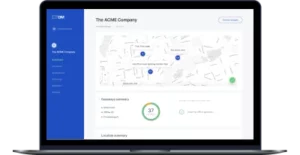
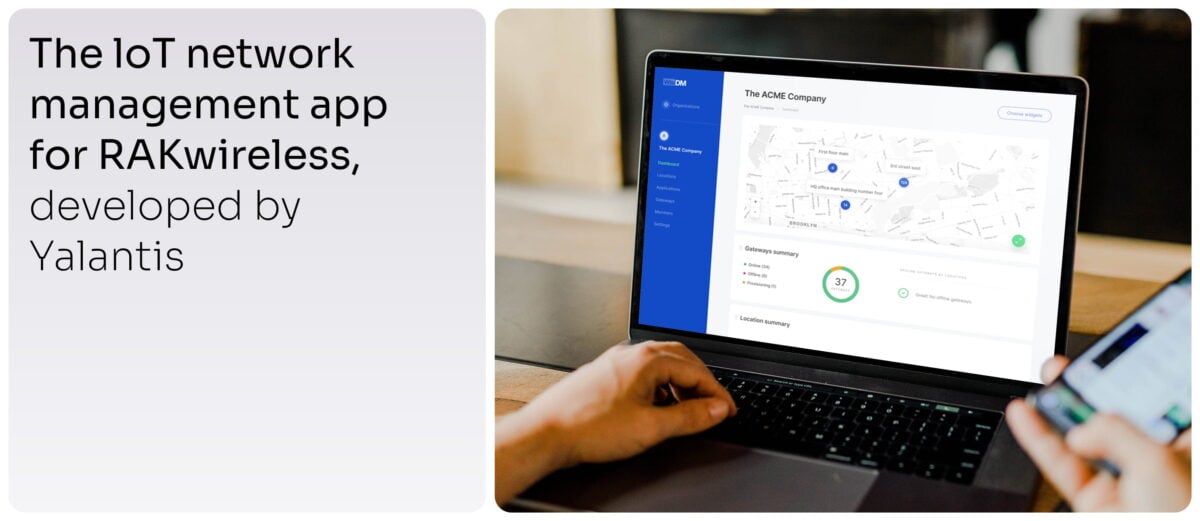
The SaaS web application interacts with the RAKwireless IoT management ecosystem through the AWS IoT Core message broker. New gateways auto-provision to AWS IoT Core and provide technical characteristics that help users locate, onboard, and configure gateways. Users can remotely update gateways and receive near real-time alerts if their equipment goes offline. The firmware layer leverages Rust and C++ to ensure memory safety across remote operations, reducing the risk of exploits that could compromise devices in the field. Unlike software-only vendors, Yalantis manages the full cycle: hardware testing in our in-house R&D lab, firmware development, cloud architecture, and the end-user management platform. This kind of result requires both strong technical architecture and hands-on experience with real-world IoT deployments.
Based on our valid expertise, we have created an article about the SaaS migration strategy that may be useful to you.
If you need an IoT software development company that knows remote management inside out, we are ready to help.
What to prioritize when you start building IoT remote management
Remote IoT device control is now a regular part of how connected systems work. As networks grow and spread out, teams need a reliable way to handle devices without being there in person, and they need to do it securely and in compliance with the standards their industry requires.
That kind of access does not happen by accident. The IoT remote management tools and architecture you choose early on will shape how your system works later, and how much effort it takes to keep it running, secure, and compliant.
Getting this right early on can make your system easier to manage and keep your team focused on day-to-day work. If you’re building something like this and want to talk through the architecture, we’re here.
FAQ
Was ist die Verwaltung von IoT-Geräten?
Die Verwaltung von IoT-Geräten umfasst den gesamten Lebenszyklus eines vernetzten Geräts: Bereitstellung, Konfiguration, Überwachung, Firmware-Updates, Fehlerbehebung und eventuelles Abschalten. All dies geschieht remote über eine zentrale Plattform, ohne dass jemand physisch an Ort und Stelle des Geräts sein muss. Für Unternehmen, die Hunderte oder Tausende von Geräten an mehreren Standorten betreiben, ist die Bereitstellung der richtigen Tools für die Verwaltung von IoT-Geräten nicht optional. Sie bilden die Grundlage für die Funktionsfähigkeit des gesamten Systems. In regulierten Branchen wie Gesundheitswesen oder Fertigung muss die Geräteverwaltung außerdem die Compliance-Anforderungen hinsichtlich Audittrails, Zugriffskontrolle und sicherer Aktualisierungsbereitstellung erfüllen.
Kann man IoT-Geräte remote aktualisieren?
Ja, und das ist eine der wichtigsten Funktionen jeder iot-gestützten Fernverwaltungsplattform. Mit Hilfe von OTA-Firmware-Updates können Sie Updates an Tausende von Geräten gleichzeitig bereitstellen, ohne jemanden vor Ort einzuschalten. Cloud-Plattformen wie AWS IoT Core übernehmen die Bereitstellung und stellen sicher, dass Geräte, die während des Updates offline waren, sich automatisch wieder nach dem Neustart nachholen. Dennoch müssen OTA-Updates sorgfältig gehandhabt werden. Best Practices beinhalten die kryptografische Signatur jedes Firmware-Pakets, die Verwendung von A/B-Partitionstrategien, damit Geräte bei einem Fehler auf eine bekannte, korrekte Version zurückkehren können, und progressive Rollouts, die mit einer kleinen Kanariengruppe begonnen und erst dann auf die gesamte Flotte ausgeweitet werden. In regulierten Umgebungen muss jede Aktualisierung außerdem in einer Audittrail protokolliert werden.
Sind IoT-Geräte fernsteuerbar?
Ja. Moderne IoT-Geräte können vollständig über eine Cloud-basierte Managementplattform überwacht, konfiguriert, aktualisiert und repariert werden. Das Schlüsselwort ist die richtige Architektur. Sie benötigen einen Gateway mit ausreichender Rechenleistung zur Abwicklung lokaler Vorgänge, eine zuverlässige und sichere Cloud-Verbindung, die durch Zertifikate authentifiziert ist, und eine gut ausgelegte Managementplattform darüber. Wenn diese Ebenen ordnungsgemäß eingerichtet sind, können Administratoren über ein einziges Dashboard aus Hunderten von Standorten aus über entfernte IoT-Geräte verfügen, einschließlich der Übertragung von Konfigurationsänderungen, des Senden von Befehlen an einzelne Geräte, der Auslösung von Diagnosen zur Problembehebung und der Anwendung von Firmware-Updates, ohne die physische Anwesenheit vor Ort zu benötigen.
Wie sichert man den Remote-Zugriff auf IoT-Geräte?
Die Sicherheit bei der Fernverwaltung von IoT-Geräten beruht auf mehreren Ebenen, die zusammenarbeiten müssen. Das beginnt mit einem Zero-Trust-Ansatz, bei dem jedes Gerät individuell über eine zertifizierte PKI authentifiziert wird, bevor es mit der Cloud kommunizieren kann. Eine strenge rollenbasierte Zugriffssteuerung begrenzt die Personen, die welche Geräte konfigurieren können. Die automatische Bereitstellung mit eindeutigen Seriennummern verhindert unbefugten Zugriff. Firmware sollte regelmäßig aktualisiert werden und über signierte OTA-Pakete bereitgestellt, um Schwachstellen zu beseitigen, bevor sie ausgenutzt werden können. Für Organisationen in regulierten Branchen müssen diese Maßnahmen außerdem den Standards wie IEC 62443 für industrielle Systeme oder ISO 13485 für Medizinprodukte entsprechen, und jede Zugriffsaktivität sollte in einer manipulationssicheren Audittrail erfasst werden.
Wie können Sie die Fernverwaltung von IoT-Geräten sicherstellen?
IoT device management is performed by accessing IoT devices in order to track and manage their functioning distantly. This can be done using remote IoT device management software. It helps to remotely reveal problems with particular parts of equipment to be examined and resolved before they affect the entire system. Teams can resolve issues remotely instead of dispatching on-site staff. In the absence of effective IoT remote management software, businesses can’t use their IoT devices effectively and monitor the system’s operational status.
A reliable remote IoT device platform also allows businesses to stay connected to their devices around the clock, even in remote or hard-to-reach locations.
Welche Cloud-Plattformen werden häufig für die Fernverwaltung von IoT-Geräten verwendet?
Die drei größten Anbieter – AWS, Microsoft Azure und Google Cloud – sind die am häufigsten verwendeten und das aus gutem Grund. Sie sind zuverlässig, skalierbar und verfügen über speziell für IoT entwickelte Tools. Wir arbeiten insbesondere mit AWS IoT Core zusammen. Es übernimmt die Gerätesynchronisierung sehr gut, hält die Dinge auch dann funktionsfähig, wenn ein Gateway kurz offline geht, und ermöglicht eine automatische Bereitstellung. Dennoch hängt die richtige Wahl von Ihrer bestehenden Infrastruktur und Ihren spezifischen Anforderungen ab.
Was ist das beste Protokoll für die Fernsteuerung von IoT-Geräten?
Es gibt keine einzige optimale Antwort, da das richtige Protokoll von der Latenz, der Durchsatz und den Leistungsanforderungen abhängt. MQTT wird am häufigsten für die Fernsteuerung von IoT-Geräten eingesetzt, weil es leicht ist, bidirektionale Kommunikation unterstützt und auch in unzuverlässigen Netzwerken funktioniert. LoRaWAN ist eine gute Wahl für Langstrecken- und Low-Power-Anwendungen wie die Landwirtschaft oder Smart City-Implementierungen, bei denen Geräte selten kleine Pakete senden. Sigfox deckt eine ähnliche Nische für noch einfacheren Telemetrie. Für industrielle Steuerungsanlagen, die eine deterministische Latenz benötigen, sind Protokolle wie OPC UA oder AMQP möglicherweise besser geeignet. Das Protokoll, das Sie früh wählen, hat einen direkten Einfluss auf die Leistung Ihres Systems in der Praxis, daher lohnt es sich, die Bandbreite, den Stromverbrauch und die Sicherheitsanforderungen zu bewerten, bevor Sie sich festlegen.
Welche Branchen profitieren am meisten von der Fernverwaltung von IoT-Geräten?
Logistik, Landwirtschaft, Fertigung und Gesundheitswesen sind diejenigen, die die unmittelbarsten Auswirkungen zu verzeichnen haben. In der Logistik geht es um die Sichtbarkeit der Flotte und die Überwachung der Kältespeicherkette, um Produktverluste zu verhindern. In der Landwirtschaft bedeutet dies, dass Landwirte aufhören, jedes Feld einzeln zu besuchen, um eine Messung durchzuführen. In der Fertigung können Teams die Geräte rund um die Uhr proaktiv überwachen, proaktive Wartungspläne durchführen und die Anforderungen der IEC 62443 erfüllen, ohne ständige Audits vor Ort durchzuführen. Auch in der Gesundheitsversorgung ist die Entwicklung sehr dynamisch: Krankenhäuser müssen IoT-Geräte nun auch aus der Ferne verwalten, um Patientenüberwachungssysteme zu betreiben und gleichzeitig die Anforderungen der FDA und der ISO 13485 zu erfüllen. Das gemeinsame Thema in allen diesen Bereichen ist, dass die Fernverwaltung Zeit spart, Kosten senkt und die Art von Überraschungen reduziert, die zu kostspieligen Problemen führen können.
Wie verwaltet man IoT-Geräte hinter einem Firewall?
Dies ist eine der häufigsten Herausforderungen bei Enterprise-IoT-Implementierungen. Unternehmens-Firewalls mit eingeschränkten Ports oder NAT-Einstellungen können die Verbindungen blockieren, die Ihre Geräte zur Verbindung mit der Cloud benötigen. Die Standardlösung besteht darin, die Geräte so zu konfigurieren, dass sie ausgehende Verbindungen initiieren, anstatt auf eingehende Zugriffe zu setzen. Da die meisten Firewalls den Ausgangsverkehr standardmäßig erlauben, funktioniert MQTT über TLS auf Port 443 gut für diese Methode. Für komplexere Netzwerktopologien können VPN-Tunnel oder spezielle IoT-Konnektivitätsbroker wie AWS IoT Core diesen Mangel ausgleichen, ohne dass Änderungen an bestehenden Firewallregeln erforderlich sind. Das Schlüsselwort ist es, diese Konnektivitätsbeschränkungen bereits in der Architekturphase zu planen, insbesondere wenn Sie Fern-IoT-Geräte an mehreren Standorten mit unterschiedlichen Netzwerkrichtlinien verwalten müssen.
Kann man die Fernüberwachung von IoT-Systemen in unsere bestehende Infrastruktur integrieren?
Ja, das können wir. Wir haben das schon viele Male gemacht und unterstützen weiterhin Projekte, in denen wir das Fernmanagement von IoT-Systemen in bestehende Systeme integriert haben. Unser Team besteht aus Spezialisten, die sich auf diese Art von Arbeiten spezialisiert haben. Kontaktieren Sie uns, und wir finden die beste Lösung für Ihre Situation.
Wie hoch sind die Kosten für den Aufbau eines IoT-Fernverwaltungssystems?
Es hängt von Ihren Anforderungen ab. Sobald wir den Umfang verstehen, stellen wir Ihnen eine grobe Schätzung zur Verfügung. Für eine genaue Schätzung beginnen wir in der Regel mit einer kurzen Erkundungsphase. Nehmen Sie Kontakt mit unserem Team auf, und wir helfen Ihnen, den besten Weg dorthin zu planen.
Über den Autor