



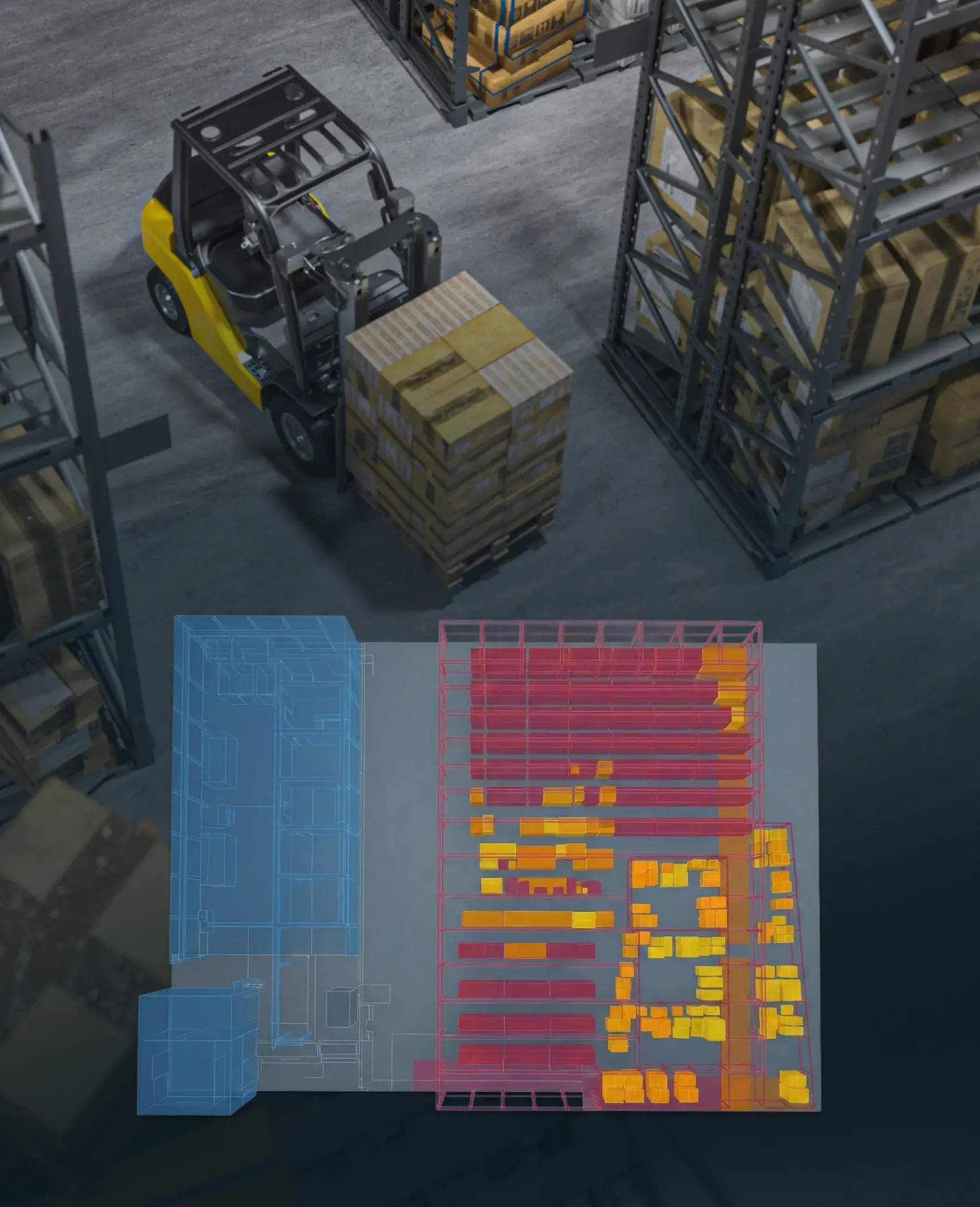
Yalantis builds custom digital twins your board can actually decide on, calibrated against your own operating history and secured to ISO 27001 and IEC 62443. One team carries the work from the IoT data layer through to the simulation, so nobody hands you a model then walks away from how it behaves.
Custom Digital Twin Development Services

17+
Years
in engineering
400+
Specialists
on staff
91
NPS from
client surveys
4+
Years of average
client retention
R&D
In-house lab
in Warsaw

ISO 9001
Quality management
ISO 27001
Information security

IEC 62443
Industrial security
ISO 28000
Supply chain security
Benefits of digital twin services with Yalantis
Here is what actually changes once the twin is live and your team is using it.
15-30% more throughput from the floor you already have
Clear the bottlenecks hiding in your current process and utilization rises, so the same equipment and headcount move considerably more volume.
10-20% extra capacity you already own
Layout and process simulation frees up space you are already paying for, which pushes the cost of new construction further out.

Vendor ROI claims tested before you sign
Our 3PL client found a bottleneck worth $3M+ in the model, months before committing to the robotics fleet that would have hit it.
Peak season rehearsed months before it hits
Run a demand surge or a supply shock through the model, so the response plan is written and tested well before the real one lands.
Live IoT data under the model, built in house
Around 40% of our project work is IoT, so the layer most consultancies subcontract we build ourselves, and your twin runs on a live sensor stream.
A lower cost per order shipped
Optimized travel paths for people and vehicles bring labor hours and fuel use down, and take some wear off the machinery.
Same-day answers from our Warsaw R&D lab
A modeling question gets tested in our own lab and answered the same day, instead of waiting on a scheduled review.
A model that keeps earning after go-live
The model stays live for the whole lifecycle, so every layout change or new SKU profile gets tested against real data before it reaches the floor.
Yalantis digital twin development services
Our digital twin development services break into seven blocks, and you can take the full build or just the piece your team is missing.

Digital twin consulting
Some programs need a build, and some need a straight answer on whether a twin is the right instrument at all. Our digital twin consulting work settles that question before you commit a budget to it.
What we deliver:
- Stakeholder interviews and a feasibility read on the data you hold, plus what would have to change for a model to be trusted
- Your candidate use cases ranked on the value at stake and on how ready the data is
- ROI modeling built with your own cost and volume figures, plus a realistic payback period
- A platform recommendation across AWS IoT TwinMaker, Azure Digital Twins, and custom digital twin software
- A fixed-scope pilot plan and business case you can take to a committee
- Engagement options, whether you want a one-off assessment or to hire digital twin developers onto your team
End-to-end digital twin development
A managed build that takes you from a data audit to a working simulation your operations team logs into. We own every layer of it, so one team answers for how the model behaves.
What we deliver:
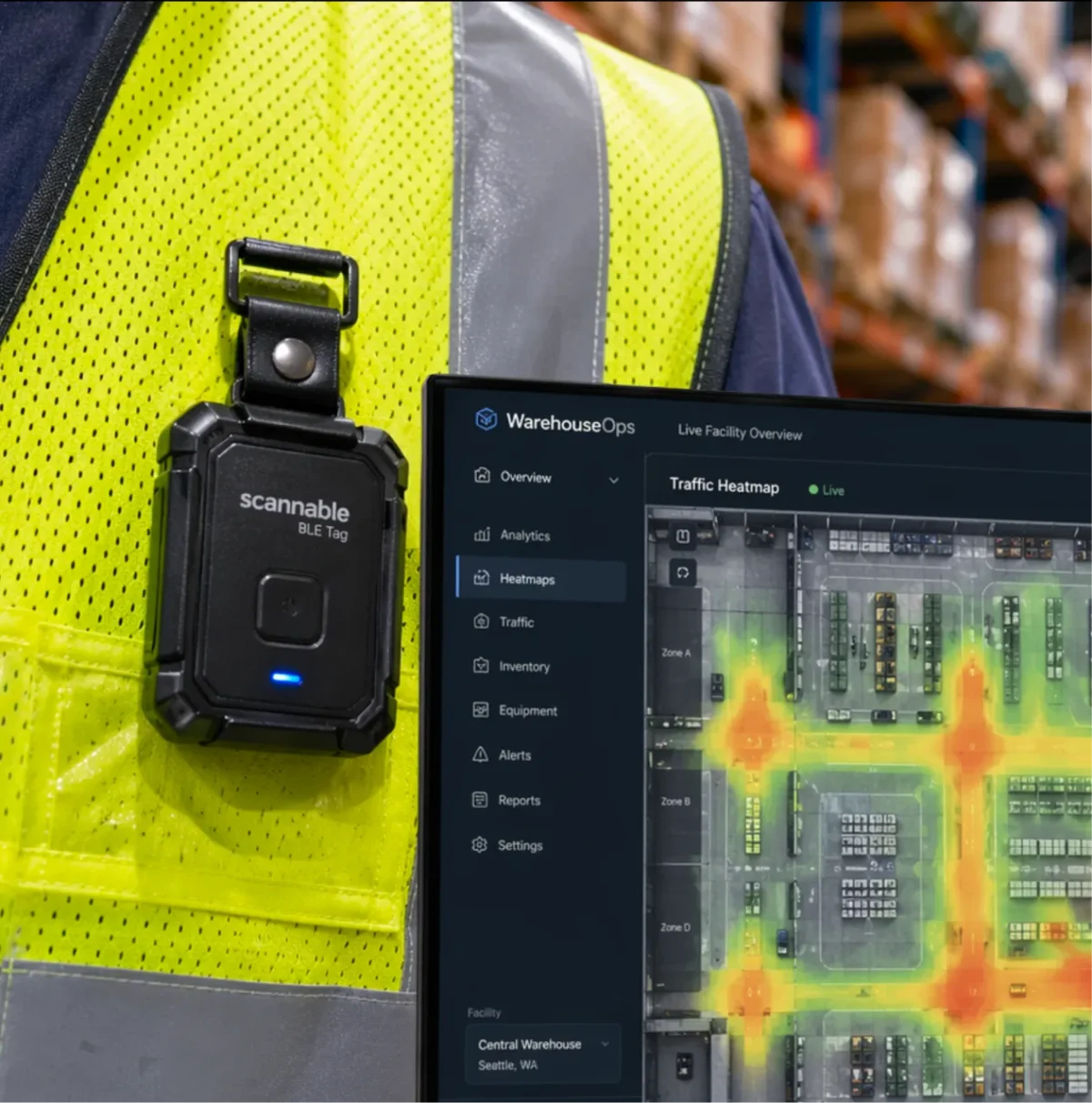
- Data processing pipelines that pull WMS, WCS, ERP, MES, and RTLS feeds into one real-time data layer
- An agent-based model where every order, forklift, worker, and machine follows your real rules
- A what-if scenario builder with an interface your team runs without engineering help
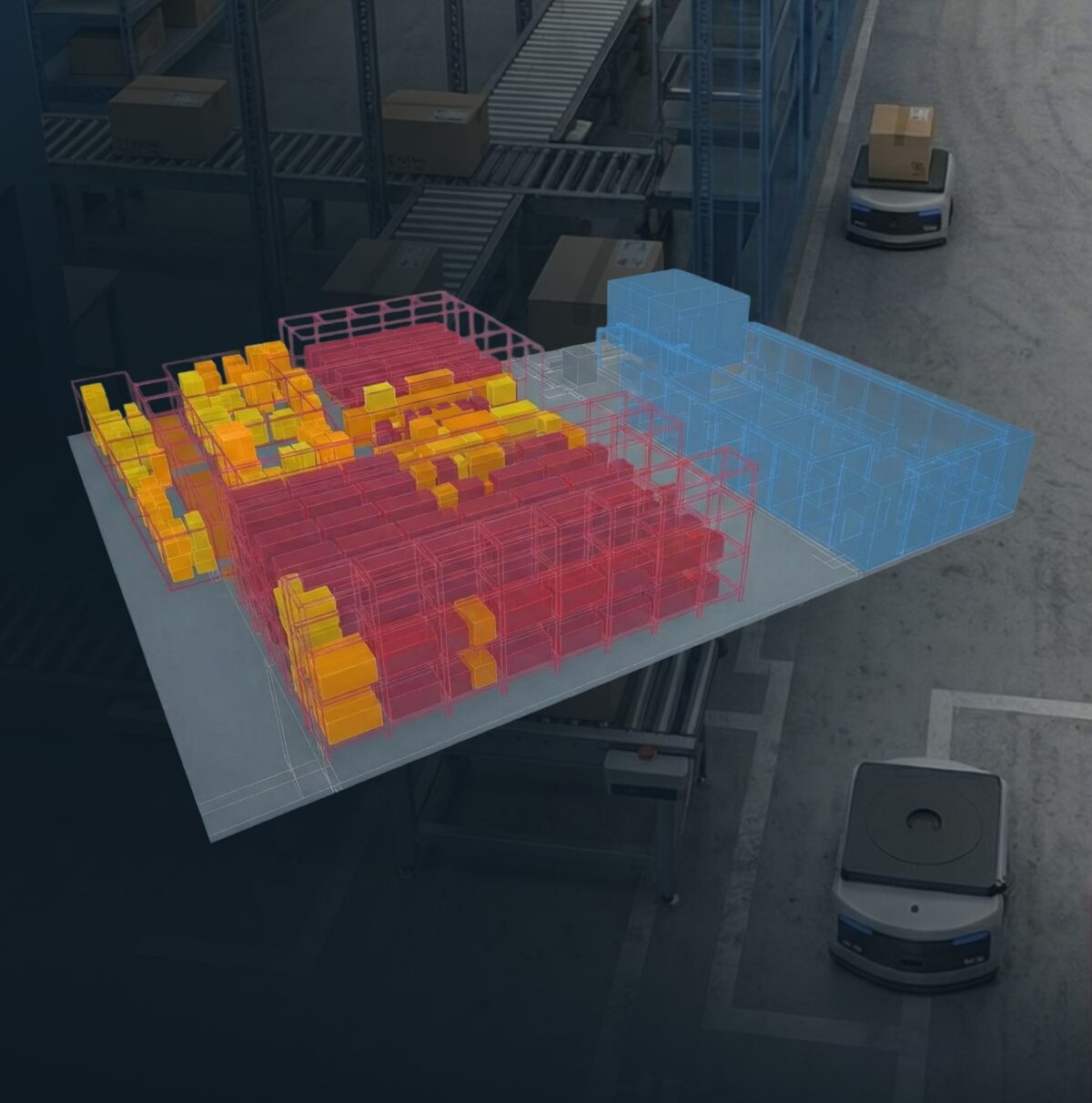
- KPI dashboards and 3D heatmaps that visualize congestion where it forms
- Validated outputs written back to your WMS, or packaged as a capital business case
AWS digital twin development with IoT TwinMaker
When your operational data already lives in AWS, the twin belongs there too. We design and deploy on AWS IoT TwinMaker so the model sits next to the data feeding it.
What we deliver:
- TwinMaker entity and component modeling that mirrors your physical assets on site
- Connectors for WMS, WCS, ERP, and RTLS, with AWS IoT SiteWise streaming equipment telemetry
- Agent-based simulation layered onto the TwinMaker scene
- Immersive 3D scenes with KPI overlays for congestion and travel paths
- Results written back to your WMS as configuration parameters
Azure digital twin development on Microsoft Azure
The same build carried out on Azure Digital Twins, which is where most teams land when Microsoft is already the platform of record. The model stays inside the estate your security group has approved.
What we deliver:
- DTDL models and twin graphs that reflect real asset dependencies
- Live ingestion from your IoT systems through Azure IoT Hub, with Data Explorer or Microsoft Fabric holding history
- Scenario logic running against the twin graph
- Visualization in Power BI or a purpose-built operations view
- Role-based access and audit trails for enterprise security review
Facility modeling and optimization
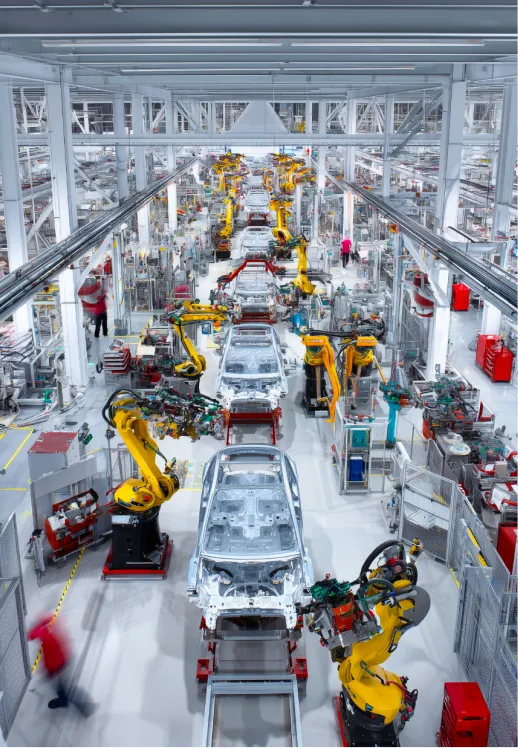
A simulation service pointed at your physical footprint. We build digital twin models that replicate greenfield layouts and brownfield retrofits alongside each other and compare them on throughput rather than on instinct.
What er deliver:
- Greenfield validation with simulation models of several candidate layouts before anyone breaks ground
- Brownfield retrofit testing, where 15% to 30% more capacity is often already available
- Real order profiles run through the model to see how new automation integrates with your existing processes and people
- An as-is against to-be comparison to find the workflow that measures best
- Peak volume stress testing on a validated model of your current facility
- Mitigation planning, from adding packers to pre-positioning fast movers
Supply chain network digital twin development
A supply chain digital twin covers the whole network, from raw material through to final delivery. It shows you where resilience is thin before a disruption finds it on your behalf.
What we deliver:
- Network mapping across every supplier tier and distribution channel you depend on
- Disruption scenarios, from a supplier failure to a closed port, scored against service levels
- Sourcing and network design compared on cost and resilience together
- Inventory levels set node by node using simulated demand swings and lead times
Industrial machinery and fleet digital twin development
A fleet digital twin for the assets whose downtime stops production. We build twins of single machines or whole fleets, connected to the sensor data you already collect.
What we deliver:
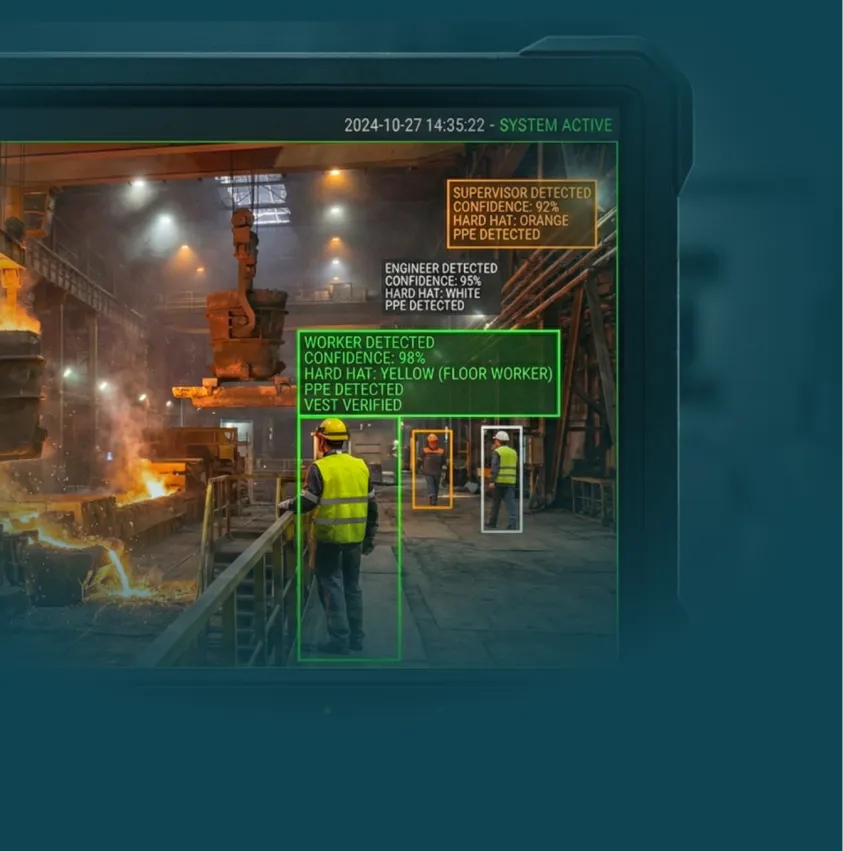
- Continuous condition monitoring and fault detection on machine health
- Predictive modeling that flags component wear early enough to schedule the work instead of reacting to it
- Deployment and workload distribution optimized and tested across fleets before you change the plan
- A virtual space for operator training and hazardous procedure rehearsal
Explore our cases
Not sure which of these you need? Tell us the decision you are trying to make and we will map the shortest route to an answer.
Yalantis digital twin development Process
Every stage ends in something you can look at and sign off on, so the model earns your trust in steps instead of asking for it all at the end.

Facility and object discovery
We start with an audit of your data landscape and a round of stakeholder interviews with the people who actually run the operation. What comes out of it is a defined pilot scope and a business case that survives a look from finance.

Data integration
Once the scope is agreed, ETL and ELT pipelines connect the data sources that have never spoken to each other. This is the stage that quietly decides how accurate the finished model turns out to be, so we do not rush it.

Model Development
With the data in place, we construct the agent-based model that mirrors your operational logic and constraints. This is the digital twin simulation engine, and the choices made here set how high-fidelity each agent needs to be and how fast the whole thing runs.

Digital Twin Validation
Right after the model is standing up, your own historical data goes through it, and we tune parameters until the simulated numbers match what actually happened, inside a margin you agree to up front. Nothing moves on until you have signed off on that match.

Digital Twin Simulation
Then the what-if work begins, whether that means a new layout or an equipment upgrade. You get comparative numbers on each option, which is what turns a capital decision from a judgment call into an analysis.

Integration
Finally, digital twin implementation feeds the validated parameters back into your live WMS or ERP, because a recommendation nobody acts on is worth very little. After that the twin keeps running on live data, so it evolves with the operation instead of going stale.



Challenges digital twin development solves
Capital decisions made on guesswork
Committing millions to a new facility or an equipment upgrade on the strength of static blueprints and a vendor spreadsheet is a hard position to defend. A digital twin tests that ROI claim against your own workflow first, so you find out whether the promised throughput survives contact with your operation.
Bottlenecks nobody can locate
Peak season throughput drops and every spreadsheet still says the operation looks healthy. Complex systems hide their constraints, and running the whole process as one model exposes the real one, whether that is a congested aisle or a pick path that doubles back on itself, so the budget goes to the thing actually holding you up.
No way to test a change without stopping work
You suspect a new slotting strategy would lift efficiency, and the only honest way to find out is to halt the line and try it. A digital twin runs dozens of what-if scenarios side by side and compares them on the numbers, so you can test real-world changes with nothing at risk on the floor.
Data silos that split the picture in half
Your WMS, ERP, MES, and PLC data each sit in their own system, so how they interact is anybody’s guess. A digital twin brings those data sources together, along with WCS and RTLS feeds, into one model that shows how the pieces behave as a set rather than one at a time.
Peak volatility you cannot rehearse
Hoping the operation holds through Black Friday counts as a plan, though a thin one. We stress-test the facility against your projected peak volumes and find the exact point where it breaks, which gives you months to close the gap in operational readiness.
Labor costs rising faster than output
A stopwatch and a clipboard can only tell you so much about a workflow. The twin models the real travel paths and work queues of your people and your equipment, so you can compare layouts and picking strategies on utilization, then choose the one that wastes the least motion.
Technologies we build digital twins with
What we reach for depends on where your data already sits and what your security review will pass.

Agent-based modeling

Discrete-event simulation

Unity3D
Python
NumPy

pandas

AWS IoT TwinMaker

AWS IoT SiteWise

AWS IoT Core

Azure Digital Twins

Azure IoT Hub

Microsoft Fabric

Kafka

Airflow

PostgreSQL

TimescaleDB

MQTT

OPC UA
REST API

GraphQL API

Rust

C
C++

Kotlin

Zephyr

Linux kernel
Bootloader

STM32

ESP32
nRF52

Arduino

LoRaWAN
Compliance and security
We hold the certifications your auditors will ask about and design to the standards your industry works under, and we produce the evidence while the work happens rather than reconstructing it afterwards.
Certifications we hold:
ISO 9001
Quality management
ISO 27001
Information security
ISO 13485
Medical devices
Standards we design to:
IEC 62443
ISO 28000
DTLF

CISA / NIST

GS1 EPC/RFID

GDPR
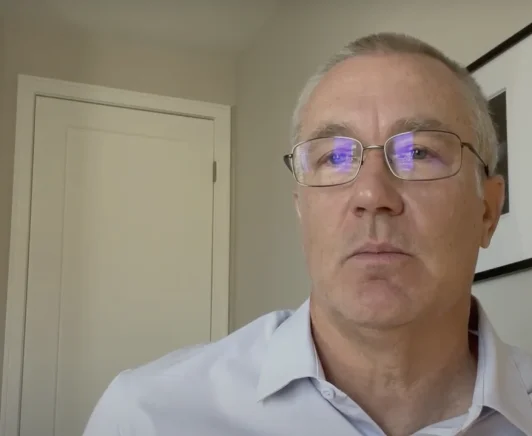
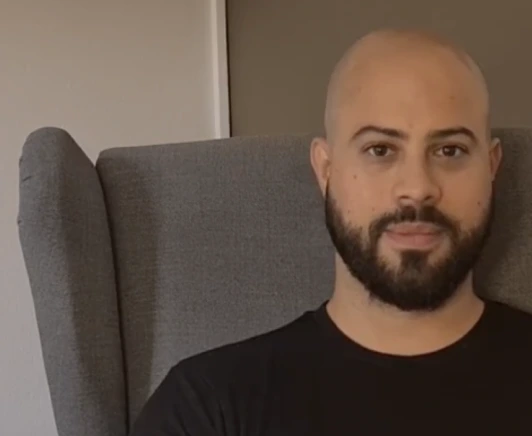
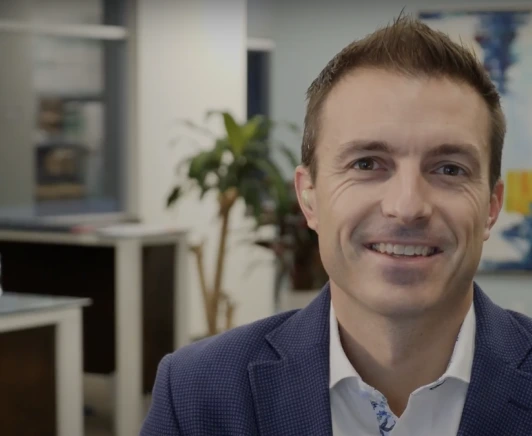
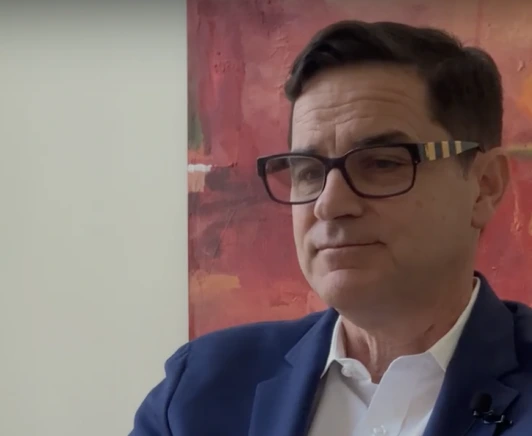
Testimonials from our clients



Digital twin engineering insights
Articles
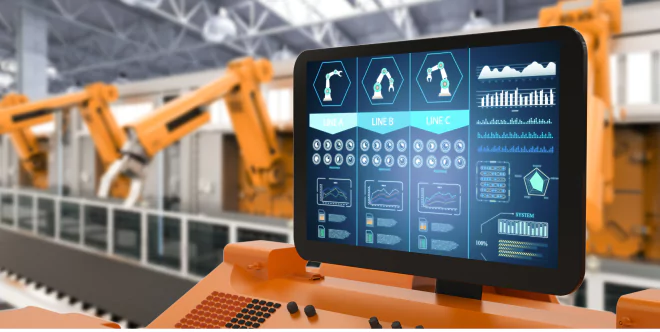
Digital twin solutions: What forward-thinking executives need to know
Digital twins are changing the game for businesses, from predicting equipment failures to optimizing store layouts. See if this tech is right for you.
Articles
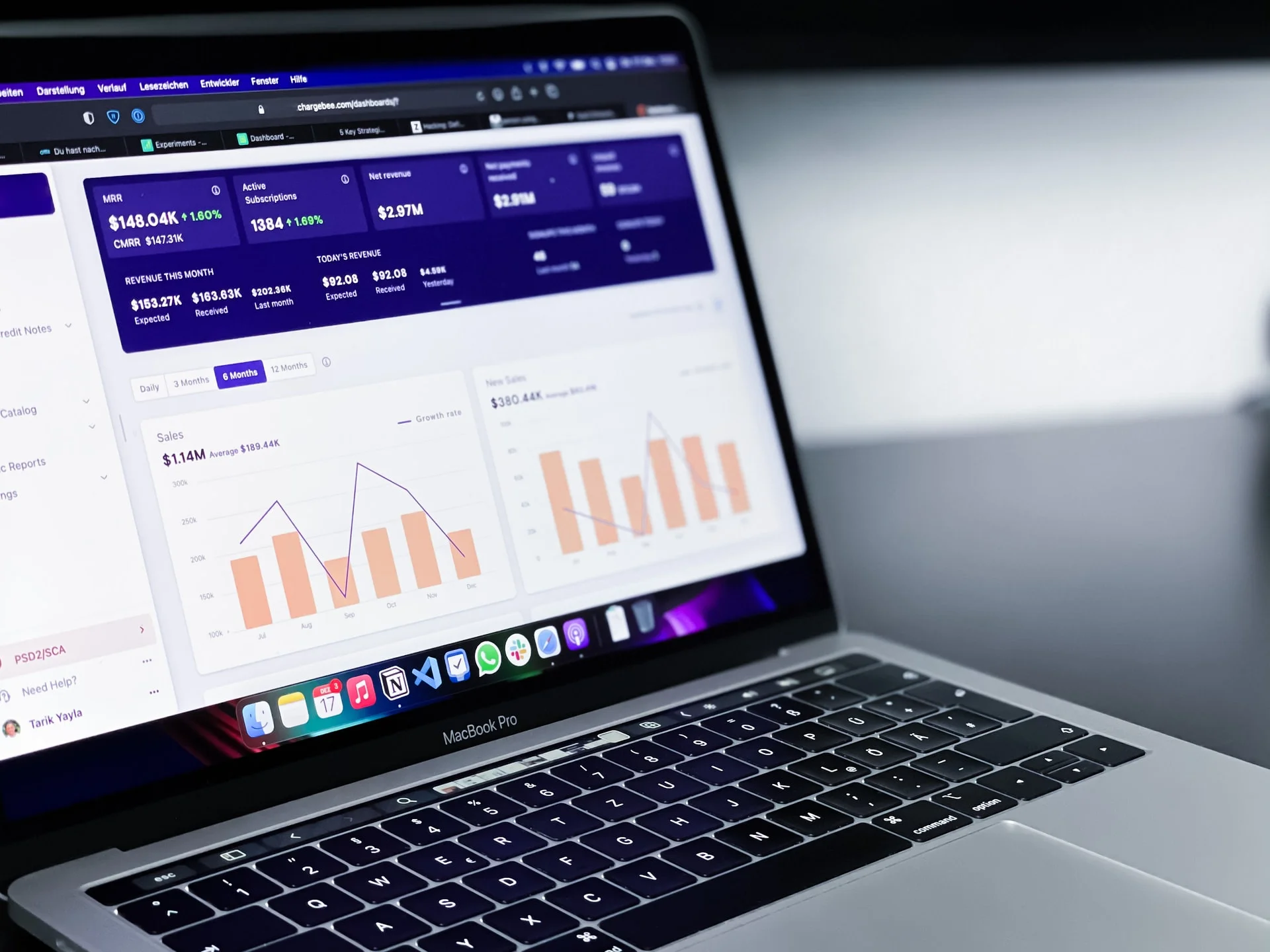
A practical guide to building supply chain dashboards
Learn about different supply chain analytics dashboards and supply chain visibility tools that can help you resolve issues that stop your company from growing.

Articles
What to consider to build a successful digital transformation roadmap for your logistics company
Use practical insights from this article to prepare for building a digital transformation roadmap that can help your supply chain business grow.
Related services and industries
FAQ
-
How is a digital twin different from a 3D model or a basic simulation?
A 3D model is a static drawing of geometry, frozen at the moment someone drew it. A basic simulation goes a step further and studies one piece of the physical system, a conveyor loop say, though it still runs on assumptions set at the start.
A digital twin is different again. It is a virtual replica of the whole operation, a digital model that feeds on your live WMS, WCS, ERP, and IoT data and stays in step with its physical counterpart. Within the digital twin, every order and forklift behaves as its own agent, which is what lets you ask the question the other two cannot answer: add a robotic picking fleet, and where does the next constraint appear? Our guide to digital twin solutions covers the longer version.
-
What data do we need to get started with digital twins?
Digital twin services should run on the data you already collect rather than send you shopping for new instrumentation, so we open with an audit, then integrate your Warehouse Management System for inventory and order profiles, your Warehouse Control System for automation logic, and real-time location or labor feeds wherever they exist.
Getting data sources that were never built to talk to each other into one shape is the bulk of the work here. If something critical is genuinely missing, you will hear about it during the audit rather than months later.
-
How do we know the digital twin simulation is accurate?
We build the model first, then run your historical data through it, and tune the parameters until every simulated metric lines up with what actually happened, inside a margin you set with us up front. Only once you sign off on that match does any what-if work begin, because validation is the step in digital twin engineering that decides whether the output belongs in a capital request.
-
Can we start with a pilot digital twin project?
Yes, and more often than not we suggest it. A pilot is fixed scope: one process, your outbound pick, pack, and ship area for instance, modeled and calibrated against historical data, then pointed at one or two questions that have real money behind them. It does two jobs at once, since you find out whether the model can be trusted and you come away with the business case for a full build, written with your numbers rather than ours.
-
What technology do you use to build the digital twin simulation engine?
Agent-based modeling and discrete-event simulation, at the core of it. Every entity in the operation, whether a worker, a forklift, an AMR, or a single order, behaves as an independent agent withCan you build a digital twin for logistics, supply chain, or manufacturing? its own logic, and system behavior emerges from those interactions rather than from an assumption somebody typed in.
On top of that, the simulation software we build for you is visualized in Unity3D when a team wants 3D scenes, or through a browser-based interface when they would rather have the numbers. The engine supports real-time simulation or runs faster than real tim
-
Can you build a digital twin for logistics, supply chain, or manufacturing?
Yes to all three, and logistics is where we can show you the most proof. Warehouse twins take on slotting and peak readiness, while network twins handle freight and sourcing decisions, and manufacturing follows close behind with production line modeling and robotic cell validation. The same approach carries into energy and urban planning, and into healthcare where patient flow behaves a lot like order flow, though where our case studies are thinner we will say so upfront.
-
Do you support AWS IoT TwinMaker and Azure Digital Twins?
Both, and we work as an implementation partner on them rather than as a platform vendor with something to defend. The choice usually settles itself once you look at where your operational data already sits and what your security team has approved, which is a far shorter conversation than a platform bake-off.
On AWS that means TwinMaker entities and components with SiteWise telemetry underneath, and on Azure it means DTDL models and twin graphs fed through IoT Hub. If neither fits the problem in front of you, we build custom digital twin software on infrastructure you control.
-
Where does our operational data live, and who can access it?
Wherever your policy requires, which in practice means inside your own cloud tenant or on your own hardware. We pull only the fields the model actually needs, so your operational data stays minimized, and access runs on roles with an audit trail on every model change. If your security team wants to review the architecture before anything connects, that is our normal starting point anyway.
-
Why should we choose Yalantis as our digital twin development company?
Around 40% of our project work is IoT, which means the IoT systems and data layer most consultancies subcontract is one we build ourselves.
Custom digital twin development, for us, means the model runs on your order profiles and your constraints rather than a tidy reference facility. We implement on AWS IoT TwinMaker and Azure Digital Twins, and we will say plainly when a custom engine suits you better.
Past that, you get 17 years of engineering and 400 specialists on staff, plus our own R&D lab in Warsaw, which is usually why a modeling question comes back the same day. Enterprise programs for Bosch, Toyota Tsusho, and KPMG ran on this delivery model, our NPS sits at 91, and clients stay past four years on average.
How to get started with Yalantis
Leave your info and a few words about the project. We’ll review it and reach out to book a call.
Welcome to Yalantis, please fill out the form and we’ll get back to you.

Thank you for contacting us.
Keep an eye on your inbox. We’ll be in touch Meanwhile, you can explore our hottest case studies and read client feedback on https://clutch.co/profile/yalantisu0022 target=u0022_blanku0022 rel=u0022noopeneru0022u003eClutch.u003c/au003eu003c/pu003e