



Our robotics development services cover the whole machine, from an early concept sketch to a robot that holds up through a full production shift. One team designs the mechanics and electronics, then writes the firmware and control software that make it move, so you have a single partner answering for how the machine behaves.
Robotics Design and Development Services

17+
Years
in engineering
400+
Engineers on staff
91
NPS from client surveys
4+
Years of average
client retention
R&D
In-house lab in Warsaw
Companies we build with








Our robotics development services
Here are the seven services we cover, and you can take all of them or just the piece your team is missing.
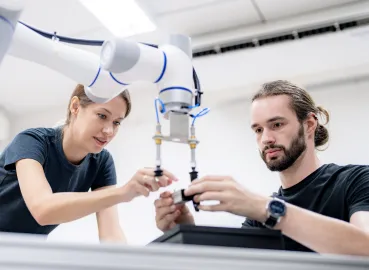
Robotics design and industrial design
Our robotics design services start with the duty cycle and the working envelope, then shape the machine around them. Every mechanical decision gets made with the electronics and the software already in view.
- Kinematic layout and workspace analysis
- Actuator and gearbox sizing
- Structural and thermal analysis
- Enclosure design for food and beverage washdown, dust or extended temperature
- Industrial design and serviceability review
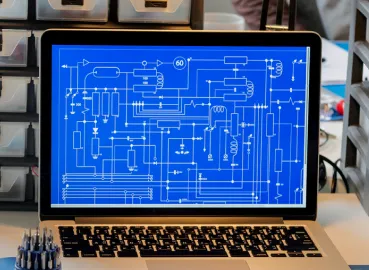
Electronics and PCB design
Our hardware design team turns the mechanical concept into printed circuit boards that survive the environment they ship into. We check signal and power integrity before the first prototype leaves the bench.
- Motor drive and power distribution design
- Safety-rated I/O and interlock circuits
- Carrier boards for your standard compute module
- Signal and power integrity simulation
- Bill of materials and manufacturing package for EMS handoff
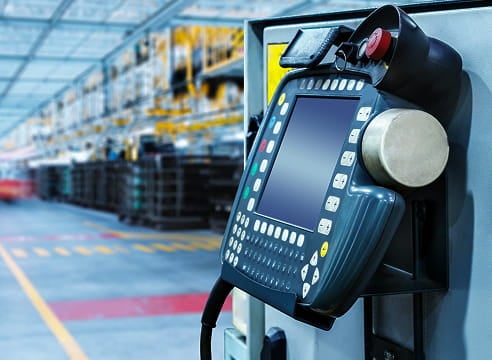
Embedded firmware development
Firmware is where a robot earns its reliability, so we treat the update path as part of the product. Real-time work runs on an RTOS or on embedded Linux, depending on what the workload needs.
- Real-time control loops and low-level device drivers
- Rust for the paths where a memory fault would mean a recall
- Safety chain and watchdog implementation
- Signed over-the-air updates with A/B partitions and tested rollback
- Board bring-up and hardware abstraction layers
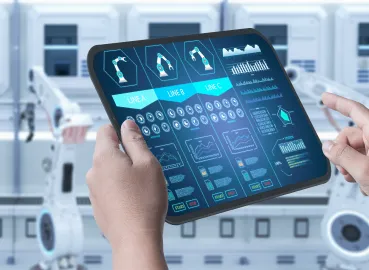
Robot control and motion software, ROS 2 development
This is the layer that decides whether a robot feels precise or twitchy. We build on ROS 2, the Robot Operating System, where its ecosystem pays off, and go bare metal when the cycle budget is tight.
- Trajectory planning and inverse kinematics
- State machines and failure handling when a sensor drops out
- ROS 2 and micro-ROS node architecture
- Simulation environments in Gazebo or Isaac Sim
- Operator interfaces and teleoperation links
- Navigation and path planning algorithms
Computer vision and perception
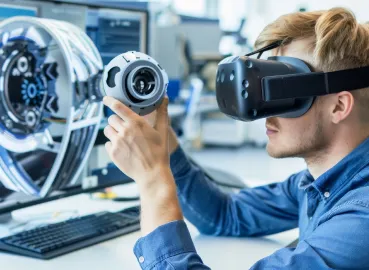
We turn sensor data from cameras and lidar into something the control stack can act on. Machine learning models get trained on your own footage, because a picking model built on a public dataset rarely survives your parts bin or your recycling line.
- Object detection and 6DoF pose estimation
- Obstacle mapping and free space detection
- Visual inspection with pass or fail calls on a moving line
- Camera calibration and sensor fusion
- Dataset collection and model training
Edge AI for robotics
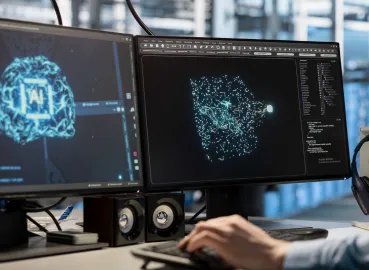
The model runs on the robot itself, with a response time you can put in a specification. We fit it inside the thermal and power budget the mechanical team already committed to.
- Model selection and benchmarking against your latency target
- Quantization and pruning for the target module
- Deployment on Jetson or an NPU-equipped SoC
- Drift monitoring once the fleet is in the field
Robotics prototyping and validation
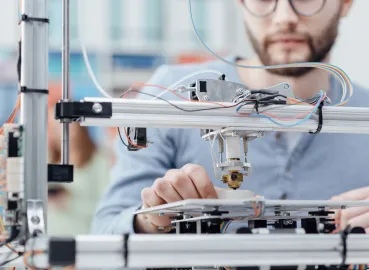
Our Warsaw lab builds the first units and runs them until something breaks. Finding a problem here costs a fraction of finding it at a certification body.
- First article build and board bring-up
- Environmental and endurance testing
- EMC pre-compliance scans
- Safety validation against your risk assessment
- Design iteration driven by test data
Technologies we work with
What usually goes wrong, and what we do about it
Almost every program we take over shows up with a version of the same few problems, so here is how we deal with each one.
Robots and systems we deliver
Some clients come to us with a rough idea, others with a prototype that now has to be ready for production.

Autonomous mobile robots
Robots that navigate a busy plant or hospital floor on their own, with fleet coordination and self-docking built in.
Collaborative workcells
Arms that limit their own force so people can work right beside them, with safety-rated control validated against your risk assessment.
Lab automation and assistive devices
Precision motion and force-limited control, built inside a quality system from day one so the documentation regulators ask for is already there.
Warehouse and fulfillment automation
Sortation and picking systems that talk to your WMS, sized to hold your throughput targets even at peak season.
Inspection and maintenance robots
Crawlers and rail-mounted units for places people should not have to go, with onboard diagnostics and either a tether or a wireless link.
Teleoperated systems
Remote control links fast enough to drive a machine in real time, built so it still behaves sensibly the moment the connection weakens.
Autonomy retrofit
Machines you already own, converted to run on their own. The mechanics stay as they are, and we add the sensing and control layers on top, with a safety chain built to match.
Field and greenhouse robots
Vision-guided weeding and harvesting units built for outdoor duty, with edge inference that keeps working when the network does not.
Our full-cycle robotics development process
Every stage ends with something that works, so you get to see the progress instead of reading about it.

Concept and requirements
We start by pinning down how hard the machine has to work, how far it has to reach, which safety category applies, and what it has to be certified against. Cost targets and volume assumptions go in here too, since they decide the actuator class and the compute you can afford.

Design
Once the requirements are signed off, mechanical layout and electronics architecture move forward next to the software architecture, so a decision in one shows up in the other within a day. Board stack-up, thermal budget, safety architecture, and the interfaces between subsystems all get agreed before anyone starts routing.

Prototype
Right after the design freeze, first articles come out of our lab with boards brought up and motion running under manual control. This is where mechanical assumptions meet a real load, and where the surprises are still cheap to fix.

Firmware
Then the firmware goes in: real-time control and device drivers alongside the safety chain, followed by the update pipeline. Rust covers the paths where a memory fault would turn into a recall.

Control and application software
With the firmware stable, motion planning and perception come together with the operator interface on the prototype. Simulation runs in parallel in Gazebo or Isaac Sim, which keeps the software team moving while hardware is still scarce.

Integration and validation
After that, the robot has to integrate with existing production lines and the systems around them, with MES and fleet integration handled at the same time. Endurance runs, EMC pre-compliance scans, safety validation, and security testing all close out here.

Deployment and support
Finally, pilot units ship with commissioning support and monitoring that tells you what the fleet is doing, which is what you need before scaling to the rest of the sites. From there we handle firmware releases and component obsolescence swaps, plus the next hardware revision when it comes.
Where does your program stand?
Tell us which stage you are in and what has already been built. We will map the remaining work and the team shape it needs

Compliance and certifications
Compliance work starts at the architecture review, so the evidence exists by the time your regulatory team needs it.

ISO 9001
Quality management
ISO 27001
Information security
ISO 13485
Medical devices

IEC 62443
Industrial security
IEC 62304
Medical software
ISO 10218-1
ISO 10218-2

ISO/TS 15066
ISO 13849
IEC 61508
IEC 60601-1
ISO 14971

FDA 21 CFR 820

ETSI EN 303 645
ISO 3691-4

ANSI/ITSDF B56.5

EN 61000

FCC Part 15

CE RED
Technologies we build robots with
What we reach for depends on your safety requirements and the code you already have, so here is the tech stack our teams use most.
Rust
C++

C

Zephyr

FreeRTOS

Embedded Linux

Yocto

ROS 2

micro-ROS

Nav2

MoveIt 2

Gazebo
NVIDIA Isaac Sim

Python

OpenCV

PyTorch
TensorRT

ONNX Runtime

PCL
NVIDIA Jetson

STM32

NXP i.MX

Raspberry Pi CM

AMD Xilinx FPGA

Altium Designer

EtherCAT

CANopen

DDS

MQTT

LTE-M

Wi-Fi 6

5G
Why engineering teams pick Yalantis for robotics development
In-house R&D lab in Warsaw
Everything happens in our own workshop in Warsaw, where we assemble the boards and bring them up ourselves. Motion gets tuned against real loads a few meters from the desk where the firmware was written, so a design question gets answered the same day instead of after a shipping cycle.
One team from schematic to control software
The reason integration goes smoothly is simple: the people routing the board sit next to the people writing the motion loop. When the two disagree, they sort it out between themselves, so the integration cost stops landing at the end of your project.
Rust where a memory fault would mean a recall
We made the call on Rust early, back when it was still an uncomfortable choice for control code. Our C++ depth stays in place for the code you already own, and the same engineers write and test the boundary between the two, so nothing slips through it.
Certifications you can hand to an auditor
If you have been through an audit, you know how much of it comes down to paperwork. We are ISO 9001 and ISO 27001 certified, both re-audited every year, and medical work runs under ISO 13485. We design to the IEC 62443 and ISO 10218 families, with the documentation produced while the work happens.
Engineers ready for the phase you are in
Staffing is usually the bottleneck, so here is the practical answer: with 400 engineers on staff, you get the mix this stage needs without waiting on a hiring cycle. When the stage changes, we change the mix with you.
Clients who stay past the first release
The number we watch most closely is how long clients stay, and on average it runs past four years. Our NPS sits at 91, and enterprise programs for Bosch and Toyota Tsusho ran on the same model you see described here.
What our clients say




Robotics engineering insights
Articles
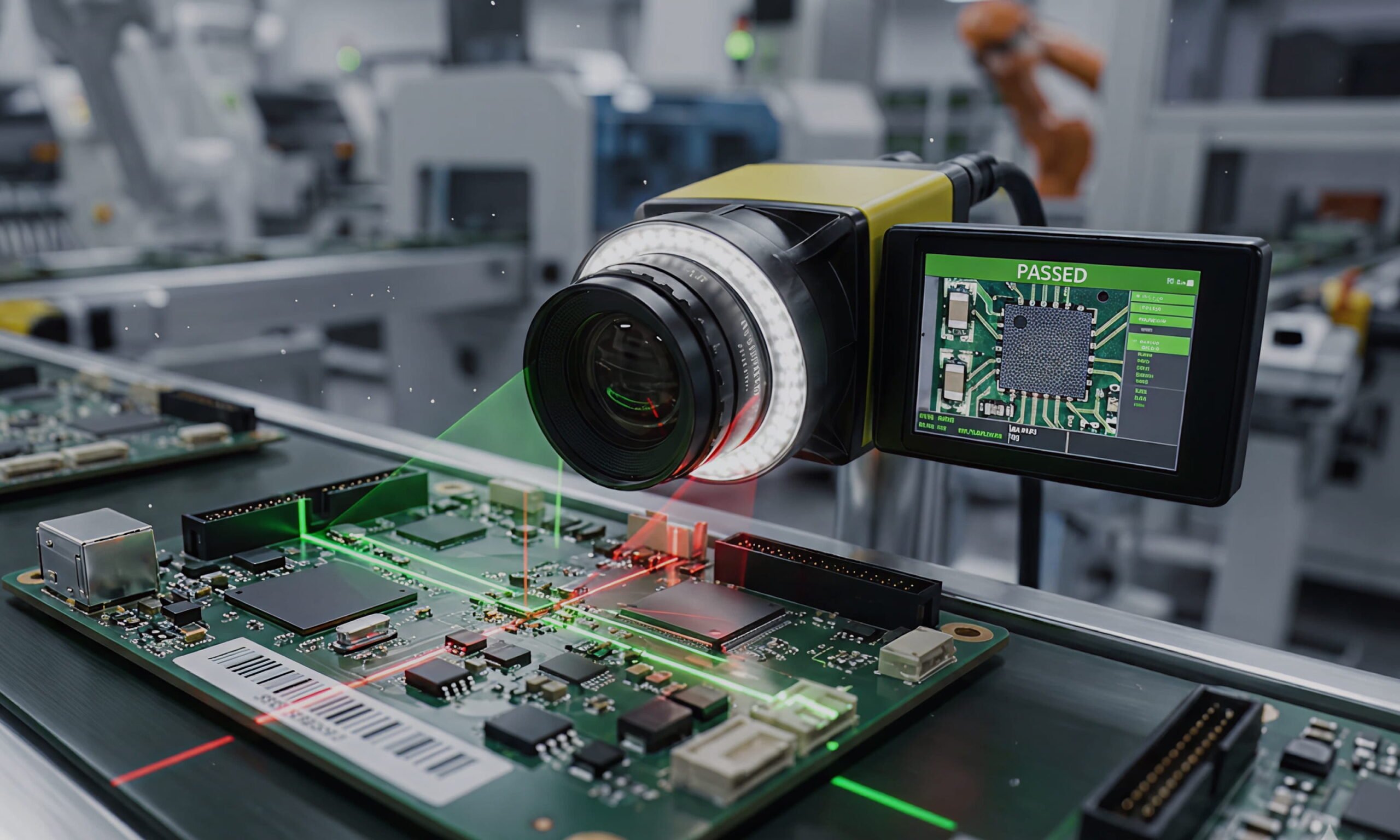
Implementing Computer Vision in Manufacturing: From Defect Detection to Safety
Learn why manufacturers adopt computer vision, what problems it solves on the factory floor, and how to implement and scale it in real production environments

Articles
The Complete Firmware Development Engineering Guide for Embedded and IoT Devices
Find the top 6 best practices in firmware development for embedded IoT devices. Get insights on architecture, security, and optimization.
Articles
How to Reduce BOM Costs Without Sacrificing Product Quality
Discover how to reduce BOM costs without sacrificing product quality. Learn how early design decisions and hardware architecture improvements lower manufacturing costs at scale.
Let’s scope your robotics program
Send us the machine you are trying to build. Our engineering lead comes back with a scope and a team shape, plus the two or three questions worth answering before anything starts
Related services and industries
FAQ
-
What does the robotics design and development process involve?
The development lifecycle runs from a defined problem to a robotic system working on your floor. We start with requirements and the safety category, then move into mechanical and electronics design and build a prototype in our lab. Firmware and control software follow on that hardware, and integration testing happens against your real production environment.
The last stage is commissioning and the support model, which covers firmware releases and component obsolescence. Every stage ends with something you can watch run, so what you are approving is demonstrated behavior.
-
Which engineering disciplines does a robot actually need?
Four, and the hard part is getting them to agree. Mechanics sets the kinematics and the enclosure. Electronics turns that into boards and power stages. Firmware runs the real-time control systems on top of it. Control software handles motion planning and perception, and gives the operator something to work with.
Most delays happen at the seams. A clean mechanical concept can turn out to be unroutable on a four-layer board, or a control loop that behaved in simulation misses its deadline on a microcontroller already busy servicing encoder interrupts. When separate vendors own separate layers, the integration bill arrives at the end, which is why we keep all four in one team.
-
What is the difference between robotics design and robotics development?
Design answers what the machine will be, and development builds it. Design covers kinematics, actuator selection, electronics architecture, and the safety concept, and it hands over drawings and schematics with a plan you can build against. Development is PCB layout, firmware, control software, and the test rigs that prove it works.
We do both, and that matters, because in robotics product development most of the expensive surprises come from a design decision nobody checked against implementation reality.
-
Can you handle both the hardware and the software for a robot?
Yes, and hardware and software development sitting in one team is usually why people call us. A robotics development company that covers only one layer has to subcontract the rest, and that is where integration cost comes from. Here the same organization designs the electronics and writes the firmware, and the control software comes from the same group, so an interface change gets settled in a conversation instead of a change request.
You can also bring us in for one layer only. Plenty of teams start with firmware for a machine that already exists, or with a control software rebuild, then widen the scope once we have worked together.
-
Do you offer embedded robotics design services on their own?
Yes. If the mechanics are already settled, we can take just the embedded layer: real-time control on an RTOS or embedded Linux, plus the drivers and the boards underneath it. Teams usually arrive this way when a machine already exists and its firmware needs rebuilding rather than patching.
-
How do you develop custom industrial robotics?
We start with the duty cycle and your risk assessment, because those two decide the safety category and most of the hardware. From there we design the drive chain and the controller, then build the motion software against the cycle times your line actually runs.
Fieldbus usually comes down to EtherCAT or CANopen, depending on what the plant already has. Security follows IEC 62443, and validation includes endurance runs plus EMC pre-compliance in our lab, so nothing surprising turns up once an external body gets involved.
-
What does medical robotics development require?
A quality system, before it requires any code. We work under ISO 13485 and produce IEC 62304 documentation while the software is being written, with risk management to ISO 14971 and electrical safety to IEC 60601-1.
The part teams tend to underestimate is traceability from requirement to test. Building it as you go costs a fraction of reconstructing it for a 510(k) or an MDR submission, so we treat the design history file as a deliverable from day one.
-
Which technologies do you use for robotics development?
Control code is Rust or C++, depending on how much safety weight it carries and what you already own, running on an RTOS such as Zephyr or FreeRTOS, or on embedded Linux built with Yocto. Higher up it is ROS 2, with micro-ROS on the microcontroller side and Nav2 or MoveIt 2 where they fit the job.
Perception work uses OpenCV and PyTorch, deployed through TensorRT or ONNX Runtime on Jetson or a comparable module. On the hardware side we design in Altium Designer around STM32, NXP i.MX, or whichever compute module you have already standardized on.
-
How do you ensure robot safety and secure over-the-air (OTA) updates?
Safety is an architecture decision, so we take it first. We derive the required performance level from your risk assessment, then put the safety chain in hardware wherever a software fault must never be the only thing standing between a person and a moving axis.
For updates, every release ships as a signed image to A/B partitions, and a watchdog reverts any unit that fails its health check after the switch. Rollouts go by cohort so a bad release stops at the first group. Keys sit in a hardware root of trust, and we test the update path on production hardware during validation, because a rollback that has never run is a rollback you do not have.
How to get started with Yalantis
Leave your info and a few words about the project. We’ll review it and reach out to book a call.
Welcome to Yalantis, please fill out the form and we’ll get back to you.

Thank you for contacting us.
Keep an eye on your inbox. We’ll be in touch Meanwhile, you can explore our hottest case studies and read client feedback on https://clutch.co/profile/yalantisu0022 target=u0022_blanku0022 rel=u0022noopeneru0022u003eClutch.u003c/au003eu003c/pu003e