

Yalantis runs a fixed-scope, four-week EU cyber resilience assessment of every connected product you sell into the EU. We map your devices against CRA essential requirements, score each gap by regulatory risk, and deliver a remediation roadmap your engineering team can act on the day we hand it over.
EU Cyber Resilience Act Audit
Know exactly where your products stand against the EU Cyber Resilience Act.


$35,000
fixed fee
4
weeks
Low
access required
Vulnerability reporting obligations since:
11 Sep 2026
Full compliance required:
11 Dec 2027
Of global turnover
€15M / 2.5%
EU CRA regulation timeline
The EU CRA regulation applies to almost every product with a digital element sold into the European market — industrial controllers, smart-home gear, health wearables, embedded software. Only a few sectors with their own rules are excluded, such as certified medical devices, vehicles and aviation.
Phase 1: In force — 11 Sep 2026
Vulnerability reporting obligations begin. Manufacturers must report actively exploited vulnerabilities and severe incidents through ENISA’s Single Reporting Platform: an early warning within 24 hours of becoming aware, a full notification within 72 hours, and a final report afterwards. This applies to products already on the market too.
Phase 2: Full compliance Dec 2027
Every product with digital elements placed on the EU market from this date must meet CRA essential requirements: secure-by-default design, vulnerability handling, and update mechanisms.
Penalty exposure €15M / 2.5%
Up to €15 million or 2.5% of global annual turnover, whichever is higher. Plus a market-access block: non-compliant products cannot be sold in the EU.
EU Cyber resilience assessment deliverables
Every EU cyber resilience act audit Yalantis delivers produces the same three artifacts, scoped to your specific product portfolio. No generic compliance deck — these are working documents your engineering, product, and regulatory teams use the day they land.
-
01 / Asset
Product & asset inventory with SBOM Every connected product you sell into the EU, classified under CRA categories: default, Important Class I, Important Class II, or critical. That class determines whether you can self-assess or need a notified body. Software bill of materials (SBOM), third-party dependencies, and open-source components mapped to known CVEs. This is the foundation regulators will ask for first.
-
02 / Gaps
Scored gap analysis against CRA essential requirements Each requirement of the cyber resilience act EU framework — secure-by-default configuration, vulnerability handling process, update mechanisms, incident reporting workflow — checked against your product. Every gap ranked by regulatory risk and remediation effort, so prioritization is already done.
-
03 / Roadmap
Sprint-ready remediation roadmap & walkthrough Prioritized remediation plan with timelines, resource estimates, and architecture notes. Sized for sprint planning, not consulting theatre. Includes an executive walkthrough session so your decision-makers see the case for the budget — and your engineering leads leave with a plan.
EU Cyber Resilience Act preparation · 4-week cadence
The Yalantis audit is deliberately desk-and-interview heavy. We work from your documentation, source artifacts, and structured calls with your engineering leads — no production access, no security clearances to chase, no six-week procurement loop before kickoff. That’s how we keep it to four weeks.

W1 — Product & asset mapping, SBOM inventory
We catalog every connected product in scope, classify each one under the CRA categories, and build the software bill of materials with third-party and open-source dependencies.

W2 — Gap analysis against essential requirements
Secure-by-default design, vulnerability handling, update mechanisms, and incident reporting — each measured against your current product, with evidence of what’s in place and what isn’t.

W3 — Risk scoring & remediation prioritization
Each gap ranked on a regulatory-risk axis and an engineering-effort axis. High-risk, low-effort items go first; architectural rework gets its own sequenced track.

W4 — Roadmap delivery & executive walkthrough
You receive the three artifacts and a live walkthrough session with your engineering and regulatory leadership. Q&A included, follow-up engagement optional.
Kickoff within 10 business days of signed scope.
Built for manufacturers facing EU CRA preparation under deadline.
If your product has a digital element and you sell it — directly or through distribution — into the European Union, you are in scope. These are the three sectors where Yalantis has found the gap between current state and CRA-ready state is widest, and the deadline pressure is highest.

Industrial equipment & Industrial IoT manufacturers
Plants, sensors, programmable controllers, gateways, and connected machinery. Mostly CRA default category, but gateways, routers, switches and components with security functions can be Important Class I or II. Long product lifecycles and legacy firmware often pre-date secure-by-default thinking.

Connected health & wellness products outside MDR/IVDR
Health-tracking wearables, companion apps, hubs and connected accessories that don’t qualify as medical devices. Certified medical devices are excluded from the CRA because MDR/IVDR already set their cybersecurity rules. The tricky part is the borderline: products marketed as ‘wellness’, or sold alongside a medical device, often fall under the CRA without the team realising it. Health-monitoring wearables are Important Class I, so they may need a third-party conformity assessment.
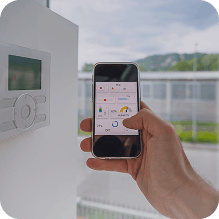
Consumer & smart-home connected product companies
Mass-market connected devices: cameras, hubs, wearables, smart appliances. High unit volume into the EU makes the penalty exposure concrete, and most teams have no SBOM, no vulnerability disclosure process, and no encrypted OTA pipeline yet.
Get your CRA audit on the calendar before the December 2027.
Leave your info and a few words about the project. We’ll review it and reach out to book a call.
Welcome to Yalantis, please fill out the form and we’ll get back to you.

Thank you for contacting us.
Keep an eye on your inbox. We’ll be in touch shortly
Meanwhile, you can explore our hottest case studies and read
client feedback on Clutch.